
Thorium nitrate (CAS 13823-29-5): storage and disposal
Thorium nitrate is a radioactive salt held as legacy stock in schools, colleges and universities, usually as a white or colourless crystalline solid in an old bottle. It may intensify a fire as an oxidiser, is harmful if swallowed, irritates skin, eyes and airways, and may damage organs with repeated exposure. Radioactive status is what decides the route, so the Radiation Protection Adviser leads rather than a chemical collection.
- CAS number
- 13823-29-5
- Form
- Solid
- Storage class
- Oxidiser
- Signal word
- Danger
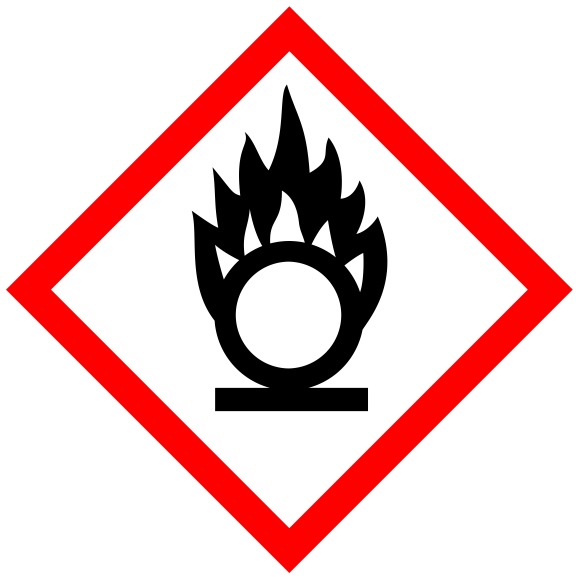 Oxidising
 Harmful or irritant
 Serious health hazard
 Hazardous to the environment
This chemical is a manual enquiry
This is radioactive. Radioactive materials have their own regulations, which can require a permit or registration, and they need a specialist route, so we look at each one individually.
Thorium compound, radioactive.
It cannot be priced through a form. Please do not open or move it. Call us or send an enquiry and we will talk through the next step, which depends on what it is. Keep following your own procedures for controlled drugs, radioactive materials, gases and asbestos.
What to do this week
- Leave it where it is. If it looks old, crystalline or damaged, do not open or move it and keep people away from the shelf. If there is immediate danger, such as a leak, fumes or a fire, leave the area and call 999.
- Write down the label wording, the rough age and where it is stored, from a safe distance.
- Send us those details, and a photo if you can take one without touching it.
Safe storage in a school or lab
Two properties decide where it goes: it is radioactive, and it is an oxidiser that may intensify a fire. So the bottle stays in place, labelled, with its record of holding, in a separate space clear of flammable, organic and reducing materials. Check that nothing like wooden shelving, cardboard or solvent bottles sits beside it, because those are what old cupboards tend to be full of, and clear those neighbours instead of shifting the bottle. It is also toxic to aquatic life with long lasting effects, so nothing should reach water. Leave it locked away from general access. Do not repackage it, however tired the container looks, and let your Radiation Protection Adviser decide the next step.
How to tell it has deteriorated
Old glass with a brown or peeling label, a rusted metal cap or a perished stopper is what you are likely to see. The crystals readily take up moisture, and a thorium nitrate bottle that has sat in a damp store may show clumped, wet looking or partly liquefied contents. Staining on the shelf beneath, or corrosion on nearby metal fittings, suggests the bottle has been leaking or the cap has failed. There is no change in colour that reliably marks age, so it gives few other visible signs. Its radioactive status does not fade over any working lifetime. Paper or card that has been in contact with spilled salt deserves caution too, because it has been in contact with an oxidiser. Report it, without opening anything.
How it is disposed of
This does not go through our standard collection route. It is arranged by manual enquiry, and never goes down the drain or into general waste.
Do not pour it away, dissolve it for disposal or put it out with general waste. Do not move it to a collection point either. It is radioactive material under the Environmental Permitting regime in England and Wales, with equivalent rules in Scotland and Northern Ireland, and that puts it outside a chemical collection. It is not quoted online. Schools and colleges should go to their Radiation Protection Adviser, while a university may use its Radioactive Waste Adviser too. A manual enquiry can help you describe what you have, and a store assessment is recommended. Give the amount, the label wording and the state of the bottle, then leave it labelled and in place until advice comes.
| Usually classed as hazardous waste | Yes |
|---|
No List of Waste code is given here. The waste is outside the chemical collection stream and is assessed by manual enquiry.
The code depends on where the waste came from and what it contains, and classifying it is the producer's duty. Use the waste code finder to see why.
Common quantities
Usually held as: legacy stock.
Tell us the container size and how many you hold. An estimate is enough to start with, and some items cannot be priced until someone has looked at them.
Where it is commonly held
Hazard statements
- H272 May intensify fire; oxidiser.
- H302 Harmful if swallowed.
- H315 Causes skin irritation.
- H319 Causes serious eye irritation.
- H335 May cause respiratory irritation.
- H373 May cause damage to organs through prolonged or repeated exposure.
- H411 Toxic to aquatic life with long lasting effects.
Precautionary statements
- P210 Keep away from heat, hot surfaces, sparks, open flames and other ignition sources. No smoking.
- P220 Keep away from clothing and other combustible materials.
- P260 Do not breathe dust, fume, gas, mist, vapours or spray.
- P261 Avoid breathing dust, fume, gas, mist, vapours or spray.
- P264 Wash hands and exposed skin thoroughly after handling.
- P264+P265 Wash hands and exposed skin thoroughly after handling. Do not touch eyes.
- P270 Do not eat, drink or smoke when using this product.
- P271 Use only outdoors or in a well-ventilated area.
- P273 Avoid release to the environment.
- P280 Wear protective gloves, protective clothing, eye protection and face protection.
- P301+P317 IF SWALLOWED: Get medical help.
- P302+P352 IF ON SKIN: Wash with plenty of water.
- P304+P340 IF INHALED: Remove person to fresh air and keep comfortable for breathing.
- P305+P351+P338 IF IN EYES: Rinse cautiously with water for several minutes. Remove contact lenses, if present and easy to do. Continue rinsing.
- P319 Get medical help if you feel unwell.
- P321 Specific treatment (see supplemental first aid instruction on this label).
- P330 Rinse mouth.
- P332+P317 If skin irritation occurs: Get medical help.
- P337+P317 If eye irritation persists: Get medical help.
- P362+P364 Take off contaminated clothing. And wash it before reuse.
- P370+P378 In case of fire: Use suitable extinguishing media to extinguish.
- P391 Collect spillage.
- P403+P233 Store in a well-ventilated place. Keep container tightly closed.
- P405 Store locked up.
- P501 Dispose of contents and container in accordance with local, regional, national and international regulations.
Substance as classified, dilutions may differ.
Questions
Could thorium nitrate go in with our other nitrates when we clear the oxidiser cupboard?
No. It may look like just another nitrate on a list, but its radioactive status takes it outside a chemical collection. Take it off your clearance list, leave the bottle where it stands and report it separately to your Radiation Protection Adviser. Ask your Radiation Protection Adviser whether the remaining cupboard clearance can proceed.
The crystals look wet in the bottle. Does that mean it has leaked?
Not necessarily, because the salt takes up moisture from the air and can look damp or partly liquefied through a poor seal. Still treat it as a warning about the cap. Look for staining on the shelf from where you stand and tell your adviser, without opening or lifting the bottle.
Is there any reason a school would have this?
It was once used in teaching and in radioactivity work, so it survives in some legacy stores, sometimes with paperwork long since lost. Finding it is no sign of anything wrong today. What matters is reporting it, getting it on the record of holding and keeping it locked up in the meantime.
Related chemicals
Search the chemical database- Ammonium dichromateCAS 7789-09-5Oxidiser


- Ammonium nitrateCAS 6484-52-2Oxidiser
- Ammonium perchlorateCAS 7790-98-9Oxidiser
- Ammonium persulfateCAS 7727-54-0Oxidiser
- Barium nitrateCAS 10022-31-8Oxidiser
- Barium peroxideCAS 1304-29-6Oxidiser