
Ammonium perchlorate (CAS 7790-98-9): storage and disposal
Held mainly in university departments as legacy stock, ammonium perchlorate is a white crystalline solid that looks like any ordinary salt. It is classified as explosive with a mass explosion hazard, and it is also a strong oxidiser, an eye irritant and a possible cause of organ damage with repeated exposure. Explosive decomposition is possible with heat or contamination, so those two things decide how it is handled. Any holding needs a manual enquiry and a visit in person.
- CAS number
- 7790-98-9
- Form
- Solid
- Storage class
- Oxidiser
- Signal word
- Danger
- Usual EWC code
- 16 05 06*
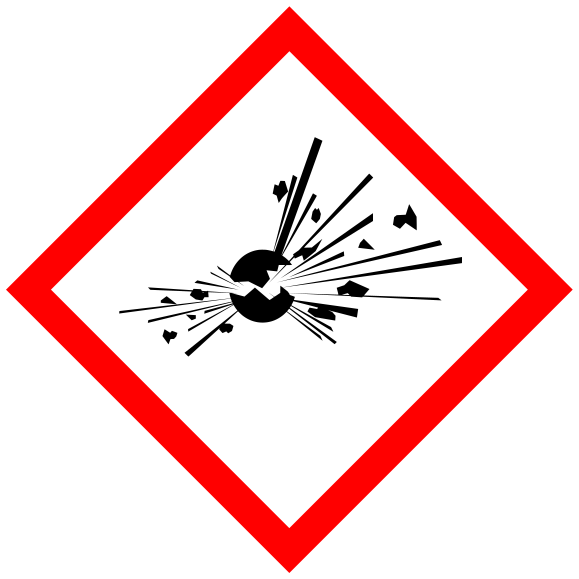 Explosive
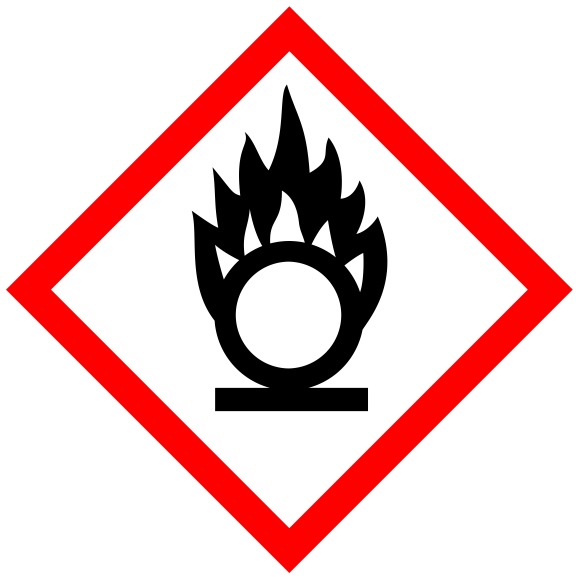 Oxidising
 Harmful or irritant
 Serious health hazard
This chemical is a manual enquiry
This can become unstable or explosive, especially if it is old or has dried out. Nobody should move it until someone competent has looked at it, so we start with a conversation and usually a store assessment.
Perchlorate: explosive decomposition risk.
It cannot be priced through a form. Please do not open or move it. Call us or send an enquiry and we will talk through the safe next step, which is often a store assessment.
What to do this week
- Leave it where it is. If it looks old, crystalline or damaged, do not open or move it and keep people away from the shelf.
- Write down the label wording, the rough age and where it is stored, from a safe distance.
- Send us those details, and a photo if you can take one without touching it.
Safe storage in a school or lab
Look at what stands within reach of the jar: a hot plate, a heated oven, a solvent bottle, a paper box or metal powder. Heat and contamination are the two ways explosive decomposition becomes possible, and in research labs both tend to creep up unnoticed on old stock. A shared shelf where the original owner has long gone is the typical finding. It belongs on its own, on non-combustible shelving in an oxidiser space, with flammable, acid, alkali, toxic and corrosive stock elsewhere. Quantity matters more than usual for this salt, so write down how much the label says is present. If you find it near heat or solvents, do not lift it or start to clear around it. Leave the area and make the enquiry first.
How to tell it has deteriorated
Age brings few visible changes. Sound stock stays a white crystalline solid, and it can look the same as new after a very long time, so a clean appearance should not reassure anyone. Damp from the air can make it clump, but the bigger question is contamination, which may not show. Look for any second colour, dust, paper fibres or metal specks inside the jar, staining on the shelf, a cracked container or a damaged cap. A faded label on an unknown white salt in a research store could be this, and that uncertainty matters by itself. If you see any of these, do not open or move the jar, and get a specialist assessment. No visual check can tell you how sensitive it has become.
How it must be disposed of
This does not go through our standard collection route. It is arranged by manual enquiry, and never goes down the drain or into general waste.
It leaves only after a manual enquiry, and it may be a job for an explosives or emergency specialist instead of a chemical collection. It is not quoted online, and the online quote path does not accept it. A store assessment is recommended, with a competent chemist seeing it in person. Give the label wording, the amount the label states, the age if known, and everything within reach of it, especially heat sources and solvents. Do not open it, move it or try to make it safe. Keep people away if you have any doubt about its condition. It must never go into a sink, a drain, a bin or a skip. University stock normally takes code 16 05 06*, though that does not settle how it leaves.
| EWC code, laboratory chemicals | 16 05 06* |
|---|---|
| Discarded inorganic chemical, not a laboratory pack | 16 05 07* |
| Hazardous waste | Yes |
The code depends on where the waste came from and what it is mixed with. Use the waste code finder to see why.
Do not store with
- FlammableOxidisers can ignite flammable materials or make a fire far more intense.
- AcidMany oxidisers release toxic gas or become unstable in contact with acid.
- AlkaliSome oxidisers react strongly with alkalis, and ammonia based stock is especially at risk.
- ToxicToxic and oxidising stock are stored apart. A reaction could release toxic vapours.
- CorrosiveCorrosive stock can react with oxidisers, releasing heat or fumes.
Named chemicals to keep apart
- Acetic acidMany oxidisers release toxic gas or become unstable in contact with acid.
- AcetoneOxidisers can ignite flammable materials or make a fire far more intense.
- Ammonia solutionSome oxidisers react strongly with alkalis, and ammonia based stock is especially at risk.
- EthanolOxidisers can ignite flammable materials or make a fire far more intense.
- FormalinToxic and oxidising stock are stored apart. A reaction could release toxic vapours.
- HexaneOxidisers can ignite flammable materials or make a fire far more intense.
- Hydrochloric acidMany oxidisers release toxic gas or become unstable in contact with acid.
- Mercury(II) chlorideToxic and oxidising stock are stored apart. A reaction could release toxic vapours.
Show 9 more
- MethanolOxidisers can ignite flammable materials or make a fire far more intense.
- Nitric acidMany oxidisers release toxic gas or become unstable in contact with acid.
- Potassium hydroxideSome oxidisers react strongly with alkalis, and ammonia based stock is especially at risk.
- Sodium cyanideToxic and oxidising stock are stored apart. A reaction could release toxic vapours.
- Sodium hydroxideSome oxidisers react strongly with alkalis, and ammonia based stock is especially at risk.
- Sulfuric acidMany oxidisers release toxic gas or become unstable in contact with acid.
- Thionyl chlorideCorrosive stock can react with oxidisers, releasing heat or fumes.
- TolueneOxidisers can ignite flammable materials or make a fire far more intense.
- Zinc chlorideCorrosive stock can react with oxidisers, releasing heat or fumes.
Common quantities we collect
Usually held as: legacy stock.
Part-used bottles and full containers are both fine. Tell us the size and how many, and an estimate is enough for a first price.
Where it is commonly held
Hazard statements
- H201 Explosive; mass explosion hazard.
- H271 May cause fire or explosion; strong oxidiser.
- H319 Causes serious eye irritation.
- H373 May cause damage to organs through prolonged or repeated exposure.
Precautionary statements
- P210 Keep away from heat, hot surfaces, sparks, open flames and other ignition sources. No smoking.
- P220 Keep away from clothing and other combustible materials.
- P230 Keep wetted with the specified agent.
- P240 Ground and bond container and receiving equipment.
- P250 Do not subject to grinding, shock or friction.
- P280 Wear protective gloves, protective clothing, eye protection and face protection.
- P283 Wear fire resistant or flame retardant clothing.
- P306+P360 IF ON CLOTHING: Rinse immediately contaminated clothing and skin with plenty of water before removing clothes.
- P370+P378 In case of fire: Use suitable extinguishing media to extinguish.
- P370+P380 In case of fire: Evacuate area.
- P371+P380+P375 In case of major fire and large quantities: Evacuate area. Fight fire remotely due to the risk of explosion.
- P372 Explosion risk.
- P373 DO NOT fight fire when fire reaches explosives.
- P401 Store in accordance with local, regional, national and international regulations.
- P420 Store separately.
- P501 Dispose of contents and container in accordance with local, regional, national and international regulations.
- P260 Do not breathe dust, fume, gas, mist, vapours or spray.
- P264+P265 Wash hands and exposed skin thoroughly after handling. Do not touch eyes.
- P305+P351+P338 IF IN EYES: Rinse cautiously with water for several minutes. Remove contact lenses, if present and easy to do. Continue rinsing.
- P319 Get medical help if you feel unwell.
- P337+P317 If eye irritation persists: Get medical help.
Substance as classified, dilutions may differ.
Questions
It looks like an ordinary white salt. Why the caution?
Because its appearance says nothing about its hazard. It is classified as explosive with a mass explosion hazard, and heat or contamination can set off decomposition. Contamination may not be visible at all. Treat the label as the important fact, leave the jar alone and send an enquiry.
Does a very small quantity change the route?
It does not. Even a small jar goes through a manual enquiry, and the online quote path does not accept it. Say how much the label states, because quantity will help the person assessing it decide what is needed, and leave the jar where it stands.
Should we move it out of the building for safety?
No. Moving an old jar is one of the riskier things you could do, and carrying it past people makes that worse. Leave it where it is, keep others away from that area and send an enquiry. If there is a visible warning sign, say so at the start.
Related chemicals
Search the chemical database- Ammonium dichromateCAS 7789-09-5Oxidiser



- Ammonium nitrateCAS 6484-52-2Oxidiser
- Ammonium persulfateCAS 7727-54-0Oxidiser
- Barium nitrateCAS 10022-31-8Oxidiser
- Barium peroxideCAS 1304-29-6Oxidiser
- Benzoyl peroxideCAS 94-36-0Oxidiser