
Liquid nitrogen (CAS 7727-37-9): storage and disposal
Liquid nitrogen is a cryogen kept in dewars in schools, colleges, universities, pathology, histology and veterinary settings, for demonstrations, sample storage and freezing work. It causes cold burns, and rapid evaporation displaces oxygen in closed rooms. It is not chemical waste. What decides handling is the dewar and the room around it, because a dewar must vent and must never be sealed, and it should not stand where its gas can collect.
- CAS number
- 7727-37-9
- Form
- Gas
- Storage class
- General
- Signal word
- Warning
- Usual EWC code
- 16 05 05
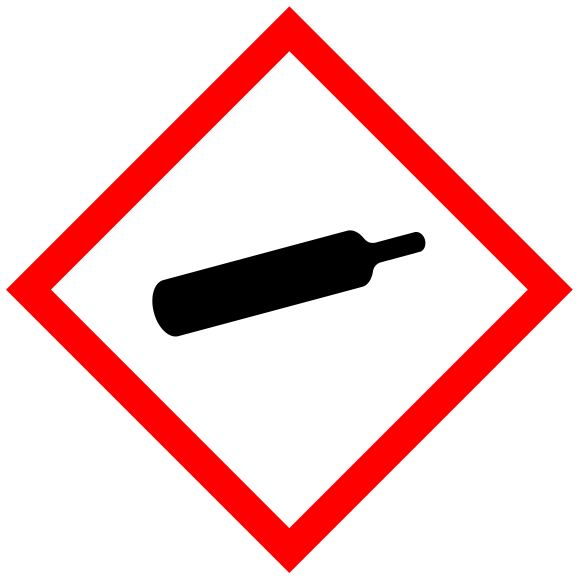 Gas under pressure
This chemical is a manual enquiry
This is held as a compressed gas. Cylinders are usually returned to the supplier or handled separately, and they do not go into a laboratory pack.
Held as a compressed or liquefied gas in a pressure container.
It cannot be priced through a form. Please do not open or move it. Call us or send an enquiry and we will talk through the safe next step, which is often a store assessment.
What to do this week
- Leave it where it is. If it looks old, crystalline or damaged, do not open or move it and keep people away from the shelf.
- Write down the label wording, the rough age and where it is stored, from a safe distance.
- Send us those details, and a photo if you can take one without touching it.
Safe storage in a school or lab
In a school it usually arrives for a particular demonstration and stands in the prep room in a delivery dewar, sometimes for far longer than planned. That room matters more than the dewar. Rapid evaporation displaces oxygen in closed rooms, so a small windowless store or a lift journey with a person beside it is the wrong arrangement. Stand the dewar upright and secure in a well ventilated area, away from heat and from any place where it might get knocked. The lid is loose fitting for a reason: dewars must vent and must never be sealed, so no tape, stopper or tight cap should be added, and nobody should interfere with the vent. Veterinary and pathology stores should also keep a clear route to the door.
How to tell it has deteriorated
Some frost at the neck and a little cold fog when the lid lifts are normal for a working dewar. The liquid itself does not age and simply boils slowly away. The warning signs concern the vessel. Heavy frost or wet patches on the outer body suggest the insulating vacuum has failed, and the level will fall much faster than usual. An ice plug around the neck is a more urgent fault, because it can block venting and the dewar must never be sealed. A dewar that has gone dry may still hold samples or vials of unknown state. Dents and a damaged lid are the other things to record. In any of these cases, keep clear and ask for advice.
How it must be disposed of
This does not go through our standard collection route. It is arranged by manual enquiry, and never goes down the drain or into general waste.
An unwanted dewar does not leave as chemical waste, as liquid nitrogen is not chemical waste, and it does not go in a lab pack or through an online quote. Your gas supplier is the first contact, because many dewars belong to them and go back. Where that does not resolve it, send a manual enquiry with the dewar size, its owner if known, its location and how full it seems. A store assessment is recommended, particularly for several vessels or a poorly ventilated store. Never pour it into a sink or drain or onto a floor, and do not seal the vessel or try to treat the contents first. Tell us if it holds samples, as those are a separate matter.
| EWC code, laboratory chemicals | 16 05 05 |
|---|---|
| Hazardous waste | No |
Gases in pressure containers are assessed by manual enquiry, usually with return to the cylinder owner.
The code depends on where the waste came from and what it is mixed with. Use the waste code finder to see why.
Common quantities we collect
Usually held as: dewar.
Part-used bottles and full containers are both fine. Tell us the size and how many, and an estimate is enough for a first price.
Where it is commonly held
Hazard statements
- H280 Contains gas under pressure; may explode if heated.
- H281 Contains refrigerated gas; may cause cryogenic burns or injury.
Precautionary statements
- P282 Wear cold insulating gloves and either face shield or eye protection.
- P336+P317 Thaw frosted parts with lukewarm water. Do not rub affected area. Get medical help.
- P403 Store in a well-ventilated place.
- P410+P403 Protect from sunlight. Store in a well-ventilated place.
Substance as classified, dilutions may differ.
Questions
Can we keep a small dewar in a windowless prep room overnight?
That is a poor choice without a proper assessment. Rapid evaporation displaces oxygen in closed rooms, and a small space will not dilute it in the way a larger one might. A well ventilated place is the safer option, with the dewar upright, secure and never sealed.
How do we deal with a part full dewar we no longer need?
Contact the supplier first, as many dewars are theirs to take back. If not, send a manual enquiry saying how full it seems and where it is. Do not pour the liquid away or seal the vessel, and keep it upright and well ventilated.
There is an ice plug in the neck of the dewar. What should we do?
Stay clear and do not chip at it or try to free it, because a blocked vent stops the dewar venting as it should. Keep people out of the area and get advice straight away from your gas supplier or site safety contact.
Related chemicals
Search the chemical database- 1,1,1-TrichloroethaneCAS 71-55-6General

- 1-NaphtholCAS 90-15-3General

- 2-NaphtholCAS 135-19-3General

- 3,3',5,5'-TetramethylbenzidineCAS 54827-17-7General
- 4-NitrophenolCAS 100-02-7General

- AcetophenoneCAS 98-86-2General