
Sulfur dioxide (CAS 7446-09-5): storage and disposal
Sulfur dioxide is kept in university departments as a liquefied gas in a cylinder, with a sharp smell of struck matches that most people recognise. It is toxic if inhaled, causes severe skin burns and eye damage, and causes damage to organs. As the stock is held in a pressure container, it falls outside any normal chemical collection, and ownership of the cylinder usually decides where it goes.
- CAS number
- 7446-09-5
- Form
- Gas
- Storage class
- Toxic
- Signal word
- Danger
- Usual EWC code
- 16 05 04*
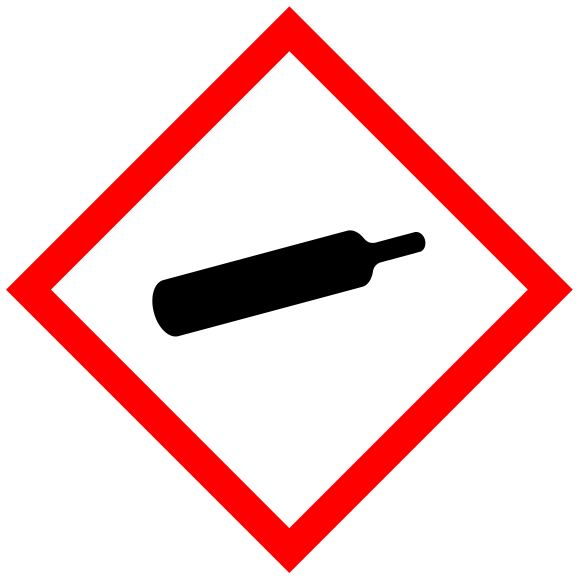 Gas under pressure
 Corrosive
 Acute toxicity
 Serious health hazard
This chemical is a manual enquiry
This is a gas held under pressure, liquefied or in solid or cryogenic form. Cylinders and dewars are usually returned to the supplier or handled separately, and they do not go into a laboratory pack.
Held as a compressed or liquefied gas in a pressure container.
It cannot be priced through a form. Please do not open or move it. Call us or send an enquiry and we will talk through the next step, which depends on what it is. Keep following your own procedures for controlled drugs, radioactive materials, gases and asbestos.
What to do this week
- Leave it where it is. If it looks old, crystalline or damaged, do not open or move it and keep people away from the shelf. If there is immediate danger, such as a leak, fumes or a fire, leave the area and call 999.
- Write down the label wording, the rough age and where it is stored, from a safe distance.
- Send us those details, and a photo if you can take one without touching it.
Safe storage in a school or lab
Confirm that the cylinder appears on the stock record and that the store door really does lock. Toxic stock of this kind belongs in a secured space, away from food and drink areas, and apart from acids and oxidisers. Inside a pressure container it sits mostly as a liquid, so keep it upright, chained and clear of heat. Damp is the enemy. With water the gas forms an acidic solution that attacks steel, which is why a cold, wet store ruins valves and shoulders. Because the gas is heavier than air, a leak settles low, and a basement or pit is a poor location. Nobody should puncture the cylinder or vent it.
How to tell it has deteriorated
A sharp struck match smell at the store door is usually the first sign, well before anything shows on the metal. Sulfur dioxide irritates at low levels, so people tend to notice it quickly. Next come brown rust around the valve and flaking at the shoulder, both of which suggest moisture and escaping traces have been working together. Paper labels nearby may look bleached or brittle, as the moist gas can bleach some dyes. Inside the cylinder it gives few visible signs of age, and a bright, clean cylinder does not prove anything about the valve. If the smell is present, stay out, keep others away and report it at once. It causes severe burns and is toxic if inhaled.
How it is disposed of
This does not go through our standard collection route. It is arranged by manual enquiry, and never goes down the drain or into general waste.
Grouping does not help here. A bottled chemical might join others in a lab pack, but a sulfur dioxide cylinder is a pressure container and stays out of one, even when sulfites or sulfuric acid from the same store are going in the same clear out. List it on its own. Most cylinders return to the gas supplier, so look for a name on the shoulder label and check old orders. If no owner turns up, send a manual enquiry with the size, the markings and any rust on the valve. It is not quoted online, and a store assessment is recommended. Keep it locked, upright and in place until you have advice, and do not try to vent it.
| Usual EWC code | 16 05 04* |
|---|---|
| Usually classed as hazardous waste | Yes |
Gases in pressure containers are assessed by manual enquiry, usually with return to the cylinder owner.
The code depends on where the waste came from and what it contains, and classifying it is the producer's duty. Use the waste code finder to see why.
Do not store with
- OxidiserToxic and oxidising stock are stored apart. A reaction could release toxic vapours.
- AcidToxic stock is stored apart from acids. Several toxic salts release toxic gas in contact with acid.
Named chemicals to keep apart
- Acetic acidToxic stock is stored apart from acids. Several toxic salts release toxic gas in contact with acid.
- Calcium hypochloriteToxic and oxidising stock are stored apart. A reaction could release toxic vapours.
- Hydrochloric acidToxic stock is stored apart from acids. Several toxic salts release toxic gas in contact with acid.
- Hydrogen peroxideToxic and oxidising stock are stored apart. A reaction could release toxic vapours.
- Nitric acidToxic stock is stored apart from acids. Several toxic salts release toxic gas in contact with acid.
- Potassium nitrateToxic and oxidising stock are stored apart. A reaction could release toxic vapours.
- Potassium permanganateToxic and oxidising stock are stored apart. A reaction could release toxic vapours.
- Sulfuric acidToxic stock is stored apart from acids. Several toxic salts release toxic gas in contact with acid.
Common quantities
Usually held as: cylinder.
Tell us the container size and how many you hold. An estimate is enough to start with, and some items cannot be priced until someone has looked at them.
Where it is commonly held
Hazard statements
- H280 Contains gas under pressure; may explode if heated.
- H314 Causes severe skin burns and eye damage.
- H331 Toxic if inhaled.
- H370 Causes damage to organs.
Precautionary statements
- P260 Do not breathe dust, fume, gas, mist, vapours or spray.
- P261 Avoid breathing dust, fume, gas, mist, vapours or spray.
- P264 Wash hands and exposed skin thoroughly after handling.
- P270 Do not eat, drink or smoke when using this product.
- P271 Use only outdoors or in a well-ventilated area.
- P280 Wear protective gloves, protective clothing, eye protection and face protection.
- P301+P330+P331 IF SWALLOWED: Rinse mouth. Do NOT induce vomiting.
- P302+P361+P354 IF ON SKIN: Take off immediately all contaminated clothing. Immediately rinse with water for several minutes.
- P304+P340 IF INHALED: Remove person to fresh air and keep comfortable for breathing.
- P305+P354+P338 IF IN EYES: Immediately rinse with water for several minutes. Remove contact lenses, if present and easy to do. Continue rinsing.
- P308+P316 IF exposed or concerned: Get emergency medical help immediately.
- P316 Get emergency medical help immediately.
- P321 Specific treatment (see supplemental first aid instruction on this label).
- P363 Wash contaminated clothing before reuse.
- P403+P233 Store in a well-ventilated place. Keep container tightly closed.
- P405 Store locked up.
- P501 Dispose of contents and container in accordance with local, regional, national and international regulations.
Substance as classified, dilutions may differ.
Questions
Could this gas go with the sulfites and other sulfur chemicals in our clear out?
No. The name suggests a family resemblance, but the cylinder is a pressure container and has a separate route. Bottled sulfites can be listed for a chemical collection on their own merits. Mention the cylinder separately so that nobody plans to pack it alongside them.
Why has the valve on our sulfur dioxide cylinder rusted when other cylinders look fine?
Traces of this gas form an acidic solution with moisture, and that attacks steel far more than an inert gas would. Rust on the valve can therefore point to a slow leak or a damp store. Report it, stay out if you can smell anything and do not test the valve.
Is an old sulfur dioxide cylinder likely to have emptied itself by now?
It is unwise to assume so. It holds liquefied gas, so a sound cylinder can keep its contents for many years, and a light one still counts as a pressure container. A specialist or the supplier can decide what it holds. Nobody should open it to see.
Does the store need to be locked if only trained researchers use it?
Yes, and for a reason beyond the researchers. Cleaners, contractors and later staff also pass through, and this gas is toxic if inhaled. A lock and a stock record stop a forgotten cylinder from becoming nobody's responsibility when the group that bought it has moved on.
