
Calcium hypochlorite (CAS 7778-54-3): storage and disposal
Calcium hypochlorite is held in school, college and university stores and in clinics as bleaching powder or granules. It is a strong oxidiser, classified as causing severe skin burns and eye damage, and very toxic to aquatic life. It loses strength as it ages and releases chlorine, and a damp container can heat and ignite. Those two habits, not its label, decide where it sits and how a collector treats it.
- CAS number
- 7778-54-3
- Form
- Solid
- Storage class
- Oxidiser
- Signal word
- Danger
- Usual EWC code
- 16 05 06*
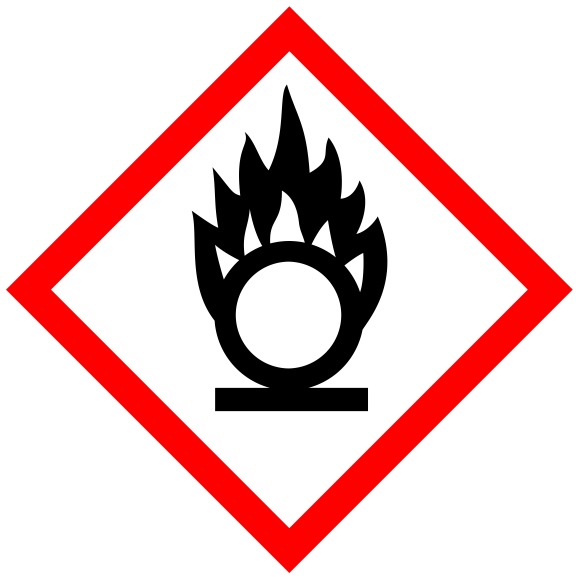 Oxidising
 Corrosive
 Harmful or irritant
 Hazardous to the environment
What to do this week
- Check the label is readable and write down the opened date if it is not already there.
- Check it is stored as oxidiser stock and apart from the items listed under "Do not store with".
- If you no longer need it, add it to your disposal list so it goes on the next collection.
Safe storage in a school or lab
It is an oxidiser with a burns hazard, so it belongs in a separate, labelled oxidiser space on non-combustible shelving. The partners to keep it from are the ones people overlook: acetone and other solvents, ammonia solution and ammonium chloride, because hypochlorites and ammonia form toxic chloramine gases, plus aluminium powder, activated charcoal and peroxide forming ethers such as dioxane. Bleaching powder in clinics is often kept near cleaning cupboards, where ammonia based products also sit. A damp shelf is a poor place for it. Keep the lid tight, dated on arrival, and do not keep stock past its date. UN 1748 applies to qualifying dry calcium hypochlorite products. The correct transport entry for the actual product and formulation is confirmed by the specialist carrier.
How to tell it has deteriorated
Look at the container and label first. A bleached or crumbling label, a corroded or stuck cap and a lid that has swollen outward are the early signs, and a sealed container that has been warm can burst. Inside, bleaching powder that has lost strength smells of chlorine and goes clumpy or damp, and damp stock can heat and ignite. White crust around the neck and rust on nearby metal shelving suggest chlorine has been escaping. Old stock that was bought years ago and never used is the typical find in a school prep room, and undated tubs should be treated as old.
How it must be disposed of
By specialist collection only. It never goes down the drain or into general waste. It is normally packed in a oxidising laboratory pack with compatible chemicals.
Waste code 16 05 06* fits a lab pack, and a clinic would use the healthcare entry 18 01 06*. Its very toxic effect on aquatic life is one reason it never goes near a sink, drain or general waste bin, and nobody should try to treat it or spread it out to dry. The awkward points are the damp and the pressure. Tell the collection team if warmth, dampness, a strong chlorine smell or a bulging lid has been reported or observed without handling the container. Suspect stock must remain undisturbed pending specialist safety assessment. It is packed apart from ammonia based stock, solvents and organic material, and never in a sealed airtight bag.
| EWC code, laboratory chemicals | 16 05 06* |
|---|---|
| Discarded inorganic chemical, not a laboratory pack | 16 05 07* |
| Human healthcare setting | 18 01 06* |
| Hazardous waste | Yes |
The code depends on where the waste came from and what it is mixed with. Use the waste code finder to see why.
Do not store with
- FlammableOxidisers can ignite flammable materials or make a fire far more intense.
- AcidMany oxidisers release toxic gas or become unstable in contact with acid.
- AlkaliSome oxidisers react strongly with alkalis, and ammonia based stock is especially at risk.
- ToxicToxic and oxidising stock are stored apart. A reaction could release toxic vapours.
- CorrosiveCorrosive stock can react with oxidisers, releasing heat or fumes.
Named chemicals to keep apart
- 1,2-DimethoxyethanePeroxide forming ethers can ignite or explode with strong oxidisers.
- 1,4-DioxanePeroxide forming ethers can ignite or explode with strong oxidisers.
- AcetoneHypochlorites react with these solvents, releasing heat and chlorinated products.
- Activated charcoalStrong oxidisers can form mixtures with these materials that burn fiercely or explode.
- Aluminium powderStrong oxidisers can form mixtures with these materials that burn fiercely or explode.
- Ammonia gasHypochlorites and ammonia or amines form toxic chloramine gases.
- Ammonia solutionHypochlorites and ammonia or amines form toxic chloramine gases.
- Ammonium chlorideHypochlorites and ammonia or amines form toxic chloramine gases.
Show 15 more
- Ammonium nitrateHypochlorites and ammonia or amines form toxic chloramine gases.
- Ammonium sulfateHypochlorites and ammonia or amines form toxic chloramine gases.
- DiethylamineHypochlorites and ammonia or amines form toxic chloramine gases.
- Diethyl etherPeroxide forming ethers can ignite or explode with strong oxidisers.
- Diisopropyl etherPeroxide forming ethers can ignite or explode with strong oxidisers.
- EthanolHypochlorites react with these solvents, releasing heat and chlorinated products.
- EthanolamineHypochlorites and ammonia or amines form toxic chloramine gases.
- GlucoseStrong oxidisers can form mixtures with these materials that burn fiercely or explode.
- Hydrobromic acidHypochlorites release toxic chlorine gas in contact with acids.
- Hydrochloric acidHypochlorites release toxic chlorine gas in contact with acids.
- Hydroiodic acidHypochlorites release toxic chlorine gas in contact with acids.
- IsopropanolHypochlorites react with these solvents, releasing heat and chlorinated products.
- Magnesium ribbonStrong oxidisers can form mixtures with these materials that burn fiercely or explode.
- MethanolHypochlorites react with these solvents, releasing heat and chlorinated products.
- Nitric acidHypochlorites release toxic chlorine gas in contact with acids.
Common quantities we collect
Usually held as: bleaching powder, granules.
Part-used bottles and full containers are both fine. Tell us the size and how many, and an estimate is enough for a first price.
Where it is commonly held
Hazard statements
- H272 May intensify fire; oxidiser.
- H302 Harmful if swallowed.
- H314 Causes severe skin burns and eye damage.
- H400 Very toxic to aquatic life.
Precautionary statements
- P210 Keep away from heat, hot surfaces, sparks, open flames and other ignition sources. No smoking.
- P220 Keep away from clothing and other combustible materials.
- P260 Do not breathe dust, fume, gas, mist, vapours or spray.
- P264 Wash hands and exposed skin thoroughly after handling.
- P270 Do not eat, drink or smoke when using this product.
- P273 Avoid release to the environment.
- P280 Wear protective gloves, protective clothing, eye protection and face protection.
- P301+P317 IF SWALLOWED: Get medical help.
- P301+P330+P331 IF SWALLOWED: Rinse mouth. Do NOT induce vomiting.
- P302+P361+P354 IF ON SKIN: Take off immediately all contaminated clothing. Immediately rinse with water for several minutes.
- P304+P340 IF INHALED: Remove person to fresh air and keep comfortable for breathing.
- P305+P354+P338 IF IN EYES: Immediately rinse with water for several minutes. Remove contact lenses, if present and easy to do. Continue rinsing.
- P316 Get emergency medical help immediately.
- P321 Specific treatment (see supplemental first aid instruction on this label).
- P330 Rinse mouth.
- P363 Wash contaminated clothing before reuse.
- P370+P378 In case of fire: Use suitable extinguishing media to extinguish.
- P391 Collect spillage.
- P405 Store locked up.
- P501 Dispose of contents and container in accordance with local, regional, national and international regulations.
Substance as classified, dilutions may differ.
Questions
Why does our bleaching powder smell of chlorine?
Calcium hypochlorite can decompose during storage and release chlorine-containing gases. A strong chlorine smell around a closed container may indicate deterioration or leakage. Do not open suspect stock to investigate the smell. It is still collected, but note the smell and any damp when you describe it.
What must calcium hypochlorite never be stored with?
Keep it from ammonia solution and ammonium chloride, because chloramine gases form, and from acetone, aluminium powder, activated charcoal and peroxide forming ethers. It needs its own oxidiser space, not a shelf shared with cleaning products.
Can a swollen or warm container be moved?
No. Do not move, reposition or handle a swollen or warm container. Damp stock can heat and ignite, and sealed containers can burst. Keep people away from the affected area and obtain specialist safety assistance before collection arrangements are made.
Does old bleaching powder become less hazardous?
Not reliably. It loses strength, but it is still classified as an oxidiser causing severe burns, and it is still handled as hazardous waste. Date and describe it honestly instead of assuming it has weakened enough to ignore.
Related chemicals
Search the chemical database- Ammonium dichromateCAS 7789-09-5Oxidiser


- Ammonium nitrateCAS 6484-52-2Oxidiser
- Ammonium perchlorateCAS 7790-98-9Oxidiser
- Ammonium persulfateCAS 7727-54-0Oxidiser
- Barium nitrateCAS 10022-31-8Oxidiser
- Barium peroxideCAS 1304-29-6Oxidiser