
Chemical waste collection for pathology and histology labs
A histology lab produces waste the way a kitchen produces washing up: daily, in known quantities, and at the same few points in the workflow. For a laboratory manager, the decision is how to run formalin, xylene, alcohol and stain waste as separate routine streams, and what to do about the old reagents that sit outside that routine. Getting the streams right at the bench matters more than anything that happens at collection. We arrange these collections through registered hazardous waste carriers and handle the pricing, consignment notes and invoice. We do not transport or treat waste ourselves, and the laboratory or its host organisation remains the producer.
Request a quote
Tell us what you have. A rough list is fine. We reply within 2 working days.
What we handle from cellular pathology and histology labs
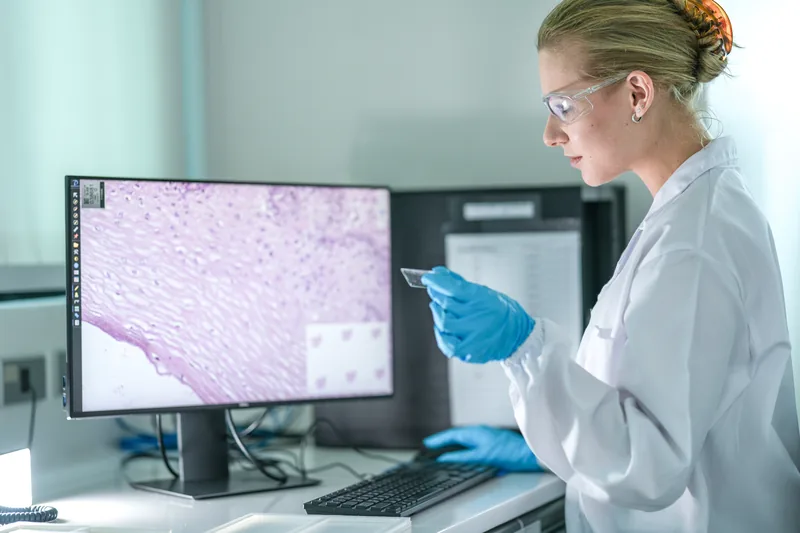
Tissue processors, stainers and coverslippers generate most of the volume, and each has its own waste point. The streams we see most often in a working department are:
- spent neutral buffered formalin, from processors and from specimen dissection
- xylene or a xylene substitute, used for clearing and coverslipping
- graded alcohols, usually ethanol or industrial methylated spirits, with some water and fixative carryover
- staining reagents, including haematoxylin, eosin, silver stains and Schiff reagent
- DAB and related immunohistochemistry waste, and kit reagents with low concentrations of azide
- contaminated consumables such as wax-soaked cassettes and solvent-soaked wipes
Some items need a person to look at them before they go anywhere. Picric acid, whether dry stock or a Bouin's fixative that has dried around the closure, goes to a manual enquiry and should be left untouched. So does any radioactive stain such as uranyl acetate from electron microscopy, and any cylinders or controlled drugs that a wider pathology department may hold.
How collection works
-
List
Send a stock list, a spreadsheet or a few photos. A rough list is fine, and we will ask about anything unclear.
-
Price
We work out how the items will be packed and give you one price, with the waste code for each line.
-
Book
Accept the quote against a purchase order and we agree a date that suits the site.
-
Collect
A registered carrier packs the chemicals on site and takes them away for treatment or disposal.
-
Document
You get the consignment note and disposal records. Keep them for at least three years.
What to have ready for a pathology collection
- your streams, with typical monthly volume and container type for each
- the specific clearing agent and alcohol used, by product name
- any dissolved or carried-over contaminants, such as wax or formalin in spent alcohol
- a separate list of legacy reagents, including any you cannot identify
- location of the waste store, its distance from the loading bay and any lift restrictions
- the name of the person in the lab who will sign for each collection
A department on a shared hospital site should also tell its waste officer before the first visit. The consignment note will carry the hospital's premises details, and the hospital's own register needs to include it.
Keeping formalin, xylene and alcohol streams apart
Each of these streams looks simple until it has been mixed. Xylene and alcohols are flammable, while formalin is a toxic and carcinogenic aqueous solution with a different treatment route. GOV.UK guidance treats wastes as different categories where mixing would affect their disposal or recovery options, so a bulk container that received them all is no longer the waste the description says it is.
Automated equipment is where this tends to go wrong. A processor programme drains several reagents into separate waste lines, and a single misplaced line can spoil a carboy. Label the container at the point of drain, not at the point of collection. Keep the lines and containers visibly distinct, and make sure anyone covering a shift knows which is which.
Formalin deserves a specific word. It is typically collected for treatment as a liquid hazardous waste, and pots returned from theatres or clinics add to that total with tissue and pot residues that differ from clean processor waste. Do not attempt to deactivate or dilute formalin at the bench as a way of reducing the waste you hold. We do not offer a sewer route for any chemical.
Fixed tissue and contaminated consumables
Tissue complicates the coding. GOV.UK classification guidance lists chemically preserved anatomical waste from human healthcare under 18 01 06*, combined with 18 01 02 or 18 01 03* according to whether it is infectious. Animal tissue from veterinary pathology follows the 18 02 equivalents. Because the fixative travels with it, it should not go in the same container as anatomical waste that has not been chemically preserved.
Fixed specimens are not usually a matter for a chemical collection alone, and many departments send them through their contracted clinical route. Make sure that route knows what it is taking.
Consumables need the same honesty. HTM 07-01 says medicine and chemical containers should be assumed contaminated and classified by what they contain, unless completely empty and rinsed out, and that used absorbents from chemical spills fall under Chapter 15 of the List of Waste. A bin of xylene-soaked wipes in an open lab is both a fire load and a waste description problem. It is covered by DSEAR, which requires employers to find out what dangerous substances they hold and control the risks.
Stains, reagents and legacy methods
Histology has a long history of chemicals that the modern lab no longer uses. A store in an older department may hold mercuric chloride fixatives, Zenker's fluid, Harris haematoxylin made with mercuric oxide, chromic acid, uranyl salts, benzidine and osmium tetroxide ampoules. These are often on the top shelf because no one wanted to make a decision about them.
Benzidine-type chromogens and DAB need the same discipline: collect them as hazardous, and keep their concentrated stocks apart from working waste. Sodium azide deserves a mention too. It appears at low concentration in many kits and buffers, and azide solutions sent to drains can react with copper and lead pipework. This is one more reason why nothing from the reagent shelf should go to a sink.
When a method is withdrawn, deal with its reagents at the same time. A method change is the one moment everyone still knows what the bottle is, what concentration it holds and why it was bought. Six years later, nobody will. A store assessment is the better first step if the backlog has already built up.
Collection planning for a working laboratory
A histology department has a rhythm that is easy to plan around. Weekly volumes are predictable, so you can work out how many containers you fill between visits. Then you can set a collection interval that keeps flammable waste in the lab as low as possible, instead of allowing it to build up until the next crisis. Anything left on the lab floor sits in your COSHH assessment as an ongoing exposure, including for cleaners and maintenance staff, who may have no idea what the carboys hold.
The note needs thought as well. Under GOV.UK guidance, the short description in the List of Waste is not normally enough. The note should give the components and concentrations, the physical form and an accurate weight in kilograms for each code. A conversion factor from litres to kilograms is acceptable, as long as it is reliable.
We often find it is easier to fix that description once than to repeat it every visit. Agree a standard wording for each stream, covering what the waste is, where it comes from and what it contains. If a process changes, update it. Your quality manager will probably want that wording under document control anyway.
Related chemicals
Search the chemical database- FormalinCAS 50-00-0Toxic



- XyleneCAS 1330-20-7Flammable

- EthanolCAS 64-17-5Flammable
- 3,3'-DiaminobenzidineCAS 91-95-2Toxic
- HaematoxylinCAS 517-28-2General
- Eosin YCAS 17372-87-1General
- Picric acidCAS 88-89-1Flammable

- Osmium tetroxideCAS 20816-12-0Toxic
Frequently asked questions
Can spent formalin go in the same container as spent xylene?
No. They are different wastes with different hazards, and they often go to different treatment routes. Hazardous waste of different categories must not be mixed, so each stream needs its own labelled container from the point it is drained.
What is the waste code for fixed tissue?
GOV.UK gives chemically preserved anatomical waste from human healthcare as 18 01 06* with 18 01 02 or 18 01 03*, depending on whether it is infectious. It should stay out of the routine anatomical stream because of the fixative, and the description on the note should say so.
Do emptied formalin containers count as waste?
HTM 07-01 says chemical containers should be assumed to be contaminated, and classified by what they held, unless they are completely empty and rinsed out. Do not rinse formalin containers into a drain to change that. List them instead.
We use a xylene substitute. Does that change anything?
It changes the description and sometimes the route, so it should be collected and described separately. Some substitutes behave differently in recovery or incineration, and mixing them with xylene hides a component from the people receiving the waste.
Are uranyl stains from electron microscopy part of this?
They are handled as a manual enquiry, because uranyl compounds are radioactive. List them separately from the rest of the stain waste and do not include them in a routine collection.
Official sources
- GOV.UK: Healthcare and related wastes, how to classify
- NHS England: HTM 07-01, safe and sustainable management of healthcare waste
- GOV.UK: Hazardous waste segregation and mixing
- GOV.UK: Hazardous waste consignment note guidance
- HSE: How to carry out a COSHH risk assessment
- HSE: Dangerous Substances and Explosive Atmospheres Regulations
Send us your list
A rough list or a photo of the shelf is enough for us to start. We reply within 2 working days.
Latest articles
All guides and articles-
What to do with unlabelled bottles in a lab
Do not open or move them. How to make an unlabelled bottle safe to leave, what to record and how identification works.
-
What counts as hazardous waste in a school or lab
Which lab and school waste is hazardous, how to tell, and what the law expects you to do before anything leaves site.
-
How to keep a chemical inventory in a science department
What to record for each container, how to set up locations and how to keep a school chemical register current.