
1,4-Dioxane (CAS 123-91-1): storage and disposal
1,4-Dioxane is a highly flammable cyclic ether held as neat liquid in college and university labs, and in histology departments where it was once a common dehydrant. It may cause cancer and it forms explosive peroxides on storage. What decides handling is the bottle's opened date, and a quirk of this solvent: it can freeze in a cold store, which conceals the crystals a technician would look for.
- CAS number
- 123-91-1
- Form
- Liquid
- Storage class
- Flammable
- Signal word
- Danger
- Usual EWC code
- 16 05 06*
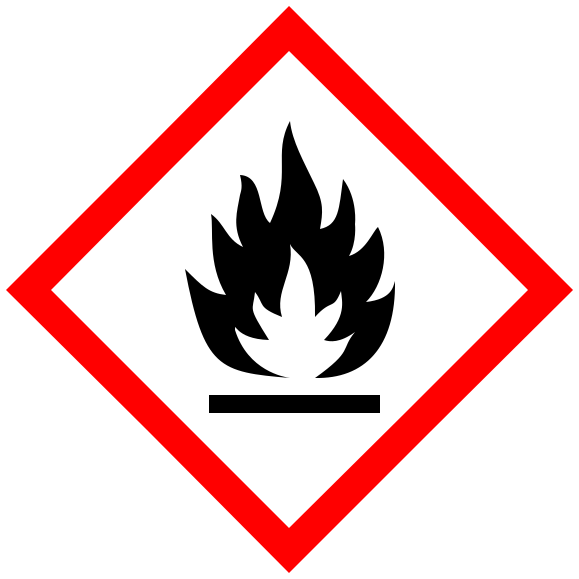 Flammable
 Harmful or irritant
 Serious health hazard
This chemical is a manual enquiry
This can become unstable or explosive, especially if it is old or has dried out. Nobody should move it until someone competent has looked at it, so we start with a conversation and usually a store assessment.
Ether solvent: dangerous peroxides in old stock, and age cannot be judged from a web form.
It cannot be priced through a form. Please do not open or move it. Call us or send an enquiry and we will talk through the safe next step, which is often a store assessment.
What to do this week
- Leave it where it is. If it looks old, crystalline or damaged, do not open or move it and keep people away from the shelf.
- Write down the label wording, the rough age and where it is stored, from a safe distance.
- Send us those details, and a photo if you can take one without touching it.
Safe storage in a school or lab
Highly flammable vapour and a cancer classification together decide its place: a ventilated fire-resistant cabinet with spill containment, with access limited to those who need it. Avoid the coldest corner of an unheated store, because a frozen bottle conceals crystals and gives a false impression of its condition. Permanganate, dichromate, chlorate, hypochlorite, chromium trioxide and hydrogen peroxide belong well away, as this ether can ignite or explode with them. Write the opened date on the label and review an opened bottle at 12 months. A histology bench may still have an old dehydrant bottle left from earlier methods, so include those benches when checking stock. Eye and airway irritation mean a poor cap should not simply be lived with until the next review.
How to tell it has deteriorated
Often the first thing noticed is a bottle that has gone solid in a cold store, and freezing itself is normal for dioxane. The problem is what it hides, since any crystals of peroxide cannot be told from frozen solvent. A liquid bottle gives few visual signs too, and it can stay clear while peroxides build. So the opened date counts for more than appearance. Look for crystals around the cap, a viscous layer, a failed seal or a faded label. Nobody should warm a frozen bottle to see what is inside. If it is old, undated or shows warning signs, do not move it, do not open it, and get a specialist assessment. Any peroxide testing is for competent staff only.
Forms explosive peroxides on storage.
This can form peroxides as it ages, especially after opening. Age and the opened date matter more than appearance, so a container with no opened date should be treated as old.
Review after 12 months: Review interval after opening from the cited peroxide former lists, not an expiry date from a manufacturer. Class C and all other chemicals are left null.
How it must be disposed of
This does not go through our standard collection route. It is arranged by manual enquiry, and never goes down the drain or into general waste.
A frozen or old bottle must not be thawed, opened or carried to a better spot before advice comes, and none of this stock goes into a sink or drain. Nobody should try to make it safe first either. It is not quoted online, and it is not accepted through the online quote path, since age cannot be judged from a web form. Your enquiry should say whether it is liquid or solid at the time, what the dates show, and which bench or store it sits in. A store assessment is recommended, with a competent chemist or, if warning signs are present, an explosives or emergency specialist. A hospital histology department normally uses code 18 01 06* for it, rather than 16 05 06*.
| EWC code, laboratory chemicals | 16 05 06* |
|---|---|
| Discarded organic chemical, not a laboratory pack | 16 05 08* |
| Human healthcare setting | 18 01 06* |
| Hazardous waste | Yes |
20 01 13* (solvents) belongs to municipal collections and is shown for reference only. It is not the normal code for a laboratory collection.
The code depends on where the waste came from and what it is mixed with. Use the waste code finder to see why.
Do not store with
- OxidiserOxidisers can ignite flammable materials or make a fire far more intense.
- AcidOxidising acids can ignite flammable materials, and acid fumes attack containers and seals.
- CorrosiveA leak of corrosive stock can break down flammable containers and feed a fire.
Named chemicals to keep apart
- Acetic acidOxidising acids can ignite flammable materials, and acid fumes attack containers and seals.
- Calcium hypochloritePeroxide forming ethers can ignite or explode with strong oxidisers.
- Chromium trioxidePeroxide forming ethers can ignite or explode with strong oxidisers.
- Hydrochloric acidOxidising acids can ignite flammable materials, and acid fumes attack containers and seals.
- Hydrogen peroxidePeroxide forming ethers can ignite or explode with strong oxidisers.
- Nitric acidOxidising acids can ignite flammable materials, and acid fumes attack containers and seals.
- Potassium chloratePeroxide forming ethers can ignite or explode with strong oxidisers.
- Potassium dichromatePeroxide forming ethers can ignite or explode with strong oxidisers.
Show 7 more
- Potassium nitrateOxidisers can ignite flammable materials or make a fire far more intense.
- Potassium permanganatePeroxide forming ethers can ignite or explode with strong oxidisers.
- Sodium chloratePeroxide forming ethers can ignite or explode with strong oxidisers.
- Sodium dichromatePeroxide forming ethers can ignite or explode with strong oxidisers.
- Sulfuric acidOxidising acids can ignite flammable materials, and acid fumes attack containers and seals.
- Thionyl chlorideA leak of corrosive stock can break down flammable containers and feed a fire.
- Zinc chlorideA leak of corrosive stock can break down flammable containers and feed a fire.
Common quantities we collect
Usually held as: neat.
Part-used bottles and full containers are both fine. Tell us the size and how many, and an estimate is enough for a first price.
Where it is commonly held
Hazard statements
- H225 Highly flammable liquid and vapour.
- H319 Causes serious eye irritation.
- H335 May cause respiratory irritation.
- H350 May cause cancer.
Precautionary statements
- P203 Obtain, read and follow all safety instructions before use.
- P210 Keep away from heat, hot surfaces, sparks, open flames and other ignition sources. No smoking.
- P233 Keep container tightly closed.
- P240 Ground and bond container and receiving equipment.
- P241 Use explosion-proof electrical, ventilating and lighting equipment.
- P242 Use non-sparking tools.
- P243 Take action to prevent static discharges.
- P261 Avoid breathing dust, fume, gas, mist, vapours or spray.
- P264+P265 Wash hands and exposed skin thoroughly after handling. Do not touch eyes.
- P271 Use only outdoors or in a well-ventilated area.
- P280 Wear protective gloves, protective clothing, eye protection and face protection.
- P303+P361+P353 IF ON SKIN (or hair): Take off immediately all contaminated clothing. Rinse skin with water or shower.
- P304+P340 IF INHALED: Remove person to fresh air and keep comfortable for breathing.
- P305+P351+P338 IF IN EYES: Rinse cautiously with water for several minutes. Remove contact lenses, if present and easy to do. Continue rinsing.
- P318 If exposed or concerned, get medical advice.
- P319 Get medical help if you feel unwell.
- P337+P317 If eye irritation persists: Get medical help.
- P370+P378 In case of fire: Use suitable extinguishing media to extinguish.
- P403+P233 Store in a well-ventilated place. Keep container tightly closed.
- P403+P235 Store in a well-ventilated place. Keep cool.
- P405 Store locked up.
- P501 Dispose of contents and container in accordance with local, regional, national and international regulations.
Substance as classified, dilutions may differ.
Questions
Our dioxane bottle has frozen solid. Can we let it thaw and check it?
Do not warm it or carry it to a warmer room. Freezing can hide peroxide crystals, and thawing an old bottle disturbs whatever is inside. Check the dates from the outside, leave it where it stands, and send an enquiry saying it is frozen.
We found old dioxane in a histology department. Is anything different for us?
The same rules on opening and moving apply, and a hospital setting normally changes the code to 18 01 06*. Old dehydrant stock is often undated, so treat it as needing assessment. Say which bench it was on, and whether anyone remembers when it was last used.
How often should an opened bottle of 1,4-dioxane be reviewed?
Review it at 12 months after opening, using the date on the label. Any peroxide testing at that point is for competent staff only. A bottle with no date cannot be reviewed in any useful way, and it needs a specialist assessment instead of a guess.
Related chemicals
Search the chemical database- 1,2-DichloroethaneCAS 107-06-2Flammable
- 1,2-DimethoxyethaneCAS 110-71-4Flammable
- 2,4-DinitrophenylhydrazineCAS 119-26-6Flammable
- 2-Bromo-2-methylpropaneCAS 507-19-7Flammable
- 2-Chloro-2-methylpropaneCAS 507-20-0Flammable
- AcetaldehydeCAS 75-07-0Flammable