
Chromium trioxide (CAS 1333-82-0): storage and disposal
Deep red crystals of chromium trioxide, also called chromium(VI) oxide, turn up in school and college prep rooms, university stores and histology labs, either as the solid or as chromic acid solutions. It is a strong oxidiser that ignites organic liquids on contact, and it may cause cancer and genetic defects. Those two hazards decide where it is kept and how it is grouped when it leaves.
- CAS number
- 1333-82-0
- Form
- Solid
- Storage class
- Oxidiser
- Signal word
- Danger
- Usual EWC code
- 16 05 06*
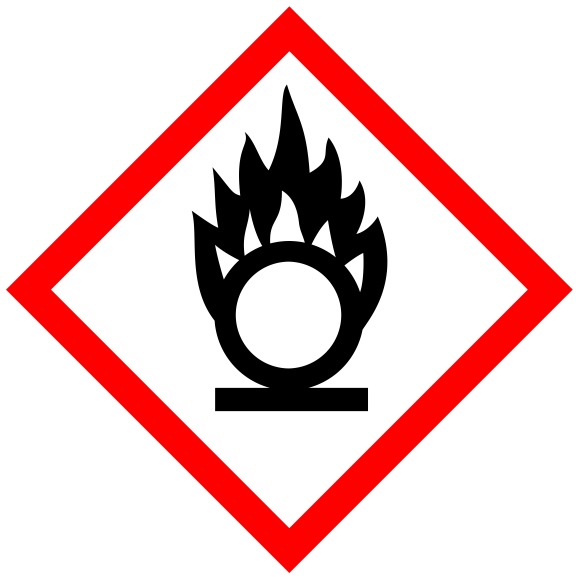 Oxidising
 Corrosive
 Acute toxicity
 Serious health hazard
 Hazardous to the environment
What to do this week
- Check the label is readable and write down the opened date if it is not already there.
- Check it is stored as oxidiser stock and apart from the items listed under "Do not store with".
- If you no longer need it, add it to your disposal list so it goes on the next collection.
Safe storage in a school or lab
In a school or college prep room it belongs in the separate, labelled oxidiser space, on non-combustible shelving where possible, and never among the general solids. Acetone, acetic acid and acetic anhydride are the classic bad neighbours, since it can ignite organic liquids on contact. Diethyl ether and 1,4-dioxane, along with activated charcoal and aluminium powder, also need to be elsewhere. Keep the lid closed firmly, because the crystals take up moisture from the air. As a chromium(VI) compound that is fatal if inhaled, it merits a clear stock record and limited access. In histology, chromic acid solution needs its own place away from the open bench, where alcohols and xylene are close by. A weaker solution may carry less hazard than the solid, but it still needs its strength and date on the label.
How to tell it has deteriorated
A corroded cap is often the first thing to notice, and the label beneath it may be stained or brittle. Paper or organic dust on or around the bottle is a concern in its own right with an oxidiser this strong. Sound stock is loose, dry, deep red crystals. Because they absorb moisture, poor seals let them clump and take on a wet appearance. A dark green tinge around the cap means chromium(VI) has reacted with something and been reduced to green chromium(III), usually where the solid has met the cap or dust. Chromic acid solution shows the same change, shifting from orange-red towards green. A green colour is no evidence that the hazard has gone. Do not force a corroded cap or scrape anything away. Describe what you see and leave the bottle closed.
How it must be disposed of
By specialist collection only. It never goes down the drain or into general waste. It is normally packed in a oxidising laboratory pack with compatible chemicals.
Nothing containing it goes into a sink, a drain, a general waste bin or a skip, and nobody should try to treat it or change it first, not least because it is very toxic to aquatic life. Specialist collection is the only route. Say whether you hold the solid or a chromic acid solution, and give the strength where the label shows one. Old glassware cleaning solutions may hold other acids, so copy the label wording exactly. Its oxidiser class is what shapes the grouping: inside a lab pack it has to stay apart from solvents and other organics. A school or university would use code 16 05 06*, and a hospital histology lab 18 01 06*. Keep your copy of the consignment note for three years.
| EWC code, laboratory chemicals | 16 05 06* |
|---|---|
| Discarded inorganic chemical, not a laboratory pack | 16 05 07* |
| Human healthcare setting | 18 01 06* |
| Hazardous waste | Yes |
The code depends on where the waste came from and what it is mixed with. Use the waste code finder to see why.
Do not store with
- FlammableOxidisers can ignite flammable materials or make a fire far more intense.
- AcidMany oxidisers release toxic gas or become unstable in contact with acid.
- AlkaliSome oxidisers react strongly with alkalis, and ammonia based stock is especially at risk.
- ToxicToxic and oxidising stock are stored apart. A reaction could release toxic vapours.
- CorrosiveCorrosive stock can react with oxidisers, releasing heat or fumes.
Named chemicals to keep apart
- 1,2-DimethoxyethanePeroxide forming ethers can ignite or explode with strong oxidisers.
- 1,4-DioxanePeroxide forming ethers can ignite or explode with strong oxidisers.
- Acetic acidChromium trioxide can ignite organic liquids on contact.
- Acetic anhydrideChromium trioxide can ignite organic liquids on contact.
- AcetoneChromium trioxide can ignite organic liquids on contact.
- Activated charcoalStrong oxidisers can form mixtures with these materials that burn fiercely or explode.
- Aluminium powderStrong oxidisers can form mixtures with these materials that burn fiercely or explode.
- Ammonia solutionSome oxidisers react strongly with alkalis, and ammonia based stock is especially at risk.
Show 14 more
- Diethyl etherPeroxide forming ethers can ignite or explode with strong oxidisers.
- Diisopropyl etherPeroxide forming ethers can ignite or explode with strong oxidisers.
- EthanolChromium trioxide can ignite organic liquids on contact.
- FormalinToxic and oxidising stock are stored apart. A reaction could release toxic vapours.
- GlucoseStrong oxidisers can form mixtures with these materials that burn fiercely or explode.
- GlycerolChromium trioxide can ignite organic liquids on contact.
- Magnesium ribbonStrong oxidisers can form mixtures with these materials that burn fiercely or explode.
- Potassium cyanideCyanides react violently with strong oxidisers.
- Red phosphorusStrong oxidisers can form mixtures with these materials that burn fiercely or explode.
- Sodium cyanideCyanides react violently with strong oxidisers.
- SucroseStrong oxidisers can form mixtures with these materials that burn fiercely or explode.
- SulfurStrong oxidisers can form mixtures with these materials that burn fiercely or explode.
- TetrahydrofuranPeroxide forming ethers can ignite or explode with strong oxidisers.
- White phosphorusPhosphorus can ignite or explode with oxidisers.
Common quantities we collect
Usually held as: solid, chromic acid solutions.
Part-used bottles and full containers are both fine. Tell us the size and how many, and an estimate is enough for a first price.
Where it is commonly held
Hazard statements
- H271 May cause fire or explosion; strong oxidiser.
- H301 Toxic if swallowed.
- H311 Toxic in contact with skin.
- H314 Causes severe skin burns and eye damage.
- H317 May cause an allergic skin reaction.
- H330 Fatal if inhaled.
- H334 May cause allergy or asthma symptoms or breathing difficulties if inhaled.
- H340 May cause genetic defects.
- H350 May cause cancer.
- H361f Suspected of damaging fertility.
- H372 Causes damage to organs through prolonged or repeated exposure.
- H410 Very toxic to aquatic life with long lasting effects.
Substance as classified, dilutions may differ.
Questions
Our chromic acid solution has gone green. Is it still hazardous?
Assume so. The green means some chromium(VI) has become chromium(III), but colour cannot tell you how much remains. Do not treat it as safe or as ordinary waste. Describe it as found, noting the colour change, and it leaves by specialist collection in the same way.
Should chromium trioxide go in the locked toxic cabinet?
Chromium trioxide needs secure, restricted storage that also meets its oxidiser segregation requirements. It must be kept away from organic materials, reducing agents and other incompatible chemicals. A general toxic cabinet is only suitable if those compatibility requirements are met. Its toxicity is still real, so restrict who can reach the oxidiser space and keep the same kind of stock record you would hold for the toxic cabinet.
We found an old school jar of wet looking crystals. Does that change anything?
The route stays the same, but the condition must be described. Mention the wet appearance and any corroded cap or green tinge when arranging collection. Nobody should open the jar, try to dry the crystals or tip them into a new container, even if the original looks shabby.
How do we describe an old bottle of chromic acid when the strength is unknown?
Copy what the label says, give the approximate volume and record any colour change. If the label is gone, say so plainly, as nobody should test it to find out. A weaker solution may be less hazardous than the solid, but it is not safe to assume.
Related chemicals
Search the chemical database- Ammonium dichromateCAS 7789-09-5Oxidiser
- Ammonium nitrateCAS 6484-52-2Oxidiser

- Ammonium perchlorateCAS 7790-98-9Oxidiser
- Ammonium persulfateCAS 7727-54-0Oxidiser
- Barium nitrateCAS 10022-31-8Oxidiser
- Barium peroxideCAS 1304-29-6Oxidiser