
Acetylene (CAS 74-86-2): storage and disposal
Acetylene is an extremely flammable gas held in university labs in cylinders, for example on atomic absorption instruments and for workshop welding. Unlike most cylinder gases it is not simply compressed: it sits dissolved in a solvent inside a porous filling. That affects how the cylinder is stored and why it cannot be thought of as empty. Ownership usually settles the route, and an unclaimed cylinder goes through a manual enquiry.
- CAS number
- 74-86-2
- Form
- Gas
- Storage class
- Flammable
- Signal word
- Danger
- Usual EWC code
- 16 05 04*
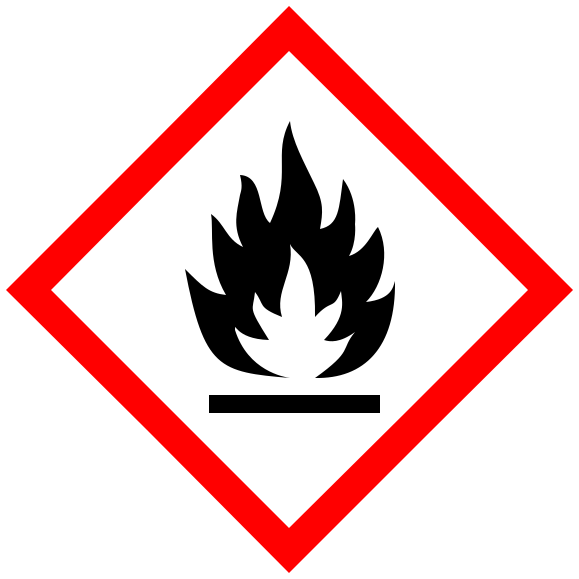 Flammable
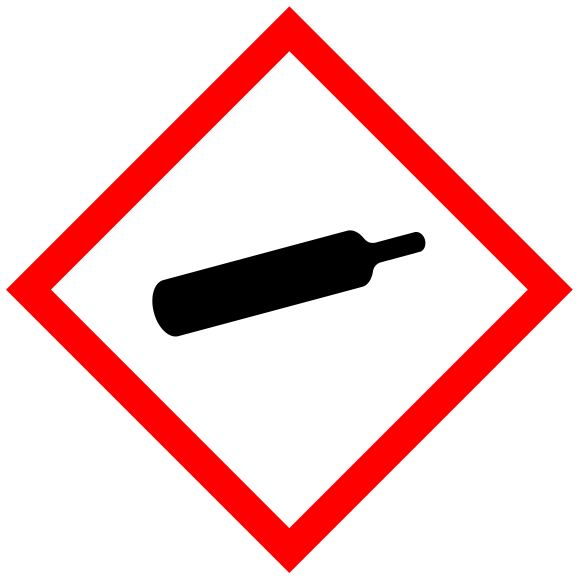 Gas under pressure
This chemical is a manual enquiry
This is held as a compressed gas. Cylinders are usually returned to the supplier or handled separately, and they do not go into a laboratory pack.
Held as a compressed or liquefied gas in a pressure container.
It cannot be priced through a form. Please do not open or move it. Call us or send an enquiry and we will talk through the safe next step, which is often a store assessment.
What to do this week
- Leave it where it is. If it looks old, crystalline or damaged, do not open or move it and keep people away from the shelf.
- Write down the label wording, the rough age and where it is stored, from a safe distance.
- Send us those details, and a photo if you can take one without touching it.
Safe storage in a school or lab
Check that the cylinder is upright before anything else, and secured so it cannot tip. Inside, the gas is dissolved in a solvent held in a porous filling, and a cylinder left lying down can pass that solvent towards the valve. One found on its side should be reported to whoever looks after gases rather than put back into use. Keep it away from heat and ignition sources, and apart from oxygen, which often sits beside it on a workshop trolley. Reagent stocks of iodine and silver nitrate belong well away: silver nitrate can form explosive silver compounds with acetylene, and iodine can give sensitive, violently reacting products. Acid fumes attack seals, so that store is unsuitable too. Never puncture or vent it.
How to tell it has deteriorated
Age alone shows little. Acetylene gives few visible signs, since the dissolved gas and its solvent are sealed in steel, and a cylinder that has stood for years can look the same as a new one. So judge it from the outside: rust, dents, a bent valve, a damaged valve guard or markings that can no longer be read. Commercial grades usually have a garlic like smell, which makes any smell around the valve worth reporting, along with a hiss. Scorched paint, or a cylinder that is warm for no clear reason, is a different matter, because it may explode if heated. Do not move it or touch the valve. Clear the area and call the fire service.
How it must be disposed of
This does not go through our standard collection route. It is arranged by manual enquiry, and never goes down the drain or into general waste.
Code 16 05 04* covers gases in pressure containers that hold hazardous substances, and the asterisk marks the entry as hazardous waste. For an acetylene cylinder that means a separate route from bottled reagents, as pressure containers stay out of a lab pack. Most cylinders go back to the gas supplier, so trace the owner first through the label or the department's hire records. When nobody claims it, send a manual enquiry with the markings and its location. Acetylene is not quoted online, and a store assessment is recommended. Bear in mind that a spent cylinder still holds its solvent and some gas. It should stay upright and secured where it stands until advice comes, and nobody should vent or puncture it.
| EWC code, laboratory chemicals | 16 05 04* |
|---|---|
| Hazardous waste | Yes |
Gases in pressure containers are assessed by manual enquiry, usually with return to the cylinder owner.
The code depends on where the waste came from and what it is mixed with. Use the waste code finder to see why.
Do not store with
- OxidiserOxidisers can ignite flammable materials or make a fire far more intense.
- AcidOxidising acids can ignite flammable materials, and acid fumes attack containers and seals.
- CorrosiveA leak of corrosive stock can break down flammable containers and feed a fire.
Named chemicals to keep apart
- Acetic acidOxidising acids can ignite flammable materials, and acid fumes attack containers and seals.
- Calcium hypochloriteOxidisers can ignite flammable materials or make a fire far more intense.
- Hydrochloric acidOxidising acids can ignite flammable materials, and acid fumes attack containers and seals.
- Hydrogen peroxideOxidisers can ignite flammable materials or make a fire far more intense.
- IodineIodine forms sensitive or violently reacting products with ammonia and reactive metals.
- Nitric acidOxidising acids can ignite flammable materials, and acid fumes attack containers and seals.
- Potassium nitrateOxidisers can ignite flammable materials or make a fire far more intense.
- Potassium permanganateOxidisers can ignite flammable materials or make a fire far more intense.
Show 4 more
- Silver nitrateSilver nitrate can form explosive silver compounds with these materials.
- Sulfuric acidOxidising acids can ignite flammable materials, and acid fumes attack containers and seals.
- Thionyl chlorideA leak of corrosive stock can break down flammable containers and feed a fire.
- Zinc chlorideA leak of corrosive stock can break down flammable containers and feed a fire.
Common quantities we collect
Usually held as: cylinder.
Part-used bottles and full containers are both fine. Tell us the size and how many, and an estimate is enough for a first price.
Where it is commonly held
Hazard statements
- H220 Extremely flammable gas.
- H280 Contains gas under pressure; may explode if heated.
Precautionary statements
- P203 Obtain, read and follow all safety instructions before use.
- P210 Keep away from heat, hot surfaces, sparks, open flames and other ignition sources. No smoking.
- P222 Do not allow contact with air.
- P280 Wear protective gloves, protective clothing, eye protection and face protection.
- P377 Leaking gas fire: Do not extinguish, unless leak can be stopped safely.
- P381 In case of leakage, eliminate all ignition sources.
- P403 Store in a well-ventilated place.
- P410+P403 Protect from sunlight. Store in a well-ventilated place.
Substance as classified, dilutions may differ.
Questions
The cylinder on our atomic absorption instrument has run out. Is it actually empty?
Not in the usual sense. The solvent and porous filling remain, along with some dissolved gas, so it still counts as a pressure container. Send it back to the supplier rather than discarding it, and never vent it. Keep it upright and secured until it is collected.
Can acetylene stay near the silver nitrate and iodine in our reagent store?
No. Silver nitrate can form explosive silver compounds with acetylene, and iodine can give sensitive, violently reacting products. Keep both out of any room holding the cylinder or its pipework. If you find them side by side, tell the person responsible for the store and leave the cylinder where it stands.
Why does an acetylene cylinder have to stay upright when other gases are less fussy?
The gas is dissolved in a solvent inside a porous filling, and standing upright keeps that solvent away from the valve. Lying down can bring it into the valve and any connected fittings. That is why one found on its side should be reported instead of simply being reconnected.
A department moved out and left an old cylinder with no hire record. What should we do?
Look for a supplier name on the label or shoulder and ask them to take it back. If it still cannot be traced, send a manual enquiry with a photograph of the markings. Leave it standing and secured where it is, and do not assume it is spent because it is old.
Related chemicals
Search the chemical database- 1,2-DichloroethaneCAS 107-06-2Flammable


- 1,2-DimethoxyethaneCAS 110-71-4Flammable
- 1,4-DioxaneCAS 123-91-1Flammable
- 2,4-DinitrophenylhydrazineCAS 119-26-6Flammable
- 2-Bromo-2-methylpropaneCAS 507-19-7Flammable
- 2-Chloro-2-methylpropaneCAS 507-20-0Flammable