
Acetone: safe storage and disposal
Acetone (CAS 67-64-1) is the bench solvent of school chemistry, histology and dental surgeries alike. It is a clear liquid that dries glassware fast, and it evaporates just as quickly. Its GHS signal word is Danger. The hazard statements are H225 Highly flammable liquid and vapour, H319 Causes serious eye irritation and H336 May cause drowsiness or dizziness.
This page covers acetone at laboratory scale: wash bottles, Winchesters and used glassware rinses. Cosmetic products are not considered here.
- CAS number
- 67-64-1
- Form
- Liquid
- Storage class
- Flammable
- Signal word
- Danger
- Usual EWC code
- 16 05 06*
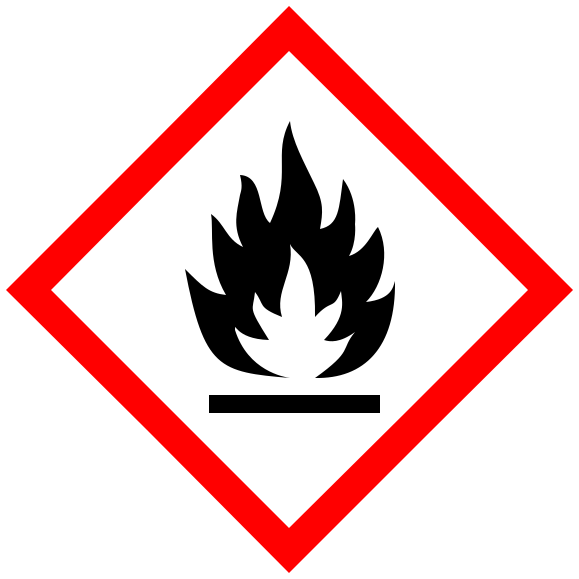 Flammable
 Harmful or irritant
What to do this week
- Check the label is readable and write down the opened date if it is not already there.
- Check it is stored as flammable stock and apart from the items listed under "Do not store with".
- If you no longer need it, add it to your disposal list so it goes on the next collection.
Safe storage of acetone in a school or lab
Acetone belongs in the flammables class. Keep the main stock in a fire-resisting cabinet, closed and labelled, and keep only what a lesson or shift needs on the open bench. Your DSEAR assessment should say how much is allowed out at any time.
Vapour is the thing to plan for. It is heavier than air and travels along benches and floors to find an ignition source, so a sink-side wash bottle beside a gas tap or a hot plate is a real risk. Store it low and away from heat, never in a domestic fridge, and away from direct sun on a window sill.
Wash bottles deserve a rule of their own. They get refilled, passed between benches and left without a label, and within a term nobody can say what is in them. Label each one with its contents and the date.
How to tell acetone has deteriorated
Acetone does not go off in the way an ether does. It does not form dangerous peroxides under normal storage, and an old sealed bottle is usually chemically sound. The problems you will meet are with the container and with what has got into it.
Look for a level that has dropped when nobody has used the bottle, which suggests a poor seal. Plastic wash bottles can soften, cloud or crack over time, and old caps may perish. Water uptake will reduce its performance as a drying agent. A yellow tint or a residue suggests that the bottle has been contaminated, usually from being used to rinse something and then returned. Treat that bottle as a mixed waste of uncertain contents, and do not pour it back into clean stock.
How acetone must be disposed of
Lab acetone goes by specialist collection. It must not go down a sink or be left to evaporate as a means of getting rid of it.
| Setting | Usual List of Wastes code | Hazardous |
|---|---|---|
| Laboratory chemical, including school and university | 16 05 06* | Yes |
| Discarded organic chemical, not in a laboratory pack | 16 05 08* | Yes |
| Human healthcare setting | 18 01 06* | Yes |
You may also see 20 01 13* for solvents. That entry belongs to municipal collections and is not the normal code for a laboratory collection. For transport, acetone is UN 1090, packing group II.
Keep used wash acetone separate from chlorinated waste, and never combine it with oxidising acids. Bulk streams, such as regular wash solvent from a university group, are often handled through solvent waste collection on a schedule.
| EWC code, laboratory chemicals | 16 05 06* |
|---|---|
| Hazardous waste | Yes |
The code depends on where the waste came from and what it is mixed with. Use the waste code finder to see why.
Do not store acetone with
Separation matters more than most technicians are told, because acetone is so ordinary that it ends up on every shelf.
- Nitric acid reacts violently with organic solvents. It can ignite them, or build pressure in a waste bottle.
- Hydrogen peroxide in concentrated form can form unstable organic peroxides with acetone.
- Sodium hypochlorite and other hypochlorites react with it, releasing heat and chlorinated products. Keep bleach well away from acetone and solvent waste.
- Chloroform can react violently with strong alkalis, especially when acetone is present. Keep those three apart, including in waste bottles.
- Oxidisers as a class can ignite flammable materials, and bromine, chromium trioxide and perchloric acid should all be kept well away.
- OxidiserOxidisers can ignite flammable materials or make a fire far more intense.
- AcidOxidising acids can ignite flammable materials, and acid fumes attack containers and seals.
- CorrosiveA leak of corrosive stock can break down flammable containers and feed a fire.
Named chemicals to keep apart
- Acetic acidOxidising acids can ignite flammable materials, and acid fumes attack containers and seals.
- BromineBromine reacts violently with ammonia, reactive metals and many solvents.
- Calcium hypochloriteHypochlorites react with these solvents, releasing heat and chlorinated products.
- Chloramine THypochlorites react with these solvents, releasing heat and chlorinated products.
- ChloroformChloroform can react violently with strong alkalis, especially when acetone is present.
- Chromium trioxideChromium trioxide can ignite organic liquids on contact.
- Hydrochloric acidOxidising acids can ignite flammable materials, and acid fumes attack containers and seals.
- Hydrogen peroxideConcentrated peroxide with these liquids can form unstable organic peroxides.
Show 10 more
- Nitric acidNitric acid reacts violently with organic solvents and can ignite them or build pressure in waste bottles.
- Osmium tetroxideOsmium tetroxide is a strong oxidiser that reacts with these materials and can release toxic gas.
- Perchloric acidPerchloric acid forms explosive mixtures with organic material.
- Potassium nitrateOxidisers can ignite flammable materials or make a fire far more intense.
- Potassium permanganateOxidisers can ignite flammable materials or make a fire far more intense.
- Sodium dichloroisocyanurateHypochlorites react with these solvents, releasing heat and chlorinated products.
- Sodium hypochloriteHypochlorites react with these solvents, releasing heat and chlorinated products.
- Sulfuric acidOxidising acids can ignite flammable materials, and acid fumes attack containers and seals.
- Thionyl chlorideA leak of corrosive stock can break down flammable containers and feed a fire.
- Zinc chlorideA leak of corrosive stock can break down flammable containers and feed a fire.
Common quantities of acetone collected
Most labs have a wash bottle or two on each bench, and one or more Winchester bottles in the cabinet. The usual disposal list shows part-used bottles and a few sealed ones left over from a changed scheme of work. Research groups and histology labs may build up used wash solvent in larger containers.
Usually held as: neat.
Part-used bottles and full containers are both fine. Tell us the size and how many, and an estimate is enough for a first price.
Acetone in different sectors
Schools and colleges. Acetone usually appears in the flammables cabinet, in chromatography and in glassware drying. Clear-outs commonly turn up several old part-used bottles, each bought by someone who could not find the last one.
Histology and pathology. Some processes use acetone as a fixative or a rinse, and the used liquid may contain tissue or stain residue. Waste chemicals must stay out of clinical and offensive streams, and the healthcare classification guidance gives the codes.
Dental practices. Small volumes are often used in a surgery. Keep them labelled, and treat them as chemical waste when no longer needed.
Hazard data from PubChem GHS classification, retrieved 31 October 2026. Guidance only. Check your own risk assessment and your supplier's safety data sheet.
Hazard statements
- H225 Highly flammable liquid and vapour.
- H319 Causes serious eye irritation.
- H336 May cause drowsiness or dizziness.
Precautionary statements
- P210 Keep away from heat, hot surfaces, sparks, open flames and other ignition sources. No smoking.
- P233 Keep container tightly closed.
- P240 Ground and bond container and receiving equipment.
- P241 Use explosion-proof electrical, ventilating and lighting equipment.
- P242 Use non-sparking tools.
- P243 Take action to prevent static discharges.
- P261 Avoid breathing dust, fume, gas, mist, vapours or spray.
- P264+P265 Wash hands and exposed skin thoroughly after handling. Do not touch eyes.
- P271 Use only outdoors or in a well-ventilated area.
- P280 Wear protective gloves, protective clothing, eye protection and face protection.
- P303+P361+P353 IF ON SKIN (or hair): Take off immediately all contaminated clothing. Rinse skin with water or shower.
- P304+P340 IF INHALED: Remove person to fresh air and keep comfortable for breathing.
- P305+P351+P338 IF IN EYES: Rinse cautiously with water for several minutes. Remove contact lenses, if present and easy to do. Continue rinsing.
- P319 Get medical help if you feel unwell.
- P337+P317 If eye irritation persists: Get medical help.
- P370+P378 In case of fire: Use suitable extinguishing media to extinguish.
- P403+P233 Store in a well-ventilated place. Keep container tightly closed.
- P403+P235 Store in a well-ventilated place. Keep cool.
- P405 Store locked up.
- P501 Dispose of contents and container in accordance with local, regional, national and international regulations.
Substance as classified, dilutions may differ.
Questions
Can we tip leftover acetone from washing bottles into one container for collection?
No. Combining liquids yourself risks an unknown reaction and makes the waste harder to describe. Keep each bottle as it is, labelled, and list them so the collector can pack compatible solvents together.
Does a dental practice use the same waste code as a school?
Not always. A human healthcare setting such as a dental surgery can use 18 01 06*, while a school or college store is normally described under 16 05 06*. Say which type of site you are and the collector will confirm.
Where should acetone be kept relative to nitric acid?
Well apart. Nitric acid reacts violently with organic solvents and can ignite them or build pressure in waste bottles. Put them in separate cabinets, with acid low down on a tray and solvent in the fire-resistant cabinet.
Our washing bottle label has rubbed off. What do we do with it?
If you cannot be certain what is in it, do not guess. Mark it unknown and keep it capped in the solvent cabinet, then tell the collector it is unlabelled so it can be assessed before it is packed.
Related chemicals
Search the chemical database- 1,2-DichloroethaneCAS 107-06-2Flammable

- 1,2-DimethoxyethaneCAS 110-71-4Flammable
- 1,4-DioxaneCAS 123-91-1Flammable
- 2,4-DinitrophenylhydrazineCAS 119-26-6Flammable
- 2-Bromo-2-methylpropaneCAS 507-19-7Flammable
- 2-Chloro-2-methylpropaneCAS 507-20-0Flammable