
Benzoyl peroxide (CAS 94-36-0): storage and disposal
Benzoyl peroxide is an organic peroxide held as a wetted paste in college and university labs, and at low levels as the initiator in dental resins. Heating may cause a fire or explosion, and it can cause an allergic skin reaction and serious eye irritation. Dry material is sensitive to heat, friction and shock, so whether the stock has kept its water, and how much there is, decides how it is handled.
- CAS number
- 94-36-0
- Form
- Solid
- Storage class
- Oxidiser
- Signal word
- Danger
- Usual EWC code, laboratory stock
- 16 05 06*
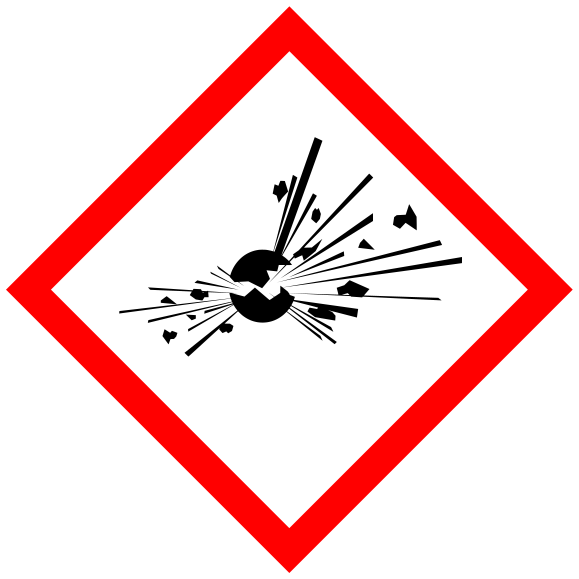 Explosive
 Flammable
 Harmful or irritant
 Hazardous to the environment
This chemical is a manual enquiry
This can become unstable or explosive, especially if it is old or has dried out. Nobody should move it until someone competent has looked at it, so we start with a conversation and usually a store assessment.
Organic peroxide: heat and shock sensitive if dry.
It cannot be priced through a form. Please do not open or move it. Call us or send an enquiry and we will talk through the next step, which depends on what it is. Keep following your own procedures for controlled drugs, radioactive materials, gases and asbestos.
What to do this week
- Leave it where it is. If it looks old, crystalline or damaged, do not open or move it and keep people away from the shelf. If there is immediate danger, such as a leak, fumes or a fire, leave the area and call 999.
- Write down the label wording, the rough age and where it is stored, from a safe distance.
- Send us those details, and a photo if you can take one without touching it.
Safe storage in a school or lab
A wetted paste in a tub is the usual laboratory form, while dental surgeries meet it inside a two part resin kit where it sits in one component and the activator in the other. That split exists for a reason, as amines start its decomposition, so never store loose laboratory stock near amine reagents. It needs a separate labelled space away from organic and reducing materials, and from acids and alkalis. Keep it cool and out of direct sunlight, away from any heater or autoclave, because heat is the classified danger. Inspect the lid and threads visually without touching or turning the cap. If dried residue, crusting or damage is visible, leave the container undisturbed and request specialist assessment. Dental kits can stay in their own box with the date on it.
How to tell it has deteriorated
Sound laboratory stock is a white paste or moist granular solid that clings together. What should worry you is a loose, dry, free running powder, or a paste that has shrunk away from the wall of the tub. White crust around the lid or in the threads means dried peroxide is sitting exactly where a turning cap creates friction. A bulging container suggests gas from slow decomposition. Dental resin components at low levels may simply harden or separate with age, so note the kit's expiry and condition. For tubs of laboratory paste, if the stock is old, undated or shows any of these signs, do not move it, do not open it, and get a specialist assessment.
Supplied wetted. Becomes heat and shock sensitive on drying.
How it is disposed of
This does not go through our standard collection route. It is arranged by manual enquiry, and never goes down the drain or into general waste.
Before asking for a collection, note the label wording, the size of the tub, any date and what you can see of the contents and lid without touching them. Say clearly whether this is a tub of wetted paste or dental resin kits, because a low level initiator in a kit is a very different item for an assessor. Both go by manual enquiry, as this substance is not quoted online, and a store assessment is recommended. Dry material may need a competent chemist in person or, with a warning sign, an explosives or emergency specialist. Dental practices would normally use 18 01 06*. It must never reach a drain, given its long lasting aquatic toxicity, and nobody should wet, open or move a dry tub.
| Usual EWC code, laboratory stock | 16 05 06* |
|---|---|
| Discarded organic chemical, not a laboratory pack | 16 05 08* |
| Human healthcare setting | 18 01 06* |
| Usually classed as hazardous waste | Yes |
The code depends on where the waste came from and what it contains, and classifying it is the producer's duty. Use the waste code finder to see why.
Do not store with
- FlammableOxidisers can ignite flammable materials or make a fire far more intense.
- AcidMany oxidisers release toxic gas or become unstable in contact with acid.
- AlkaliSome oxidisers react strongly with alkalis, and ammonia based stock is especially at risk.
- ToxicToxic and oxidising stock are stored apart. A reaction could release toxic vapours.
- CorrosiveCorrosive stock can react with oxidisers, releasing heat or fumes.
Named chemicals to keep apart
- Acetic acidMany oxidisers release toxic gas or become unstable in contact with acid.
- AcetoneOxidisers can ignite flammable materials or make a fire far more intense.
- Ammonia solutionSome oxidisers react strongly with alkalis, and ammonia based stock is especially at risk.
- EthanolOxidisers can ignite flammable materials or make a fire far more intense.
- FormalinToxic and oxidising stock are stored apart. A reaction could release toxic vapours.
- HexaneOxidisers can ignite flammable materials or make a fire far more intense.
- Hydrochloric acidMany oxidisers release toxic gas or become unstable in contact with acid.
- Mercury(II) chlorideToxic and oxidising stock are stored apart. A reaction could release toxic vapours.
Show 9 more
- MethanolOxidisers can ignite flammable materials or make a fire far more intense.
- Nitric acidMany oxidisers release toxic gas or become unstable in contact with acid.
- Potassium hydroxideSome oxidisers react strongly with alkalis, and ammonia based stock is especially at risk.
- Sodium cyanideToxic and oxidising stock are stored apart. A reaction could release toxic vapours.
- Sodium hydroxideSome oxidisers react strongly with alkalis, and ammonia based stock is especially at risk.
- Sulfuric acidMany oxidisers release toxic gas or become unstable in contact with acid.
- Thionyl chlorideCorrosive stock can react with oxidisers, releasing heat or fumes.
- TolueneOxidisers can ignite flammable materials or make a fire far more intense.
- Zinc chlorideCorrosive stock can react with oxidisers, releasing heat or fumes.
Common quantities
Usually held as: wetted paste, dental resin initiator.
Tell us the container size and how many you hold. An estimate is enough to start with, and some items cannot be priced until someone has looked at them.
Where it is commonly held
Hazard statements
- H241 Heating may cause a fire or explosion.
- H317 May cause an allergic skin reaction.
- H319 Causes serious eye irritation.
- H410 Very toxic to aquatic life with long lasting effects.
Precautionary statements
- P210 Keep away from heat, hot surfaces, sparks, open flames and other ignition sources. No smoking.
- P234 Keep only in original packaging.
- P235 Keep cool.
- P240 Ground and bond container and receiving equipment.
- P261 Avoid breathing dust, fume, gas, mist, vapours or spray.
- P264+P265 Wash hands and exposed skin thoroughly after handling. Do not touch eyes.
- P272 Contaminated work clothing should not be allowed out of the workplace.
- P273 Avoid release to the environment.
- P280 Wear protective gloves, protective clothing, eye protection and face protection.
- P302+P352 IF ON SKIN: Wash with plenty of water.
- P305+P351+P338 IF IN EYES: Rinse cautiously with water for several minutes. Remove contact lenses, if present and easy to do. Continue rinsing.
- P321 Specific treatment (see supplemental first aid instruction on this label).
- P333+P317 If skin irritation or rash occurs: Get medical help.
- P337+P317 If eye irritation persists: Get medical help.
- P362+P364 Take off contaminated clothing. And wash it before reuse.
- P370+P380+P375 In case of fire: Evacuate area. Fight fire remotely due to the risk of explosion.
- P378 Use suitable extinguishing media to extinguish.
- P391 Collect spillage.
- P403 Store in a well-ventilated place.
- P410 Protect from sunlight.
- P411 Store at temperatures as specified on the label.
- P420 Store separately.
- P501 Dispose of contents and container in accordance with local, regional, national and international regulations.
Substance as classified, dilutions may differ.
Questions
Do expired dental resin kits count as the same problem as a tub of paste?
They contain it only at low levels, so the risk is not the same as a tub of laboratory paste, though they are still not safe to bin. List them separately by product type and quantity in your enquiry, so that the assessor can see the difference.
Can it go in the same cupboard as our other oxidisers?
Do not assume that a cupboard used for other oxidisers is suitable for benzoyl peroxide. Organic peroxides need storage segregated from incompatible materials, including other oxidising chemicals where incompatible. The appropriate storage arrangement depends on the product formulation and supplier instructions. Old or suspect containers must remain undisturbed until specialist assessment.
Our tub has been in the store for many years and the paste looks firm. Should we open it to check?
No. Opening is the step that could cause harm if dried material is in the threads, and firmness may mean it has lost water. Leave the tub where it is, send an enquiry with what you can see and let an assessor look at it.
Related chemicals
Search the chemical database- Ammonium dichromateCAS 7789-09-5Oxidiser



- Ammonium nitrateCAS 6484-52-2Oxidiser
- Ammonium perchlorateCAS 7790-98-9Oxidiser
- Ammonium persulfateCAS 7727-54-0Oxidiser
- Barium nitrateCAS 10022-31-8Oxidiser
- Barium peroxideCAS 1304-29-6Oxidiser