
Ammonium picrate (CAS 131-74-8): storage and disposal
The explosive salt of picric acid, ammonium picrate survives as legacy stock in some college and university stores, usually as a yellow solid. It is classified as explosive with a mass explosion hazard, and toxic if swallowed, inhaled or in contact with skin. It becomes more sensitive on drying, so age and the state of the container decide everything. No holding goes through an online quote: each one needs a manual enquiry and someone competent on site.
- CAS number
- 131-74-8
- Form
- Solid
- Storage class
- Flammable
- Signal word
- Danger
- Usual EWC code
- 16 05 06*
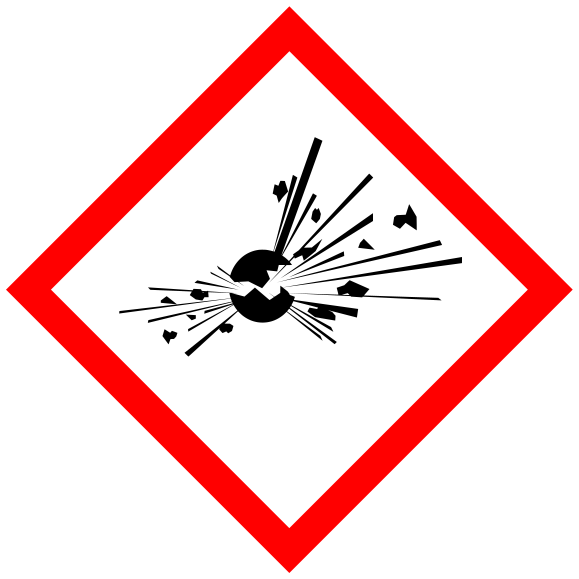 Explosive
 Acute toxicity
This chemical is a manual enquiry
This can become unstable or explosive, especially if it is old or has dried out. Nobody should move it until someone competent has looked at it, so we start with a conversation and usually a store assessment.
Explosive salt of picric acid.
It cannot be priced through a form. Please do not open or move it. Call us or send an enquiry and we will talk through the safe next step, which is often a store assessment.
What to do this week
- Leave it where it is. If it looks old, crystalline or damaged, do not open or move it and keep people away from the shelf.
- Write down the label wording, the rough age and where it is stored, from a safe distance.
- Send us those details, and a photo if you can take one without touching it.
Safe storage in a school or lab
Metals and lime are what must stay away. Aluminium powder, copper metal, iron filings, lead metal and magnesium ribbon can form shock sensitive metal picrates, and calcium carbonate, calcium hydroxide and calcium oxide form sensitive picrate salts, as do plaster and concrete. That makes the surroundings part of the question: a metal cap, a metal shelf, a bare plaster wall or a concrete floor are all contact points if anything has leaked. The shelf should also be clear of oxidisers, acids and corrosive stock. Drying is the other concern, as it grows more sensitive when dry, so a warm store is a poor place. Nobody should add water or try to change how it is stored. If it is old or undated, do not open or move it.
How to tell it has deteriorated
A metal cap, or any corrosion on one, is the first thing to look for, because picrates formed on a thread are what make old bottles so feared. Then look for a dry yellow crust around the neck, or yellow staining on the label and shelf. Those show that material has crept out and dried where friction could reach it. Check whether the contents look dry and powdery. A cracked container or a label that has faded away are also warnings. An unnamed yellow solid in a college store deserves the same caution. If you see any of these, or if it is simply old, do not open or move it, and do not touch the shelf around it. Leave the room and get specialist help.
Explosive salt which becomes more sensitive on drying.
How it must be disposed of
This does not go through our standard collection route. It is arranged by manual enquiry, and never goes down the drain or into general waste.
No lab pack group can take this on the strength of a description. It is an explosive salt that grows more sensitive on drying, so it is not quoted online and the online quote path does not accept it. Send a manual enquiry, and a store assessment is recommended. A competent chemist must see it in person, and an explosives or emergency specialist may be needed, especially if there are warning signs. Give the wording on the label, the cap material, whether you can see crust and what the contents look like from outside. Do not open it, move it or try to make it safe, and nobody should add water. It must never go into a sink, a drain, a bin or a skip.
| EWC code, laboratory chemicals | 16 05 06* |
|---|---|
| Discarded organic chemical, not a laboratory pack | 16 05 08* |
| Hazardous waste | Yes |
The code depends on where the waste came from and what it is mixed with. Use the waste code finder to see why.
Do not store with
- OxidiserOxidisers can ignite flammable materials or make a fire far more intense.
- AcidOxidising acids can ignite flammable materials, and acid fumes attack containers and seals.
- CorrosiveA leak of corrosive stock can break down flammable containers and feed a fire.
Named chemicals to keep apart
- Acetic acidOxidising acids can ignite flammable materials, and acid fumes attack containers and seals.
- Aluminium powderPicric acid forms shock sensitive metal picrates with metals.
- Calcium carbonatePicric acid forms sensitive picrate salts with lime, plaster and concrete.
- Calcium hydroxidePicric acid forms sensitive picrate salts with lime, plaster and concrete.
- Calcium hypochloriteOxidisers can ignite flammable materials or make a fire far more intense.
- Copper metalPicric acid forms shock sensitive metal picrates with metals.
- Hydrochloric acidOxidising acids can ignite flammable materials, and acid fumes attack containers and seals.
- Hydrogen peroxideOxidisers can ignite flammable materials or make a fire far more intense.
Show 12 more
- Iron filingsPicric acid forms shock sensitive metal picrates with metals.
- Lead metalPicric acid forms shock sensitive metal picrates with metals.
- Magnesium ribbonPicric acid forms shock sensitive metal picrates with metals.
- Nickel metalPicric acid forms shock sensitive metal picrates with metals.
- Nitric acidOxidising acids can ignite flammable materials, and acid fumes attack containers and seals.
- Potassium nitrateOxidisers can ignite flammable materials or make a fire far more intense.
- Potassium permanganateOxidisers can ignite flammable materials or make a fire far more intense.
- Sulfuric acidOxidising acids can ignite flammable materials, and acid fumes attack containers and seals.
- Thionyl chlorideA leak of corrosive stock can break down flammable containers and feed a fire.
- Tin metalPicric acid forms shock sensitive metal picrates with metals.
- Zinc chlorideA leak of corrosive stock can break down flammable containers and feed a fire.
- Zinc powderPicric acid forms shock sensitive metal picrates with metals.
Common quantities we collect
Usually held as: legacy stock.
Part-used bottles and full containers are both fine. Tell us the size and how many, and an estimate is enough for a first price.
Where it is commonly held
Hazard statements
- H201 Explosive; mass explosion hazard.
- H301 Toxic if swallowed.
- H311 Toxic in contact with skin.
- H331 Toxic if inhaled.
Substance as classified, dilutions may differ.
Questions
Can we add water to keep it from drying out?
No. Adding water means opening the container, and turning a cap on an old jar could set off anything that has formed in the thread. Leave it as it is, say in your enquiry that it may have dried, and let a specialist decide what happens next.
It is in a jar with a metal lid. How worried should we be?
Treat it seriously, because picric acid salts can form shock sensitive metal picrates, and a thread is where friction could set them off. Do not touch the lid or move the jar. Keep people away and put the metal lid at the top of your enquiry.
Who actually deals with this kind of stock?
A competent chemist assesses it in person, and where warning signs are present it may need an explosives or emergency specialist. It is outside an ordinary chemical collection until that has happened. Your manual enquiry starts the process, so describe the container as fully as you can from a distance.
Related chemicals
Search the chemical database- 1,2-DichloroethaneCAS 107-06-2Flammable



- 1,2-DimethoxyethaneCAS 110-71-4Flammable
- 1,4-DioxaneCAS 123-91-1Flammable
- 2,4-DinitrophenylhydrazineCAS 119-26-6Flammable
- 2-Bromo-2-methylpropaneCAS 507-19-7Flammable
- 2-Chloro-2-methylpropaneCAS 507-20-0Flammable