
Carbamide peroxide (CAS 124-43-6): storage and disposal
Tooth whitening gel in a dental surgery is where most holders meet carbamide peroxide, which is also called urea hydrogen peroxide and is held as a solid or in gel syringes. The pure substance carries oxidising and corrosive classifications. Dental whitening gels are formulations whose classifications depend on their composition and concentration, so the syringe product must be identified from its own label and safety information.
- CAS number
- 124-43-6
- Form
- Solid
- Storage class
- Oxidiser
- Signal word
- Danger
- Usual EWC code
- 16 05 06*
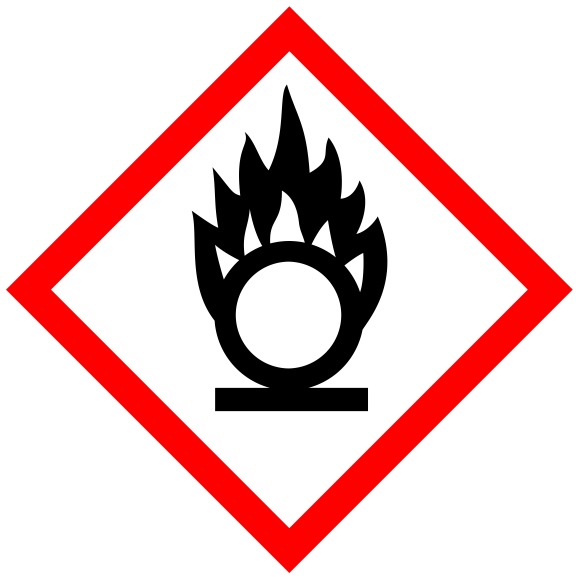 Oxidising
 Corrosive
What to do this week
- Check the label is readable and write down the opened date if it is not already there.
- Check it is stored as oxidiser stock and apart from the items listed under "Do not store with".
- If you no longer need it, add it to your disposal list so it goes on the next collection.
Safe storage in a school or lab
Syringes tend to collect in the whitening cupboard with trays, cotton rolls and cleaning wipes, and that mix is the problem. Pure carbamide peroxide requires segregation from incompatible combustible and reducing materials. Whitening gel syringes should be stored according to their product classification and supplier instructions, away from incompatible stock. It also stays apart from acids, alkalis, corrosives and poisonous stock, since oxidisers can react with each. Keep boxes off the floor and out of direct sun and heat. A surgery that stocks both a solid and ready-made gel should keep them in separate labelled containers, and each box should be dated on receipt so that old batches are used or listed first.
How to tell it has deteriorated
A syringe or tube that looks swollen is the sign that matters, because this compound gives up hydrogen peroxide as it breaks down and that releases oxygen. Also watch for a plunger that has pushed back, a bulging cap or a leaking tip. A gel that has gone thin and watery, a sticky film on the box, or damp, stained packaging point the same way. For the solid, general oxidiser checks apply: caking, a damp look, staining of shelves and corroded caps. A bulging container should not be squeezed or opened. List anything swollen, leaking or undated, and keep it away from other stock.
How it must be disposed of
By specialist collection only. It never goes down the drain or into general waste. It is normally packed in a oxidising laboratory pack with compatible chemicals.
Packing depends on the classification of the actual product. Pure oxidising carbamide peroxide must be segregated from incompatible materials, while whitening syringes are grouped by the collection supplier according to their formulation and transport requirements. Record the form, the number of syringes, whether any are swollen or leaking, and the date on the box. The code for a human healthcare setting is 18 01 06*, with 16 05 06* as the general entry. Unwanted gel must not be squeezed out, left to dry, flushed down a sink or put in clinical or general waste. A registered carrier collects it.
| EWC code, laboratory chemicals | 16 05 06* |
|---|---|
| Discarded organic chemical, not a laboratory pack | 16 05 08* |
| Human healthcare setting | 18 01 06* |
| Hazardous waste | Yes |
The code depends on where the waste came from and what it is mixed with. Use the waste code finder to see why.
Do not store with
- FlammableOxidisers can ignite flammable materials or make a fire far more intense.
- AcidMany oxidisers release toxic gas or become unstable in contact with acid.
- AlkaliSome oxidisers react strongly with alkalis, and ammonia based stock is especially at risk.
- ToxicToxic and oxidising stock are stored apart. A reaction could release toxic vapours.
- CorrosiveCorrosive stock can react with oxidisers, releasing heat or fumes.
Named chemicals to keep apart
- Acetic acidMany oxidisers release toxic gas or become unstable in contact with acid.
- AcetoneOxidisers can ignite flammable materials or make a fire far more intense.
- Ammonia solutionSome oxidisers react strongly with alkalis, and ammonia based stock is especially at risk.
- EthanolOxidisers can ignite flammable materials or make a fire far more intense.
- FormalinToxic and oxidising stock are stored apart. A reaction could release toxic vapours.
- HexaneOxidisers can ignite flammable materials or make a fire far more intense.
- Hydrochloric acidMany oxidisers release toxic gas or become unstable in contact with acid.
- Mercury(II) chlorideToxic and oxidising stock are stored apart. A reaction could release toxic vapours.
Show 9 more
- MethanolOxidisers can ignite flammable materials or make a fire far more intense.
- Nitric acidMany oxidisers release toxic gas or become unstable in contact with acid.
- Potassium hydroxideSome oxidisers react strongly with alkalis, and ammonia based stock is especially at risk.
- Sodium cyanideToxic and oxidising stock are stored apart. A reaction could release toxic vapours.
- Sodium hydroxideSome oxidisers react strongly with alkalis, and ammonia based stock is especially at risk.
- Sulfuric acidMany oxidisers release toxic gas or become unstable in contact with acid.
- Thionyl chlorideCorrosive stock can react with oxidisers, releasing heat or fumes.
- TolueneOxidisers can ignite flammable materials or make a fire far more intense.
- Zinc chlorideCorrosive stock can react with oxidisers, releasing heat or fumes.
Common quantities we collect
Usually held as: tooth whitening gel.
Part-used bottles and full containers are both fine. Tell us the size and how many, and an estimate is enough for a first price.
Where it is commonly held
Hazard statements
- H272 May intensify fire; oxidiser.
- H314 Causes severe skin burns and eye damage.
Precautionary statements
- P210 Keep away from heat, hot surfaces, sparks, open flames and other ignition sources. No smoking.
- P220 Keep away from clothing and other combustible materials.
- P260 Do not breathe dust, fume, gas, mist, vapours or spray.
- P264 Wash hands and exposed skin thoroughly after handling.
- P264+P265 Wash hands and exposed skin thoroughly after handling. Do not touch eyes.
- P280 Wear protective gloves, protective clothing, eye protection and face protection.
- P301+P330+P331 IF SWALLOWED: Rinse mouth. Do NOT induce vomiting.
- P302+P352 IF ON SKIN: Wash with plenty of water.
- P302+P361+P354 IF ON SKIN: Take off immediately all contaminated clothing. Immediately rinse with water for several minutes.
- P304+P340 IF INHALED: Remove person to fresh air and keep comfortable for breathing.
- P305+P354+P338 IF IN EYES: Immediately rinse with water for several minutes. Remove contact lenses, if present and easy to do. Continue rinsing.
- P316 Get emergency medical help immediately.
- P317 Get medical help.
- P321 Specific treatment (see supplemental first aid instruction on this label).
- P332+P317 If skin irritation occurs: Get medical help.
- P362+P364 Take off contaminated clothing. And wash it before reuse.
- P363 Wash contaminated clothing before reuse.
- P370+P378 In case of fire: Use suitable extinguishing media to extinguish.
- P405 Store locked up.
- P501 Dispose of contents and container in accordance with local, regional, national and international regulations.
Substance as classified, dilutions may differ.
Questions
Why are whitening syringes kept away from flammables?
Pure carbamide peroxide has an oxidising classification, but the classification of a whitening gel depends on its formulation. Keep the product separate from materials identified as incompatible in its safety information.
Our syringes have swelled. What does that mean?
The product is breaking down and releasing oxygen, which builds up in a sealed syringe. Do not squeeze or open it. Keep it away from other stock and list it for collection with that description.
Can expired whitening gel go in clinical waste?
No. Expired whitening gel should be listed for specialist collection. Its actual hazard classification depends on the formulation and strength, rather than automatically matching pure carbamide peroxide. Keep it in its labelled boxes and list the number of syringes.
Does the solid need different storage from the gel?
They should be held in separate labelled places, both away from combustible materials. The gel needs checking for swelling and leaks, and the solid for caking and damp. List them as different items.
Related chemicals
Search the chemical database- Ammonium dichromateCAS 7789-09-5Oxidiser



- Ammonium nitrateCAS 6484-52-2Oxidiser

- Ammonium perchlorateCAS 7790-98-9Oxidiser
- Ammonium persulfateCAS 7727-54-0Oxidiser
- Barium nitrateCAS 10022-31-8Oxidiser
- Barium peroxideCAS 1304-29-6Oxidiser