
Chlorine (CAS 7782-50-5): storage and disposal
Chlorine reaches university departments as a liquefied gas in a steel cylinder, often a small one bought for a single research group and then forgotten. It can intensify a fire, is toxic if inhaled and irritates eyes and skin, and it is very toxic to aquatic life. Ownership and valve condition decide what happens next, as most cylinders go back to the supplier and a seized one needs advice first.
- CAS number
- 7782-50-5
- Form
- Gas
- Storage class
- Oxidiser
- Signal word
- Danger
- Usual EWC code
- 16 05 04*
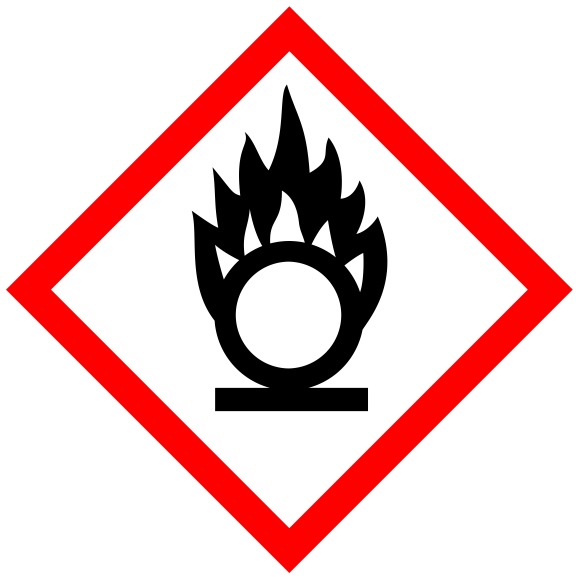 Oxidising
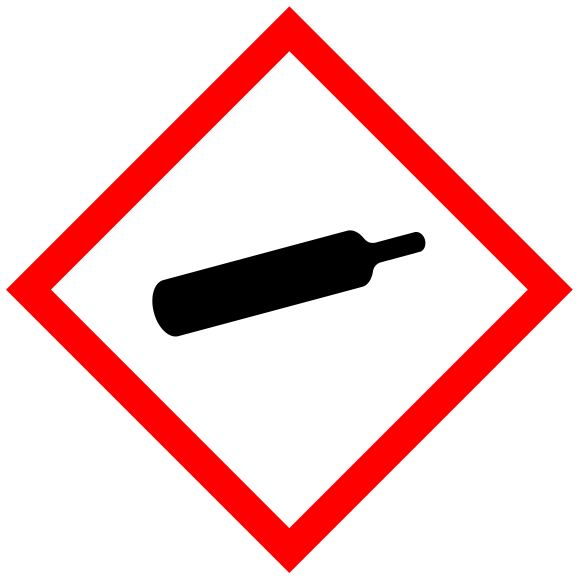 Gas under pressure
 Acute toxicity
 Hazardous to the environment
This chemical is a manual enquiry
This is held as a compressed gas. Cylinders are usually returned to the supplier or handled separately, and they do not go into a laboratory pack.
Held as a compressed or liquefied gas in a pressure container.
It cannot be priced through a form. Please do not open or move it. Call us or send an enquiry and we will talk through the safe next step, which is often a store assessment.
What to do this week
- Leave it where it is. If it looks old, crystalline or damaged, do not open or move it and keep people away from the shelf.
- Write down the label wording, the rough age and where it is stored, from a safe distance.
- Send us those details, and a photo if you can take one without touching it.
Safe storage in a school or lab
Check that the outlet cap and valve guard are in place. An uncapped outlet lets damp air reach the valve, and wet chlorine attacks steel and brass far faster than the dry gas does. Stand the cylinder upright and secured in its own labelled space, on non-combustible shelving if possible, with nothing flammable or organic around it, because an oxidiser like this can intensify a fire. Ammonia is the neighbour to worry about most, so a cylinder of ammonia gas or bottles of ammonia solution must never share that store. Acids, alkalis and other toxic stock also go elsewhere. The gas is heavier than air, so a leak lingers low down. Do not puncture or vent the cylinder.
How to tell it has deteriorated
Inside the cylinder the gas itself does not change. Age shows on the metal instead, because traces that escape combine with damp air and corrode whatever they touch. Look for rust and flaking around the valve, brown staining below the cap and corroded shelf brackets or fittings close by, which can give away a slow leak long before anyone notices a problem. A sharp, bleach like smell in the store is another warning, and a yellow-green tinge in the air means a serious release. Valves on old cylinders often seize, and nobody should force one. If you suspect a leak, clear the area, keep people upwind and call the fire service, as the gas is toxic if inhaled.
How it must be disposed of
This does not go through our standard collection route. It is arranged by manual enquiry, and never goes down the drain or into general waste.
Do not vent chlorine, bubble it through anything to absorb it or force a stiff valve. Any release is toxic if inhaled and very toxic to aquatic life, so it must stay in the cylinder. Most cylinders belong to the gas supplier and go back to them, which makes the shoulder label and the department's old orders the first place to look. Where nobody can be traced, or the valve has seized, send a manual enquiry naming the gas, the size and the valve's condition. Chlorine is not quoted online, it cannot travel in a lab pack, and a store assessment is recommended. It stays upright and secured where it is until advice comes.
| EWC code, laboratory chemicals | 16 05 04* |
|---|---|
| Hazardous waste | Yes |
Gases in pressure containers are assessed by manual enquiry, usually with return to the cylinder owner.
The code depends on where the waste came from and what it is mixed with. Use the waste code finder to see why.
Do not store with
- FlammableOxidisers can ignite flammable materials or make a fire far more intense.
- AcidMany oxidisers release toxic gas or become unstable in contact with acid.
- AlkaliSome oxidisers react strongly with alkalis, and ammonia based stock is especially at risk.
- ToxicToxic and oxidising stock are stored apart. A reaction could release toxic vapours.
- CorrosiveCorrosive stock can react with oxidisers, releasing heat or fumes.
Named chemicals to keep apart
- Acetic acidMany oxidisers release toxic gas or become unstable in contact with acid.
- AcetoneOxidisers can ignite flammable materials or make a fire far more intense.
- Ammonia solutionSome oxidisers react strongly with alkalis, and ammonia based stock is especially at risk.
- EthanolOxidisers can ignite flammable materials or make a fire far more intense.
- FormalinToxic and oxidising stock are stored apart. A reaction could release toxic vapours.
- HexaneOxidisers can ignite flammable materials or make a fire far more intense.
- Hydrochloric acidMany oxidisers release toxic gas or become unstable in contact with acid.
- Mercury(II) chlorideToxic and oxidising stock are stored apart. A reaction could release toxic vapours.
Show 9 more
- MethanolOxidisers can ignite flammable materials or make a fire far more intense.
- Nitric acidMany oxidisers release toxic gas or become unstable in contact with acid.
- Potassium hydroxideSome oxidisers react strongly with alkalis, and ammonia based stock is especially at risk.
- Sodium cyanideToxic and oxidising stock are stored apart. A reaction could release toxic vapours.
- Sodium hydroxideSome oxidisers react strongly with alkalis, and ammonia based stock is especially at risk.
- Sulfuric acidMany oxidisers release toxic gas or become unstable in contact with acid.
- Thionyl chlorideCorrosive stock can react with oxidisers, releasing heat or fumes.
- TolueneOxidisers can ignite flammable materials or make a fire far more intense.
- Zinc chlorideCorrosive stock can react with oxidisers, releasing heat or fumes.
Common quantities we collect
Usually held as: cylinder.
Part-used bottles and full containers are both fine. Tell us the size and how many, and an estimate is enough for a first price.
Where it is commonly held
Hazard statements
- H270 May cause or intensify fire; oxidiser.
- H280 Contains gas under pressure; may explode if heated.
- H315 Causes skin irritation.
- H319 Causes serious eye irritation.
- H331 Toxic if inhaled.
- H335 May cause respiratory irritation.
- H400 Very toxic to aquatic life.
Precautionary statements
- P220 Keep away from clothing and other combustible materials.
- P244 Keep valves and fittings free from oil and grease.
- P261 Avoid breathing dust, fume, gas, mist, vapours or spray.
- P264 Wash hands and exposed skin thoroughly after handling.
- P264+P265 Wash hands and exposed skin thoroughly after handling. Do not touch eyes.
- P271 Use only outdoors or in a well-ventilated area.
- P273 Avoid release to the environment.
- P280 Wear protective gloves, protective clothing, eye protection and face protection.
- P302+P352 IF ON SKIN: Wash with plenty of water.
- P304+P340 IF INHALED: Remove person to fresh air and keep comfortable for breathing.
- P305+P351+P338 IF IN EYES: Rinse cautiously with water for several minutes. Remove contact lenses, if present and easy to do. Continue rinsing.
- P316 Get emergency medical help immediately.
- P319 Get medical help if you feel unwell.
- P321 Specific treatment (see supplemental first aid instruction on this label).
- P332+P317 If skin irritation occurs: Get medical help.
- P337+P317 If eye irritation persists: Get medical help.
- P362+P364 Take off contaminated clothing. And wash it before reuse.
- P370+P376 In case of fire: Stop leak if safe to do so.
- P391 Collect spillage.
- P403 Store in a well-ventilated place.
- P403+P233 Store in a well-ventilated place. Keep container tightly closed.
- P405 Store locked up.
- P501 Dispose of contents and container in accordance with local, regional, national and international regulations.
- P260 Do not breathe dust, fume, gas, mist, vapours or spray.
- P284 In case of inadequate ventilation wear respiratory protection.
- P320 Specific treatment is urgent (see supplemental first aid instruction on this label).
- P410+P403 Protect from sunlight. Store in a well-ventilated place.
Substance as classified, dilutions may differ.
Questions
The valve on our old chlorine cylinder will not turn. Can a workshop free it?
No. A seized valve on this gas usually means corrosion, and force could break it and release the contents. Leave it closed and in place, tell the person responsible for gases and mention the seized valve in your enquiry, because it changes how the cylinder can be collected.
Can a chlorine cylinder share a gas store with an ammonia cylinder?
No. The two react readily, and a slow leak from either would reach the other in an enclosed store. They need separate spaces, with chlorine also kept clear of flammable gases. If you find them side by side, do not move either one until the person responsible for gases has been told.
A faint bleach smell comes and goes near the gas store. Should we act on it?
Yes. Chlorine can be smelled at low levels, so an intermittent smell may be the first sign of a failing valve seal. Keep people out, report it at once and look from a distance for fresh corrosion on the shelving. Do not go in to tighten anything.
Our cylinder has no gauge and is decades old. Could the pressure have gone by now?
Assume it has not. Chlorine is held largely as a liquid, so a sealed cylinder can keep its contents and its pressure for a very long time. Only the supplier or a specialist can establish what remains, and nobody should open the valve to find out.
Related chemicals
Search the chemical database- Ammonium dichromateCAS 7789-09-5Oxidiser


- Ammonium nitrateCAS 6484-52-2Oxidiser

- Ammonium perchlorateCAS 7790-98-9Oxidiser
- Ammonium persulfateCAS 7727-54-0Oxidiser
- Barium nitrateCAS 10022-31-8Oxidiser
- Barium peroxideCAS 1304-29-6Oxidiser