
Red phosphorus (CAS 7723-14-0): storage and disposal
Red phosphorus is held as a dark red powder in school, college and university stores. It is a flammable solid, harmful to aquatic life with long lasting effects, and much less reactive than white phosphorus. Its mixtures with oxidisers, chlorates above all, are sensitive to friction, and that decides where the jar is kept and how a collection is arranged.
- CAS number
- 7723-14-0
- Form
- Solid
- Storage class
- Flammable
- Signal word
- Danger
- Usual EWC code
- 16 05 06*
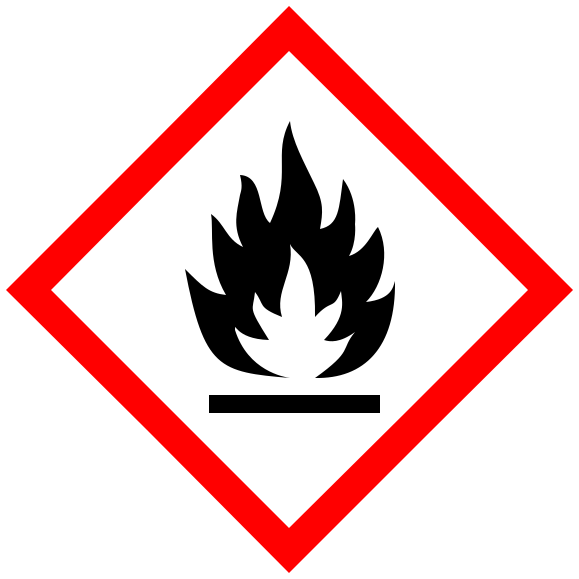 Flammable
What to do this week
- Check the label is readable and write down the opened date if it is not already there.
- Check it is stored as flammable stock and apart from the items listed under "Do not store with".
- If you no longer need it, add it to your disposal list so it goes on the next collection.
Safe storage in a school or lab
Look at the shelf as well as the jar, and check that no chlorate, permanganate or dichromate bottle is within reach. Red phosphorus forms friction sensitive mixtures with oxidisers, especially chlorates, so a spilt grain of powder meeting a spilt crystal is the scenario to design out. Keep it in a ventilated fire-resistant cabinet with spill containment, away from ignition sources, acids and corrosive stock. Calcium hypochlorite, chromium trioxide, hydrogen peroxide, potassium chlorate, potassium dichromate, potassium permanganate, sodium chlorate and sodium dichromate are the named partners to avoid. The jar should be tightly closed and dated on arrival.
How to tell it has deteriorated
The first thing to see is the powder itself, which should look dry, dark red and loose. Old samples can smell of phosphine and acidic deposits may form, so look for damp patches, a crust or a stained cap around the neck, and corroded metal on a lid. A smell noticed near the cabinet is reason enough to flag the jar. Beyond the powder, check for a faded label, a failed seal, a lost stock record or an unknown date of receipt. If the jar looks wet or crusted, leave it closed and ask for advice rather than moving it around the store.
How it must be disposed of
By specialist collection only. It never goes down the drain or into general waste. It is normally packed in a flammable laboratory pack with compatible chemicals.
The entry is 16 05 06*, and the asterisk tells the collector that red phosphorus is handled as hazardous waste because it is a flammable solid and harmful to aquatic life. UN 1338 goes on the description. Nobody should try to burn it off, wash it away or react it, and it must not go into a sink, a drain, a general bin or a skip. The only route is a specialist collector, who packs it in UN approved packaging in a compatible group, apart from chlorates and the other oxidisers named in storage. Say whether the jar is damp, crusted or smells, so the packing can be planned.
| EWC code, laboratory chemicals | 16 05 06* |
|---|---|
| Discarded inorganic chemical, not a laboratory pack | 16 05 07* |
| Hazardous waste | Yes |
The code depends on where the waste came from and what it is mixed with. Use the waste code finder to see why.
Do not store with
- OxidiserOxidisers can ignite flammable materials or make a fire far more intense.
- AcidOxidising acids can ignite flammable materials, and acid fumes attack containers and seals.
- CorrosiveA leak of corrosive stock can break down flammable containers and feed a fire.
Named chemicals to keep apart
- Acetic acidOxidising acids can ignite flammable materials, and acid fumes attack containers and seals.
- Calcium hypochloriteStrong oxidisers can form mixtures with these materials that burn fiercely or explode.
- Chromium trioxideStrong oxidisers can form mixtures with these materials that burn fiercely or explode.
- Hydrochloric acidOxidising acids can ignite flammable materials, and acid fumes attack containers and seals.
- Hydrogen peroxideStrong oxidisers can form mixtures with these materials that burn fiercely or explode.
- Nitric acidOxidising acids can ignite flammable materials, and acid fumes attack containers and seals.
- Potassium chlorateStrong oxidisers can form mixtures with these materials that burn fiercely or explode.
- Potassium dichromateStrong oxidisers can form mixtures with these materials that burn fiercely or explode.
Show 7 more
- Potassium nitrateOxidisers can ignite flammable materials or make a fire far more intense.
- Potassium permanganateStrong oxidisers can form mixtures with these materials that burn fiercely or explode.
- Sodium chlorateStrong oxidisers can form mixtures with these materials that burn fiercely or explode.
- Sodium dichromateStrong oxidisers can form mixtures with these materials that burn fiercely or explode.
- Sulfuric acidOxidising acids can ignite flammable materials, and acid fumes attack containers and seals.
- Thionyl chlorideA leak of corrosive stock can break down flammable containers and feed a fire.
- Zinc chlorideA leak of corrosive stock can break down flammable containers and feed a fire.
Common quantities we collect
Usually held as: powder.
Part-used bottles and full containers are both fine. Tell us the size and how many, and an estimate is enough for a first price.
Where it is commonly held
Hazard statements
- H228 Flammable solid.
- H412 Harmful to aquatic life with long lasting effects.
Precautionary statements
- P210 Keep away from heat, hot surfaces, sparks, open flames and other ignition sources. No smoking.
- P240 Ground and bond container and receiving equipment.
- P241 Use explosion-proof electrical, ventilating and lighting equipment.
- P273 Avoid release to the environment.
- P280 Wear protective gloves, protective clothing, eye protection and face protection.
- P370+P378 In case of fire: Use suitable extinguishing media to extinguish.
- P501 Dispose of contents and container in accordance with local, regional, national and international regulations.
Substance as classified, dilutions may differ.
Questions
Is red phosphorus as dangerous as white phosphorus?
It is a flammable solid and much less reactive than white phosphorus, but it still needs care. It forms friction sensitive mixtures with oxidisers, especially chlorates, so keep it away from them and treat unwanted stock as hazardous waste.
Our red phosphorus jar has a smell and a crust on the lid. What now?
Old samples can smell of phosphine and acidic deposits may form, so both are recognised signs of age. Leave the jar closed in its cabinet, keep people away from it and send a collection enquiry describing the smell and crust so it can be assessed.
Can red phosphorus share a cabinet with chlorates if they sit on different shelves?
No. Friction sensitive mixtures with chlorates and other oxidisers are the main hazard, so they belong in separate cabinets. A spill or a falling bottle does not respect shelf height. Keep red phosphorus with flammable stock and the oxidisers in their own space.
Related chemicals
Search the chemical database- 1,2-DichloroethaneCAS 107-06-2Flammable


- 1,2-DimethoxyethaneCAS 110-71-4Flammable
- 1,4-DioxaneCAS 123-91-1Flammable
- 2,4-DinitrophenylhydrazineCAS 119-26-6Flammable
- 2-Bromo-2-methylpropaneCAS 507-19-7Flammable
- 2-Chloro-2-methylpropaneCAS 507-20-0Flammable