
Cyclohexanone (CAS 108-94-1): storage and disposal
Cyclohexanone sits in school, college and university chemical stores as a neat liquid solvent. It is a flammable liquid and vapour, harmful if swallowed, harmful in contact with skin and harmful if inhaled. It is usually held as a single bottle in a teaching prep room and used rarely, which means it tends to outlive the practical it was bought for. Old, half used bottles are the usual disposal request.
- CAS number
- 108-94-1
- Form
- Liquid
- Storage class
- Flammable
- Signal word
- Warning
- Usual EWC code
- 16 05 06*
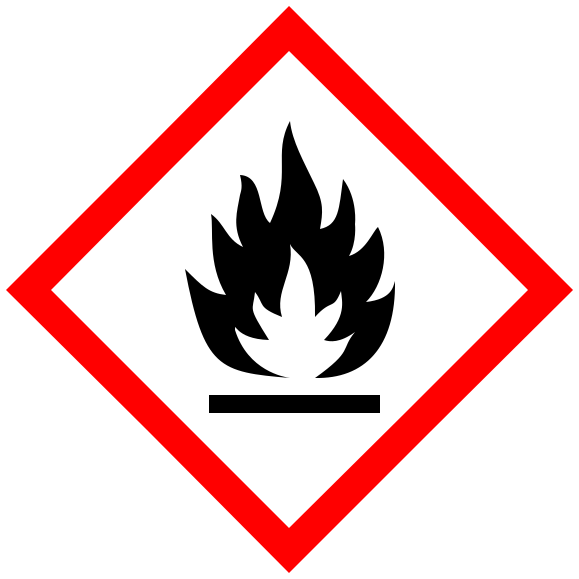 Flammable
 Harmful or irritant
What to do this week
- Check the label is readable and write down the opened date if it is not already there.
- Check it is stored as flammable stock and apart from the items listed under "Do not store with".
- If you no longer need it, add it to your disposal list so it goes on the next collection.
Safe storage in a school or lab
Because it is used rarely, a bottle of cyclohexanone often sits at the back of the solvent cabinet for years. Keep it in a ventilated fire-resistant cabinet with spill containment, away from ignition sources, and keep it clear of oxidisers, which can ignite flammable materials or make a fire far more intense. Oxidising acids are a particular concern on a shared prep room shelf, because they can ignite the liquid and acid fumes attack caps and seals. A corrosive leak can also break down a container and feed a fire. As it is harmful by skin contact and inhalation, handle the bottle with gloves when moving it, and keep the cap tight.
How to tell it has deteriorated
Few visible signs mark this substance as old, so the container does most of the talking. Look at the cap and liner first: some plastics soften or swell in contact with ketone solvents, and a stuck, tacky or distorted cap shows that liquid has crept past the seal. Check the level against the stock list, because a flammable liquid in a loosely closed bottle will lose volume over time. Stained or peeling labels, residue around the neck, a bulging or sucked-in container and any colour change from a clear liquid all count. A bottle without a legible label or date of receipt is treated as unknown stock.
How it must be disposed of
By specialist collection only. It never goes down the drain or into general waste. It is normally packed in a flammable laboratory pack with compatible chemicals.
Teaching stores tend to find cyclohexanone while clearing a prep room, so the practical first step is to write down what is actually on the shelf: bottle size, how full it is, the label wording and any date. The liquid is flammable and harmful by three routes, so it travels in a lab pack with compatible organic solvents. Waste code 16 05 06* is the usual description, and 16 05 08* is used where it is a discarded organic chemical not in a pack. It is never tipped into a sink or put in the bin, and nobody should try to burn or evaporate it off.
| EWC code, laboratory chemicals | 16 05 06* |
|---|---|
| Discarded organic chemical, not a laboratory pack | 16 05 08* |
| Hazardous waste | Yes |
20 01 13* (solvents) belongs to municipal collections and is shown for reference only. It is not the normal code for a laboratory collection.
The code depends on where the waste came from and what it is mixed with. Use the waste code finder to see why.
Do not store with
- OxidiserOxidisers can ignite flammable materials or make a fire far more intense.
- AcidOxidising acids can ignite flammable materials, and acid fumes attack containers and seals.
- CorrosiveA leak of corrosive stock can break down flammable containers and feed a fire.
Named chemicals to keep apart
- Acetic acidOxidising acids can ignite flammable materials, and acid fumes attack containers and seals.
- Calcium hypochloriteOxidisers can ignite flammable materials or make a fire far more intense.
- Hydrochloric acidOxidising acids can ignite flammable materials, and acid fumes attack containers and seals.
- Hydrogen peroxideOxidisers can ignite flammable materials or make a fire far more intense.
- Nitric acidOxidising acids can ignite flammable materials, and acid fumes attack containers and seals.
- Potassium nitrateOxidisers can ignite flammable materials or make a fire far more intense.
- Potassium permanganateOxidisers can ignite flammable materials or make a fire far more intense.
- Sulfuric acidOxidising acids can ignite flammable materials, and acid fumes attack containers and seals.
Show 2 more
- Thionyl chlorideA leak of corrosive stock can break down flammable containers and feed a fire.
- Zinc chlorideA leak of corrosive stock can break down flammable containers and feed a fire.
Common quantities we collect
Usually held as: neat.
Part-used bottles and full containers are both fine. Tell us the size and how many, and an estimate is enough for a first price.
Where it is commonly held
Hazard statements
- H226 Flammable liquid and vapour.
- H302 Harmful if swallowed.
- H312 Harmful in contact with skin.
- H332 Harmful if inhaled.
Precautionary statements
- P210 Keep away from heat, hot surfaces, sparks, open flames and other ignition sources. No smoking.
- P233 Keep container tightly closed.
- P240 Ground and bond container and receiving equipment.
- P241 Use explosion-proof electrical, ventilating and lighting equipment.
- P242 Use non-sparking tools.
- P243 Take action to prevent static discharges.
- P261 Avoid breathing dust, fume, gas, mist, vapours or spray.
- P271 Use only outdoors or in a well-ventilated area.
- P280 Wear protective gloves, protective clothing, eye protection and face protection.
- P303+P361+P353 IF ON SKIN (or hair): Take off immediately all contaminated clothing. Rinse skin with water or shower.
- P304+P340 IF INHALED: Remove person to fresh air and keep comfortable for breathing.
- P317 Get medical help.
- P370+P378 In case of fire: Use suitable extinguishing media to extinguish.
- P403+P235 Store in a well-ventilated place. Keep cool.
- P501 Dispose of contents and container in accordance with local, regional, national and international regulations.
- P264 Wash hands and exposed skin thoroughly after handling.
- P264+P265 Wash hands and exposed skin thoroughly after handling. Do not touch eyes.
- P270 Do not eat, drink or smoke when using this product.
- P301+P317 IF SWALLOWED: Get medical help.
- P302+P352 IF ON SKIN: Wash with plenty of water.
- P305+P354+P338 IF IN EYES: Immediately rinse with water for several minutes. Remove contact lenses, if present and easy to do. Continue rinsing.
- P321 Specific treatment (see supplemental first aid instruction on this label).
- P330 Rinse mouth.
- P332+P317 If skin irritation occurs: Get medical help.
- P362+P364 Take off contaminated clothing. And wash it before reuse.
Substance as classified, dilutions may differ.
Questions
How do we dispose of cyclohexanone left over from an old practical?
Keep it in its original bottle, capped and labelled, and list it with its size and fill level for specialist collection. Do not pour it away or combine it with other solvents, because that changes how it must be described.
Is cyclohexanone stored with the acids in a school prep room?
No. Keep it in the fire-resistant solvent cabinet, apart from acids. Oxidising acids can ignite flammable liquids, and acid fumes attack caps and seals, so the two need separate storage.
Does cyclohexanone go off if it has been on the shelf a long time?
It gives few visible signs of age. Judge the bottle itself: cap condition, level, label and any colour change. If the label is unreadable or the cap has failed, declare it as waste instead of using it.
What should we write on the record before collection?
The name and any CAS number on the label, the bottle size, approximate fill, the condition of the cap and whether it is sealed. Mention the hazards as harmful by skin contact, swallowing and inhalation, as well as flammable.
Related chemicals
Search the chemical database- 1,2-DichloroethaneCAS 107-06-2Flammable

- 1,2-DimethoxyethaneCAS 110-71-4Flammable
- 1,4-DioxaneCAS 123-91-1Flammable
- 2,4-DinitrophenylhydrazineCAS 119-26-6Flammable
- 2-Bromo-2-methylpropaneCAS 507-19-7Flammable
- 2-Chloro-2-methylpropaneCAS 507-20-0Flammable