
Hydrogen sulfide (CAS 7783-06-4): storage and disposal
Hydrogen sulfide reaches university labs in cylinders, including small lecture bottles left behind by old research projects. It is fatal if inhaled and extremely flammable, and it is held under pressure. Its rotten egg smell gives false comfort, because the sense of smell stops registering it as the level rises. That single fact shapes how it should be stored and how an unwanted cylinder is approached.
- CAS number
- 7783-06-4
- Form
- Gas
- Storage class
- Flammable
- Signal word
- Danger
- Usual EWC code
- 16 05 04*
 Flammable
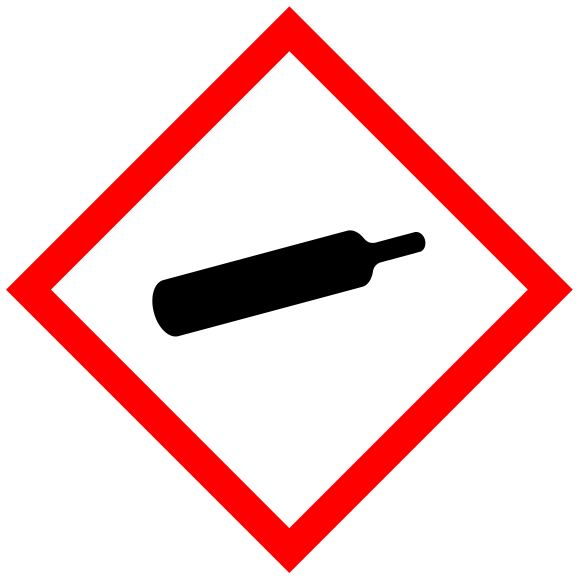 Gas under pressure
 Acute toxicity
 Hazardous to the environment
This chemical is a manual enquiry
This is held as a compressed gas. Cylinders are usually returned to the supplier or handled separately, and they do not go into a laboratory pack.
Held as a compressed or liquefied gas in a pressure container.
It cannot be priced through a form. Please do not open or move it. Call us or send an enquiry and we will talk through the safe next step, which is often a store assessment.
What to do this week
- Leave it where it is. If it looks old, crystalline or damaged, do not open or move it and keep people away from the shelf.
- Write down the label wording, the rough age and where it is stored, from a safe distance.
- Send us those details, and a photo if you can take one without touching it.
Safe storage in a school or lab
Anything oxidising must stay well clear of hydrogen sulfide, because oxidisers can ignite it or make a fire far more intense. Oxidising acids are a particular risk for the same reason, and acid fumes attack seals, so a shared acid and gas store is unsuitable. Stand each cylinder upright and secured in a ventilated space away from heat, ideally with fixed gas detection, as the nose is not a reliable alarm. Small lecture bottles need extra attention, since they get pushed to the back of cupboards and fall over. Valuable silver or copper items are best kept elsewhere too, as they tarnish black in traces of the gas. Never puncture or vent a cylinder.
How to tell it has deteriorated
Pitting or rust on the valve and shoulder, with a label too faded to read, usually marks a cylinder nobody has looked at for years. Moist hydrogen sulfide attacks steel, so a corroded valve deserves more concern here than on an inert gas. Inside, it gives few visible signs of age. A useful clue sits around the cylinder: silver, copper and brass nearby tarnish black where traces have been escaping, and lead based paint can darken too. Do not rely on smell. A rotten egg odour that fades may mean the nose has stopped working and not that the gas has gone. Leave at once, keep others out and call the fire service if a leak seems possible.
How it must be disposed of
This does not go through our standard collection route. It is arranged by manual enquiry, and never goes down the drain or into general waste.
Never crack the valve to see whether a hydrogen sulfide cylinder still holds gas, and never vent it or put it in a bin or a skip. It is fatal if inhaled and very toxic to aquatic life, so even a small release matters. Check for a supplier name first, since most cylinders return to the gas supplier. Lecture bottles can be harder, because some were sold as non-returnable. In that case, or where nobody can be traced, send a manual enquiry giving the size, the markings and the valve's condition. These cylinders are not quoted online, a lab pack is ruled out for any pressure container, and a store assessment is recommended. Leave it in place until advice comes.
| EWC code, laboratory chemicals | 16 05 04* |
|---|---|
| Hazardous waste | Yes |
Gases in pressure containers are assessed by manual enquiry, usually with return to the cylinder owner.
The code depends on where the waste came from and what it is mixed with. Use the waste code finder to see why.
Do not store with
- OxidiserOxidisers can ignite flammable materials or make a fire far more intense.
- AcidOxidising acids can ignite flammable materials, and acid fumes attack containers and seals.
- CorrosiveA leak of corrosive stock can break down flammable containers and feed a fire.
Named chemicals to keep apart
- Acetic acidOxidising acids can ignite flammable materials, and acid fumes attack containers and seals.
- Calcium hypochloriteOxidisers can ignite flammable materials or make a fire far more intense.
- Hydrochloric acidOxidising acids can ignite flammable materials, and acid fumes attack containers and seals.
- Hydrogen peroxideOxidisers can ignite flammable materials or make a fire far more intense.
- Nitric acidOxidising acids can ignite flammable materials, and acid fumes attack containers and seals.
- Potassium nitrateOxidisers can ignite flammable materials or make a fire far more intense.
- Potassium permanganateOxidisers can ignite flammable materials or make a fire far more intense.
- Sulfuric acidOxidising acids can ignite flammable materials, and acid fumes attack containers and seals.
Show 2 more
- Thionyl chlorideA leak of corrosive stock can break down flammable containers and feed a fire.
- Zinc chlorideA leak of corrosive stock can break down flammable containers and feed a fire.
Common quantities we collect
Usually held as: cylinder.
Part-used bottles and full containers are both fine. Tell us the size and how many, and an estimate is enough for a first price.
Where it is commonly held
Hazard statements
- H220 Extremely flammable gas.
- H280 Contains gas under pressure; may explode if heated.
- H330 Fatal if inhaled.
- H400 Very toxic to aquatic life.
Precautionary statements
- P203 Obtain, read and follow all safety instructions before use.
- P210 Keep away from heat, hot surfaces, sparks, open flames and other ignition sources. No smoking.
- P222 Do not allow contact with air.
- P260 Do not breathe dust, fume, gas, mist, vapours or spray.
- P271 Use only outdoors or in a well-ventilated area.
- P273 Avoid release to the environment.
- P280 Wear protective gloves, protective clothing, eye protection and face protection.
- P284 In case of inadequate ventilation wear respiratory protection.
- P304+P340 IF INHALED: Remove person to fresh air and keep comfortable for breathing.
- P316 Get emergency medical help immediately.
- P320 Specific treatment is urgent (see supplemental first aid instruction on this label).
- P377 Leaking gas fire: Do not extinguish, unless leak can be stopped safely.
- P381 In case of leakage, eliminate all ignition sources.
- P391 Collect spillage.
- P403 Store in a well-ventilated place.
- P403+P233 Store in a well-ventilated place. Keep container tightly closed.
- P405 Store locked up.
- P501 Dispose of contents and container in accordance with local, regional, national and international regulations.
- P410+P403 Protect from sunlight. Store in a well-ventilated place.
Substance as classified, dilutions may differ.
Questions
We smelled rotten eggs near the store earlier, but it has faded. Has the leak stopped?
You cannot conclude that. Hydrogen sulfide dulls the sense of smell, so a fading odour may mean the level has risen and your nose has stopped detecting it. Stay out, keep others out and call the fire service. Do not go back in to check.
An old lecture bottle has no supplier name on it. Who takes it?
Possibly nobody through the usual return, because some small bottles were sold outright. Keep it where it is and send a manual enquiry describing the markings, the valve and how it is stored. Avoid carrying it to a central store first, since a failing valve on this gas leaves little margin.
Should a store holding hydrogen sulfide have a gas detector?
It is a sensible thing to raise with your safety adviser, because smell cannot be relied on and the gas is fatal if inhaled. Detection only helps if someone knows what to do when it sounds, so agree who responds and keep people out until they have done so.
Could the gas in a very old cylinder have lost its strength by now?
Do not assume so. There is no visible way to tell what the cylinder now holds, and even a small residual amount of this gas is dangerous. Treat any old cylinder as still holding gas under pressure, and leave the valve closed until a specialist has seen it.
Related chemicals
Search the chemical database- 1,2-DichloroethaneCAS 107-06-2Flammable


- 1,2-DimethoxyethaneCAS 110-71-4Flammable
- 1,4-DioxaneCAS 123-91-1Flammable
- 2,4-DinitrophenylhydrazineCAS 119-26-6Flammable
- 2-Bromo-2-methylpropaneCAS 507-19-7Flammable
- 2-Chloro-2-methylpropaneCAS 507-20-0Flammable