
Hydrogen (CAS 1333-74-0): storage and disposal
Hydrogen reaches schools, colleges and university labs as compressed gas in a steel cylinder, often a small one kept for demonstrations or instrument work. It is classified as extremely flammable and burns with a flame you cannot see in normal light. Ownership usually decides what happens next, because most cylinders belong to the gas supplier and go back to them. Anything else needs an enquiry, as we do not quote for it online.
- CAS number
- 1333-74-0
- Form
- Gas
- Storage class
- Flammable
- Signal word
- Danger
- Usual EWC code
- 16 05 04*
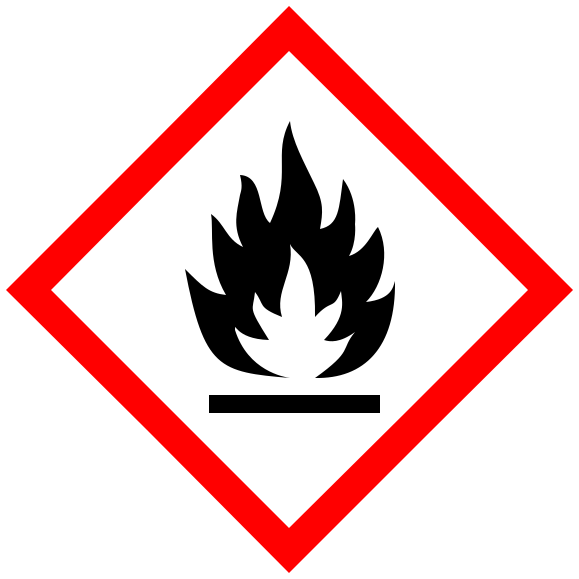 Flammable
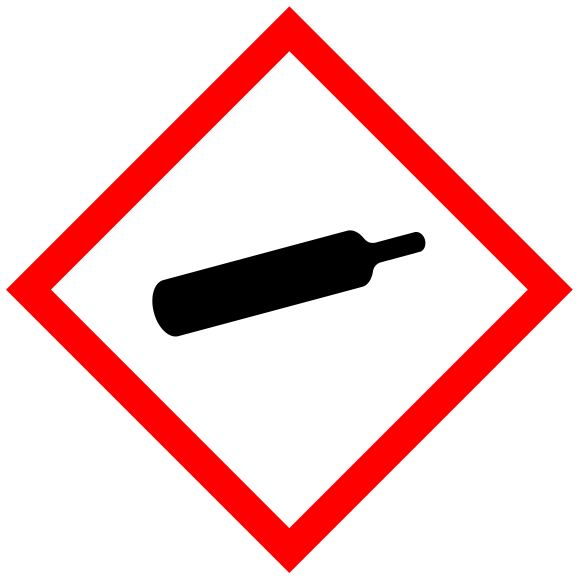 Gas under pressure
This chemical is a manual enquiry
This is a gas held under pressure, liquefied or in solid or cryogenic form. Cylinders and dewars are usually returned to the supplier or handled separately, and they do not go into a laboratory pack.
Held as a compressed or liquefied gas in a pressure container.
It cannot be priced through a form. Please do not open or move it. Call us or send an enquiry and we will talk through the next step, which depends on what it is. Keep following your own procedures for controlled drugs, radioactive materials, gases and asbestos.
What to do this week
- Leave it where it is. If it looks old, crystalline or damaged, do not open or move it and keep people away from the shelf. If there is immediate danger, such as a leak, fumes or a fire, leave the area and call 999.
- Write down the label wording, the rough age and where it is stored, from a safe distance.
- Send us those details, and a photo if you can take one without touching it.
Safe storage in a school or lab
Look at the chain or bracket first: a hydrogen cylinder should stand upright and be held so it cannot fall, including a small one tucked at the back of a prep room. Then read the shoulder label and find out who owns it, since that decides its route later. Keep it away from heat and ignition sources, and separate from oxygen and other oxidisers, which can make a fire far more intense. Acids and corrosive stock stay elsewhere too, because their fumes attack valves and seals. Ventilation should reach ceiling height, as the gas is much lighter than air and a leak gathers at the highest point of a room. Never puncture the cylinder or vent it to empty it.
How to tell it has deteriorated
Rust, dents, a bent valve or a missing valve guard tell you more than anything else, along with a shoulder label faded beyond reading. Hydrogen itself does not go off in the cylinder, so age shows in the steel and the markings rather than in the gas. Look too for periodic test stamps that are long out of date and a supplier name nobody recognises. A leak is harder to judge, because the gas has no colour or smell, and a leak that catches fire may show no visible flame at all. Any hissing, a damaged valve or a cylinder found close to a heat source needs reporting straight away to whoever looks after gases on site. Do not try to tighten or open anything.
How it is disposed of
This does not go through our standard collection route. It is arranged by manual enquiry, and never goes down the drain or into general waste.
Lab packs are how most bottled chemicals are grouped for collection, but a hydrogen cylinder cannot join one, because pressure containers do not go in a lab pack. Its usual exit is back to the gas supplier, so the first job is finding the supplier's name on the cylinder or in a hire record. Where the owner has gone or the markings are lost, send a manual enquiry describing the size, the markings and where it stands. We do not quote for hydrogen cylinders online, and a store assessment is recommended. Until advice comes, leave it upright and secured where it is. It must never go in a skip or a general waste bin, and nobody should try to vent or puncture it first.
| Usual EWC code | 16 05 04* |
|---|---|
| Usually classed as hazardous waste | Yes |
Gases in pressure containers are assessed by manual enquiry, usually with return to the cylinder owner.
The code depends on where the waste came from and what it contains, and classifying it is the producer's duty. Use the waste code finder to see why.
Do not store with
- OxidiserOxidisers can ignite flammable materials or make a fire far more intense.
- AcidSome acids, especially oxidising acids, can ignite flammable materials, and acid fumes attack containers and seals.
- CorrosiveA leak of corrosive stock can break down flammable containers and feed a fire.
Named chemicals to keep apart
- Acetic acidOxidising acids can ignite flammable materials, and acid fumes attack containers and seals.
- Calcium hypochloriteOxidisers can ignite flammable materials or make a fire far more intense.
- Hydrochloric acidOxidising acids can ignite flammable materials, and acid fumes attack containers and seals.
- Hydrogen peroxideOxidisers can ignite flammable materials or make a fire far more intense.
- Nitric acidOxidising acids can ignite flammable materials, and acid fumes attack containers and seals.
- Potassium nitrateOxidisers can ignite flammable materials or make a fire far more intense.
- Potassium permanganateOxidisers can ignite flammable materials or make a fire far more intense.
- Sulfuric acidOxidising acids can ignite flammable materials, and acid fumes attack containers and seals.
Show 2 more
- Thionyl chlorideA leak of corrosive stock can break down flammable containers and feed a fire.
- Zinc chlorideA leak of corrosive stock can break down flammable containers and feed a fire.
Common quantities
Usually held as: cylinder.
Tell us the container size and how many you hold. An estimate is enough to start with, and some items cannot be priced until someone has looked at them.
Where it is commonly held
Hazard statements
- H220 Extremely flammable gas.
- H280 Contains gas under pressure; may explode if heated.
Precautionary statements
- P203 Obtain, read and follow all safety instructions before use.
- P210 Keep away from heat, hot surfaces, sparks, open flames and other ignition sources. No smoking.
- P222 Do not allow contact with air.
- P280 Wear protective gloves, protective clothing, eye protection and face protection.
- P377 Leaking gas fire: Do not extinguish, unless leak can be stopped safely.
- P381 In case of leakage, eliminate all ignition sources.
- P403 Store in a well-ventilated place.
- P282 Wear cold insulating gloves and either face shield or eye protection.
- P336+P317 Thaw frosted parts with lukewarm water. Do not rub affected area. Get medical help.
- P410+P403 Protect from sunlight. Store in a well-ventilated place.
Substance as classified, dilutions may differ.
Questions
Can a small hydrogen cylinder go in with our other lab chemicals for collection?
No. Pressure containers stay out of a lab pack, however small they are. Check first whether the gas supplier will take it back, which is the usual outcome. If they will not, or no owner can be traced, send a manual enquiry, as this item is not quoted online.
Does it matter where the ventilation is in a room holding hydrogen?
Yes. Hydrogen is far lighter than air, so escaping gas rises and can gather under a ceiling or in the top of an enclosed space. High level ventilation suits it better than a vent near the floor. Keep ignition sources away from the upper part of the room as well as around the cylinder.
Our cylinder has sat in the prep room for years with no record. Has the gas lost its hazard?
No. Hydrogen does not break down with age, so an old cylinder stays extremely flammable and still under pressure. Assume it holds gas unless the supplier confirms otherwise. Keep it upright and secured, look for a supplier's name and raise an enquiry if nobody can claim it.
How would we know if a hydrogen leak had caught fire?
You may not be able to see it, because the flame is invisible in normal light. Do not walk up to a hissing cylinder to look closer. Clear the area, keep others out and call the fire service.
Related chemicals
Search the chemical database- 1,2-DichloroethaneCAS 107-06-2Flammable


- 1,2-DimethoxyethaneCAS 110-71-4Flammable
- 1,4-DioxaneCAS 123-91-1Flammable
- 2,4-DinitrophenylhydrazineCAS 119-26-6Flammable
- 2-Bromo-2-methylpropaneCAS 507-19-7Flammable
- 2-Chloro-2-methylpropaneCAS 507-20-0Flammable