
Magnesium perchlorate (CAS 10034-81-8): storage and disposal
University labs use magnesium perchlorate as a drying agent, in gas drying tubes and desiccators, which is why it so often turns up as part used granules inside equipment. It may intensify fire, irritates skin, eyes and airways, and forms explosive mixtures with organic material. Spent desiccant keeps the hazard, so a used tube is no lesser item than a full bottle. It is not quoted online, and each holding goes through a manual enquiry.
- CAS number
- 10034-81-8
- Form
- Solid
- Storage class
- Oxidiser
- Signal word
- Danger
- Usual EWC code
- 16 05 06*
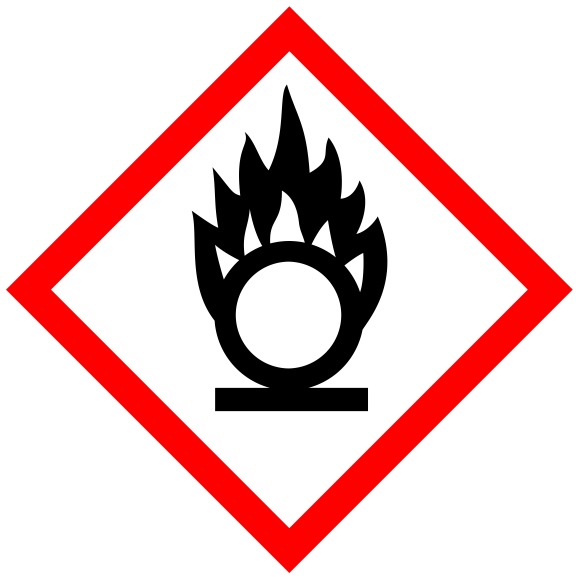 Oxidising
 Harmful or irritant
This chemical is a manual enquiry
This can become unstable or explosive, especially if it is old or has dried out. Nobody should move it until someone competent has looked at it, so we start with a conversation and usually a store assessment.
Perchlorate desiccant: explosive mixtures with organic material.
It cannot be priced through a form. Please do not open or move it. Call us or send an enquiry and we will talk through the safe next step, which is often a store assessment.
What to do this week
- Leave it where it is. If it looks old, crystalline or damaged, do not open or move it and keep people away from the shelf.
- Write down the label wording, the rough age and where it is stored, from a safe distance.
- Send us those details, and a photo if you can take one without touching it.
Safe storage in a school or lab
A university lab tends to have it in two places: a bottle in the oxidiser store and working charges on the bench. The bottle belongs on non-combustible shelving, apart from flammable and corrosive stock. The bench is where things go wrong, because a drying tube or desiccator brings the salt close to cotton wool plugs, rubber tubing, stoppers and vacuum grease, all of which are organic. Old apparatus left on a back shelf after a project ended is the classic find. Label any working charge with the name of the drying agent, as a tube of white granules looks much like one holding silica gel. Nobody should reuse a charge or dry it out in an oven. Leave forgotten apparatus assembled and ask for advice.
How to tell it has deteriorated
Water is what it is there to take up, so it changes in use. Fresh granules are white and free running, and they clump and then form a wet, sticky mass as they take on moisture. That is normal for a spent drying agent, and it does not remove the hazard. What matters is organic contact: discolouration from vapours in the gas stream, grease on a desiccator flange touching the salt, or a cotton plug that has been soaked. A bottle in the store gives few visible signs of age beyond clumping, a crust at the neck or a stained label. An unlabelled drying tube of uncertain use deserves caution. Do not scrape out a tube or open a desiccator that has been sitting for years.
How it must be disposed of
This does not go through our standard collection route. It is arranged by manual enquiry, and never goes down the drain or into general waste.
Grouping it with other drying agents is the mistake to avoid. A tray of used silica gel is one thing, but this salt forms explosive mixtures with organic material, and it is not quoted online. The online quote path does not accept it. Send a manual enquiry, and a store assessment is recommended, with a competent chemist seeing it in person, because old apparatus may have had years of contact with grease and plugs. Warning signs may bring in an explosives or emergency specialist. List full bottles, working charges and any apparatus still assembled. Do not open it, move it, empty a tube or try to make it safe. It must never go into a sink, a drain, a bin or a skip.
| EWC code, laboratory chemicals | 16 05 06* |
|---|---|
| Discarded inorganic chemical, not a laboratory pack | 16 05 07* |
| Hazardous waste | Yes |
The code depends on where the waste came from and what it is mixed with. Use the waste code finder to see why.
Do not store with
- FlammableOxidisers can ignite flammable materials or make a fire far more intense.
- AcidMany oxidisers release toxic gas or become unstable in contact with acid.
- AlkaliSome oxidisers react strongly with alkalis, and ammonia based stock is especially at risk.
- ToxicToxic and oxidising stock are stored apart. A reaction could release toxic vapours.
- CorrosiveCorrosive stock can react with oxidisers, releasing heat or fumes.
Named chemicals to keep apart
- Acetic acidMany oxidisers release toxic gas or become unstable in contact with acid.
- AcetoneOxidisers can ignite flammable materials or make a fire far more intense.
- Ammonia solutionSome oxidisers react strongly with alkalis, and ammonia based stock is especially at risk.
- EthanolOxidisers can ignite flammable materials or make a fire far more intense.
- FormalinToxic and oxidising stock are stored apart. A reaction could release toxic vapours.
- HexaneOxidisers can ignite flammable materials or make a fire far more intense.
- Hydrochloric acidMany oxidisers release toxic gas or become unstable in contact with acid.
- Mercury(II) chlorideToxic and oxidising stock are stored apart. A reaction could release toxic vapours.
Show 9 more
- MethanolOxidisers can ignite flammable materials or make a fire far more intense.
- Nitric acidMany oxidisers release toxic gas or become unstable in contact with acid.
- Potassium hydroxideSome oxidisers react strongly with alkalis, and ammonia based stock is especially at risk.
- Sodium cyanideToxic and oxidising stock are stored apart. A reaction could release toxic vapours.
- Sodium hydroxideSome oxidisers react strongly with alkalis, and ammonia based stock is especially at risk.
- Sulfuric acidMany oxidisers release toxic gas or become unstable in contact with acid.
- Thionyl chlorideCorrosive stock can react with oxidisers, releasing heat or fumes.
- TolueneOxidisers can ignite flammable materials or make a fire far more intense.
- Zinc chlorideCorrosive stock can react with oxidisers, releasing heat or fumes.
Common quantities we collect
Usually held as: desiccant.
Part-used bottles and full containers are both fine. Tell us the size and how many, and an estimate is enough for a first price.
Where it is commonly held
Hazard statements
- H272 May intensify fire; oxidiser.
- H315 Causes skin irritation.
- H319 Causes serious eye irritation.
- H335 May cause respiratory irritation.
Precautionary statements
- P210 Keep away from heat, hot surfaces, sparks, open flames and other ignition sources. No smoking.
- P220 Keep away from clothing and other combustible materials.
- P261 Avoid breathing dust, fume, gas, mist, vapours or spray.
- P264 Wash hands and exposed skin thoroughly after handling.
- P264+P265 Wash hands and exposed skin thoroughly after handling. Do not touch eyes.
- P270 Do not eat, drink or smoke when using this product.
- P271 Use only outdoors or in a well-ventilated area.
- P280 Wear protective gloves, protective clothing, eye protection and face protection.
- P283 Wear fire resistant or flame retardant clothing.
- P301+P317 IF SWALLOWED: Get medical help.
- P302+P352 IF ON SKIN: Wash with plenty of water.
- P304+P340 IF INHALED: Remove person to fresh air and keep comfortable for breathing.
- P305+P351+P338 IF IN EYES: Rinse cautiously with water for several minutes. Remove contact lenses, if present and easy to do. Continue rinsing.
- P306+P360 IF ON CLOTHING: Rinse immediately contaminated clothing and skin with plenty of water before removing clothes.
- P319 Get medical help if you feel unwell.
- P321 Specific treatment (see supplemental first aid instruction on this label).
- P330 Rinse mouth.
- P332+P317 If skin irritation occurs: Get medical help.
- P337+P317 If eye irritation persists: Get medical help.
- P362+P364 Take off contaminated clothing. And wash it before reuse.
- P370+P378 In case of fire: Use suitable extinguishing media to extinguish.
- P371+P380+P375 In case of major fire and large quantities: Evacuate area. Fight fire remotely due to the risk of explosion.
- P403+P233 Store in a well-ventilated place. Keep container tightly closed.
- P405 Store locked up.
- P420 Store separately.
- P501 Dispose of contents and container in accordance with local, regional, national and international regulations.
Substance as classified, dilutions may differ.
Questions
The desiccant is spent. Does it still count as a perchlorate?
Yes. Spent desiccant keeps the hazard, because water uptake does not change the perchlorate. A wet sticky charge can still form explosive mixtures with organic material. List it in your enquiry alongside any unused bottles, and say what apparatus it is in.
Can we regenerate it in an oven as we do with silica gel?
No. Heating a perchlorate that may have touched grease, rubber or cotton is a serious explosion risk, and it does not behave like silica gel. Keep the charges labelled and out of ovens. Send an enquiry for anything you no longer need.
How should we deal with an old desiccator with a greased flange?
Leave it closed and in place, because the grease is organic and it may have reached the salt. Note the age if you know it, and whether you can see any contact between grease and granules. Include that in your enquiry, and keep others from opening it in the meantime.
Related chemicals
Search the chemical database- Ammonium dichromateCAS 7789-09-5Oxidiser




- Ammonium nitrateCAS 6484-52-2Oxidiser
- Ammonium perchlorateCAS 7790-98-9Oxidiser

- Ammonium persulfateCAS 7727-54-0Oxidiser
- Barium nitrateCAS 10022-31-8Oxidiser
- Barium peroxideCAS 1304-29-6Oxidiser