
Methenamine (CAS 100-97-0): storage and disposal
Methenamine, also called hexamethylenetetramine, is a white crystalline solid that appears in histology silver stain kits, teaching labs and pharmacy stock. It is a flammable solid and may cause an allergic skin reaction. In a histology room it tends to sit with the silver stain reagents, which puts it near acids and oxidising stock that it should not share a shelf with.
- CAS number
- 100-97-0
- Form
- Solid
- Storage class
- Flammable
- Signal word
- Warning
- Usual EWC code, laboratory stock
- 16 05 06*
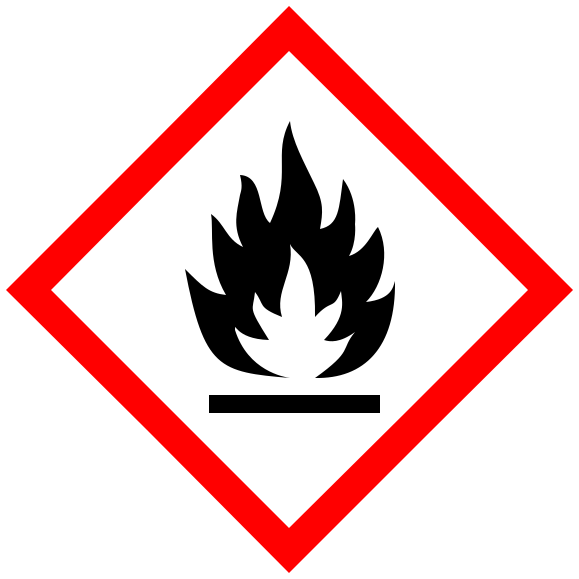 Flammable
 Harmful or irritant
What to do this week
- Without moving anything that looks damaged, check the label is readable and write down the opened date if it is not already there.
- Check it is stored as flammable stock, and apart from anything listed under "Do not store with" on this page. If nothing is listed, that does not prove it is safe with everything.
- If you no longer need it, add it to your disposal list so it can be included in a collection.
Safe storage in a school or lab
On a histology bench it is usually found beside the silver stain reagents, and that shelf is where it needs to be sorted out. As a flammable solid it belongs in a ventilated fire-resistant cabinet with spill containment, away from ignition sources. Oxidisers can ignite it or make a fire far more intense, and acids break it down, so neither should be in the same cabinet. A leak from incompatible acid or oxidising stock can also create a dangerous reaction. Keep the cap tight so that damp air stays out, and put gloves on to handle it, since it can sensitise skin. School and pharmacy holders should keep small jars together and label them.
How to tell it has deteriorated
Old methenamine can clump and cake after exposure to moisture, so a jar that was free-flowing powder and now forms a hard lump may have been exposed to damp air through a poor seal or during previous use. Other signs are a faded or stained label, a cap thread coated in powder, a lower level than the record shows and a missing date of receipt. Check histology kits for expiry marks printed by the maker and for loose reagent jars that have been separated from the kit. The substance gives few other visible signs of age. A jar that has fused to its cap should be left as it is and declared as it stands.
How it is disposed of
We arrange this by specialist collection. We do not publish a drain or general waste route for any chemical. It is normally packed in a flammable laboratory pack with compatible chemicals.
A lab pack is how it leaves: methenamine is packed with compatible organic solids, kept away from acids and oxidising stock. Waste code 16 05 06* is the usual description, with 18 01 06* in a human healthcare setting such as a pharmacy or hospital histology laboratory, and 16 05 08* for a discarded organic chemical outside a pack. Record the jar weight, whether it is caked and whether it belongs to a stain kit, since kits contain other reagents that must be listed separately. It is a flammable solid, so it is never burned or put in the bin.
| Usual EWC code, laboratory stock | 16 05 06* |
|---|---|
| Discarded organic chemical, not a laboratory pack | 16 05 08* |
| Human healthcare setting | 18 01 06* |
| Usually classed as hazardous waste | Yes |
The code depends on where the waste came from and what it contains, and classifying it is the producer's duty. Use the waste code finder to see why.
Do not store with
- OxidiserOxidisers can ignite flammable materials or make a fire far more intense.
- AcidSome acids, especially oxidising acids, can ignite flammable materials, and acid fumes attack containers and seals.
- CorrosiveA leak of corrosive stock can break down flammable containers and feed a fire.
Named chemicals to keep apart
- Acetic acidOxidising acids can ignite flammable materials, and acid fumes attack containers and seals.
- Calcium hypochloriteOxidisers can ignite flammable materials or make a fire far more intense.
- Hydrochloric acidOxidising acids can ignite flammable materials, and acid fumes attack containers and seals.
- Hydrogen peroxideOxidisers can ignite flammable materials or make a fire far more intense.
- Nitric acidOxidising acids can ignite flammable materials, and acid fumes attack containers and seals.
- Potassium nitrateOxidisers can ignite flammable materials or make a fire far more intense.
- Potassium permanganateOxidisers can ignite flammable materials or make a fire far more intense.
- Sulfuric acidOxidising acids can ignite flammable materials, and acid fumes attack containers and seals.
Show 2 more
- Thionyl chlorideA leak of corrosive stock can break down flammable containers and feed a fire.
- Zinc chlorideA leak of corrosive stock can break down flammable containers and feed a fire.
Common quantities
Usually held as: solid, histology silver stains.
Tell us the container size and how many you hold. An estimate is enough to start with, and some items cannot be priced until someone has looked at them.
Where it is commonly held
Hazard statements
- H228 Flammable solid.
- H317 May cause an allergic skin reaction.
Precautionary statements
- P210 Keep away from heat, hot surfaces, sparks, open flames and other ignition sources. No smoking.
- P240 Ground and bond container and receiving equipment.
- P241 Use explosion-proof electrical, ventilating and lighting equipment.
- P261 Avoid breathing dust, fume, gas, mist, vapours or spray.
- P272 Contaminated work clothing should not be allowed out of the workplace.
- P280 Wear protective gloves, protective clothing, eye protection and face protection.
- P302+P352 IF ON SKIN: Wash with plenty of water.
- P321 Specific treatment (see supplemental first aid instruction on this label).
- P333+P317 If skin irritation or rash occurs: Get medical help.
- P362+P364 Take off contaminated clothing. And wash it before reuse.
- P370+P378 In case of fire: Use suitable extinguishing media to extinguish.
- P501 Dispose of contents and container in accordance with local, regional, national and international regulations.
Substance as classified, dilutions may differ.
Questions
Can methenamine go in the same cabinet as the silver stain reagents?
Not if that cabinet holds oxidisers or acids. Methenamine is a flammable solid and acids break it down. Put it in the fire-resistant cabinet and keep the other stain reagents in their own storage.
Our methenamine has set into a hard lump. Can we break it up?
No. Leave it in the jar, tightly capped, and declare it caked. Breaking up a flammable solid creates dust and handling risk, and the collector can pack a caked jar as it stands.
Is a histology stain kit one waste item or several?
Several. Each reagent in the kit is described by its own contents, and the methenamine jar is listed as a flammable solid. List the parts separately and keep incompatible reagents in their appropriate storage locations.
Which waste code do pharmacies use?
In a human healthcare setting the description may be 18 01 06*, while school and university stores would usually use 16 05 06*. Give the collector the type of site and the container details.
Related chemicals
Search the chemical database- 1,2-DichloroethaneCAS 107-06-2Flammable

- 1,2-DimethoxyethaneCAS 110-71-4Flammable
- 1,4-DioxaneCAS 123-91-1Flammable
- 2,4-DinitrophenylhydrazineCAS 119-26-6Flammable
- 2-Bromo-2-methylpropaneCAS 507-19-7Flammable
- 2-Chloro-2-methylpropaneCAS 507-20-0Flammable