
Methyl methacrylate (CAS 80-62-6): storage and disposal
Methyl methacrylate is the sharp smelling monomer behind acrylic resin. Dental surgeries hold it as the liquid half of a powder and liquid acrylic system, while college and university labs tend to keep it neat. It is a highly flammable liquid and a skin sensitiser. What decides its handling is whether the bottle still holds a free running liquid with working inhibitor, or has begun to turn into polymer.
- CAS number
- 80-62-6
- Form
- Liquid
- Storage class
- Flammable
- Signal word
- Danger
- Usual EWC code
- 16 05 06*
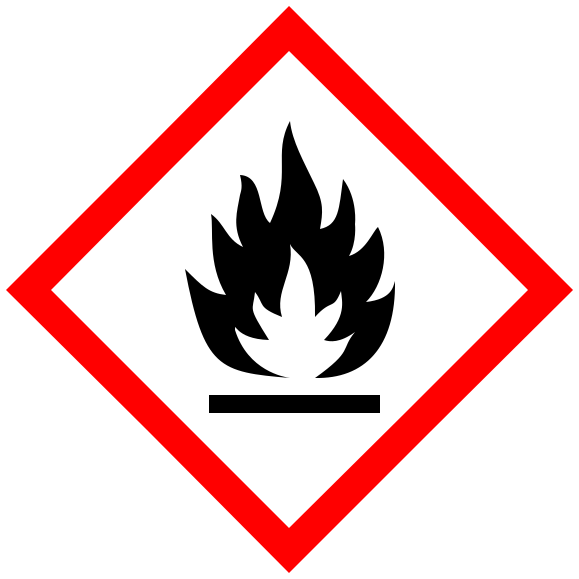 Flammable
 Harmful or irritant
What to do this week
- Leave it where it is. If it looks old, crystalline or damaged, do not open or move it and keep people away from the shelf.
- Write down the label wording, the rough age and where it is stored, from a safe distance.
- Send us those details, and a photo if you can take one without touching it.
Safe storage in a school or lab
Dental acrylic liquid usually arrives as a small bottle sold alongside the matching powder, and the pair often end up together on a laboratory bench or in a surgery cupboard. That habit is the usual fault. The liquid gives off highly flammable vapour, so it belongs in a ventilated fire-resistant cabinet with spill containment, even when the powder stays elsewhere. Keep it clear of oxidisers and acids. Heat can set off polymerisation, which rules out a sunny windowsill or a shelf above a steriliser. Write the date of receipt and first opening on the label, because this monomer relies on date checks. Close the cap firmly after each use, as residue on the outside of a bottle is one way staff end up with an allergic skin reaction.
How to tell it has deteriorated
Age shows as thickening. Fresh monomer runs as easily as water. Once the inhibitor is used up or the bottle has been warmed, it turns syrupy, then gel-like, and can finally set into a plug of solid acrylic. Polymerisation gives off heat, so a bottle part way through may bulge or feel warm. Other things to look for are a level that has dropped through evaporation, a leaking seal and a tacky or stained label. It also belongs to the peroxide forming group, and any peroxide testing is for competent staff only. If the bottle is old, undated or shows any of these signs, do not move it, do not open it, and get a specialist assessment.
This can form peroxides as it ages, especially after opening. Age and the opened date matter more than appearance, so a container with no opened date should be treated as old.
How it must be disposed of
By specialist collection only. It never goes down the drain or into general waste. It is normally packed in a flammable laboratory pack with compatible chemicals.
16 05 06* is the usual code when a college or university bottle leaves in a lab pack, while a dental practice or other human healthcare setting normally uses 18 01 06*. Tell us the volume, roughly how old it is and whether the liquid has thickened, since part polymerised stock is awkward to pack and the collector needs to know before arriving. If kits are being cleared, list the liquid and the powder separately because they are different wastes to describe. Following specialist assessment, the collector determines the appropriate packing and transport arrangements. Old, undated, thickened or otherwise suspect monomer must not be moved or opened before that assessment. Surgery sinks are never a route for the last few millilitres in a bottle, and the bottle should go as it is, with its label intact.
| EWC code, laboratory chemicals | 16 05 06* |
|---|---|
| Discarded organic chemical, not a laboratory pack | 16 05 08* |
| Human healthcare setting | 18 01 06* |
| Hazardous waste | Yes |
20 01 13* (solvents) belongs to municipal collections and is shown for reference only. It is not the normal code for a laboratory collection.
The code depends on where the waste came from and what it is mixed with. Use the waste code finder to see why.
Do not store with
- OxidiserOxidisers can ignite flammable materials or make a fire far more intense.
- AcidOxidising acids can ignite flammable materials, and acid fumes attack containers and seals.
- CorrosiveA leak of corrosive stock can break down flammable containers and feed a fire.
Named chemicals to keep apart
- Acetic acidOxidising acids can ignite flammable materials, and acid fumes attack containers and seals.
- Calcium hypochloriteOxidisers can ignite flammable materials or make a fire far more intense.
- Hydrochloric acidOxidising acids can ignite flammable materials, and acid fumes attack containers and seals.
- Hydrogen peroxideOxidisers can ignite flammable materials or make a fire far more intense.
- Nitric acidOxidising acids can ignite flammable materials, and acid fumes attack containers and seals.
- Potassium nitrateOxidisers can ignite flammable materials or make a fire far more intense.
- Potassium permanganateOxidisers can ignite flammable materials or make a fire far more intense.
- Sulfuric acidOxidising acids can ignite flammable materials, and acid fumes attack containers and seals.
Show 2 more
- Thionyl chlorideA leak of corrosive stock can break down flammable containers and feed a fire.
- Zinc chlorideA leak of corrosive stock can break down flammable containers and feed a fire.
Common quantities we collect
Usually held as: neat, dental acrylic liquid.
Part-used bottles and full containers are both fine. Tell us the size and how many, and an estimate is enough for a first price.
Where it is commonly held
Hazard statements
- H225 Highly flammable liquid and vapour.
- H315 Causes skin irritation.
- H317 May cause an allergic skin reaction.
- H335 May cause respiratory irritation.
Precautionary statements
- P210 Keep away from heat, hot surfaces, sparks, open flames and other ignition sources. No smoking.
- P233 Keep container tightly closed.
- P240 Ground and bond container and receiving equipment.
- P241 Use explosion-proof electrical, ventilating and lighting equipment.
- P242 Use non-sparking tools.
- P243 Take action to prevent static discharges.
- P261 Avoid breathing dust, fume, gas, mist, vapours or spray.
- P264 Wash hands and exposed skin thoroughly after handling.
- P271 Use only outdoors or in a well-ventilated area.
- P272 Contaminated work clothing should not be allowed out of the workplace.
- P280 Wear protective gloves, protective clothing, eye protection and face protection.
- P302+P352 IF ON SKIN: Wash with plenty of water.
- P303+P361+P353 IF ON SKIN (or hair): Take off immediately all contaminated clothing. Rinse skin with water or shower.
- P304+P340 IF INHALED: Remove person to fresh air and keep comfortable for breathing.
- P319 Get medical help if you feel unwell.
- P321 Specific treatment (see supplemental first aid instruction on this label).
- P332+P317 If skin irritation occurs: Get medical help.
- P333+P317 If skin irritation or rash occurs: Get medical help.
- P362+P364 Take off contaminated clothing. And wash it before reuse.
- P370+P378 In case of fire: Use suitable extinguishing media to extinguish.
- P403+P233 Store in a well-ventilated place. Keep container tightly closed.
- P403+P235 Store in a well-ventilated place. Keep cool.
- P405 Store locked up.
- P501 Dispose of contents and container in accordance with local, regional, national and international regulations.
Substance as classified, dilutions may differ.
Questions
Can we set leftover dental acrylic liquid off with powder and bin the solid?
No. Deliberately setting off waste monomer is a form of treatment, and the reaction gives off heat. Leave the remaining liquid in its original bottle. Arrange specialist collection, with the collector assessing its age, condition and compatibility before any movement or packing.
Does the monomer need a fridge in the surgery or lab?
Only if the supplier asks for it. Where refrigeration is needed, it has to be a spark-free unit, because highly flammable vapour can collect inside and find an ignition source. A domestic fridge or a vaccine fridge is the wrong place for it.
Why do dental staff react to it when they only handle small amounts?
Skin sensitisation builds with repeated contact, and once someone is sensitised a small exposure can bring on a reaction. The monomer also passes through thin disposable gloves fairly quickly, so wet gloves are not a barrier to rely on. Report any reaction through your occupational health route.
An opened bottle from years ago still looks clear. Is that reassuring?
Not on its own. Loss of inhibitor cannot be seen, and clear liquid tells you only that thickening has not started. With no date on the label there is no way of judging its history, so leave it in place and ask for a specialist to assess it.
Related chemicals
Search the chemical database- 1,2-DichloroethaneCAS 107-06-2Flammable

- 1,2-DimethoxyethaneCAS 110-71-4Flammable
- 1,4-DioxaneCAS 123-91-1Flammable
- 2,4-DinitrophenylhydrazineCAS 119-26-6Flammable
- 2-Bromo-2-methylpropaneCAS 507-19-7Flammable
- 2-Chloro-2-methylpropaneCAS 507-20-0Flammable