
Naphthalene (CAS 91-20-3): storage and disposal
Naphthalene turns up in school, college and university prep rooms as legacy flakes, often from old cooling-curve or melting-point work. It is a flammable solid that is also harmful if swallowed, suspected of causing cancer and very toxic to aquatic life. Its vapour leaves the solid slowly, which shapes both how it ages in a jar and how the cabinet around it is chosen.
- CAS number
- 91-20-3
- Form
- Solid
- Storage class
- Flammable
- Signal word
- Warning
- Usual EWC code, laboratory stock
- 16 05 06*
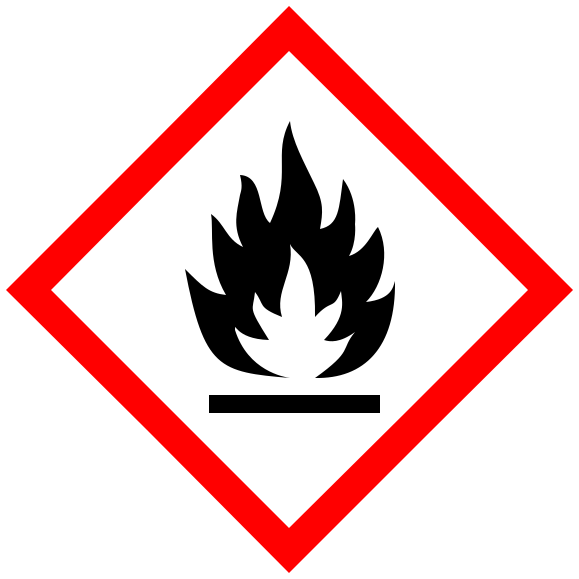 Flammable
 Harmful or irritant
 Serious health hazard
 Hazardous to the environment
What to do this week
- Without moving anything that looks damaged, check the label is readable and write down the opened date if it is not already there.
- Check it is stored as flammable stock, and apart from anything listed under "Do not store with" on this page. If nothing is listed, that does not prove it is safe with everything.
- If you no longer need it, add it to your disposal list so it can be included in a collection.
Safe storage in a school or lab
Oxidisers, oxidising acids and leaking corrosive stock are what naphthalene must be kept away from, since oxidisers and oxidising acids can ignite a flammable solid or make a fire far more intense, and a corrosive leak can break down its container. A jar of flakes belongs in the ventilated flammables cabinet, not on an open bench or beside the acid shelf. Because the vapour escapes slowly, the cabinet needs air movement rather than a sealed tin. Legacy flakes in a school prep room are often in a glass jar with a cork or plastic lid, so check the closure still seats and that spill containment sits underneath.
How to tell it has deteriorated
Look at the container before the flakes. Naphthalene slowly sublimes, so an old jar often shows crystals re-formed on the inside of the lid, round the neck or on the shelf above, while the flakes themselves shrink and lose their sharp edges. The mothball smell leaks through poor seals into the cabinet. Cracked plastic lids, labels gone yellow and flakes fused into a single lump all mean the jar has been there a long time. Stained shelving beneath a jar points to a seal that has failed. None of these makes the stock unusual to collect, but each belongs on the record.
How it is disposed of
We arrange this by specialist collection. We do not publish a drain or general waste route for any chemical. It is normally packed in a flammable laboratory pack with compatible chemicals.
Burning it off is never acceptable, and neither is sweeping it into a bin or washing it away. Nobody should try to speed up its slow loss as vapour. It leaves only by specialist collection, packed with compatible organic solids. Say on the list how much remains, whether the flakes have fused, and where crystals have re-formed. A loose discarded organic chemical not sent in a laboratory pack can fall under 16 05 08*, while pack contents usually use 16 05 06*, though the producer classifies the waste. Moving it should wait for the collector if the jar is cracked.
| Usual EWC code, laboratory stock | 16 05 06* |
|---|---|
| Discarded organic chemical, not a laboratory pack | 16 05 08* |
| Usually classed as hazardous waste | Yes |
The code depends on where the waste came from and what it contains, and classifying it is the producer's duty. Use the waste code finder to see why.
Do not store with
- OxidiserOxidisers can ignite flammable materials or make a fire far more intense.
- AcidSome acids, especially oxidising acids, can ignite flammable materials, and acid fumes attack containers and seals.
- CorrosiveA leak of corrosive stock can break down flammable containers and feed a fire.
Named chemicals to keep apart
- Acetic acidOxidising acids can ignite flammable materials, and acid fumes attack containers and seals.
- Calcium hypochloriteOxidisers can ignite flammable materials or make a fire far more intense.
- Hydrochloric acidOxidising acids can ignite flammable materials, and acid fumes attack containers and seals.
- Hydrogen peroxideOxidisers can ignite flammable materials or make a fire far more intense.
- Nitric acidOxidising acids can ignite flammable materials, and acid fumes attack containers and seals.
- Potassium nitrateOxidisers can ignite flammable materials or make a fire far more intense.
- Potassium permanganateOxidisers can ignite flammable materials or make a fire far more intense.
- Sulfuric acidOxidising acids can ignite flammable materials, and acid fumes attack containers and seals.
Show 2 more
- Thionyl chlorideA leak of corrosive stock can break down flammable containers and feed a fire.
- Zinc chlorideA leak of corrosive stock can break down flammable containers and feed a fire.
Common quantities
Usually held as: legacy flakes.
Tell us the container size and how many you hold. An estimate is enough to start with, and some items cannot be priced until someone has looked at them.
Where it is commonly held
Hazard statements
- H228 Flammable solid.
- H302 Harmful if swallowed.
- H351 Suspected of causing cancer.
- H410 Very toxic to aquatic life with long lasting effects.
Precautionary statements
- P203 Obtain, read and follow all safety instructions before use.
- P264 Wash hands and exposed skin thoroughly after handling.
- P270 Do not eat, drink or smoke when using this product.
- P273 Avoid release to the environment.
- P280 Wear protective gloves, protective clothing, eye protection and face protection.
- P301+P317 IF SWALLOWED: Get medical help.
- P318 If exposed or concerned, get medical advice.
- P330 Rinse mouth.
- P391 Collect spillage.
- P405 Store locked up.
- P501 Dispose of contents and container in accordance with local, regional, national and international regulations.
Substance as classified, dilutions may differ.
Questions
Why are there crystals on the lid of our naphthalene jar?
Naphthalene sublimes slowly, and the vapour settles as crystals on cooler surfaces such as the lid and neck. It is a sign of a long-held jar and a loose seal. Record it, keep the jar in the ventilated flammables cabinet and do not scrape the crystals off.
Can we dispose of a small amount ourselves?
No. It is a flammable solid, suspected of causing cancer and very toxic to aquatic life, so burning or washing it away is never acceptable. Leave it in its jar and arrange specialist collection, listing the quantity remaining.
Where in a school should naphthalene be stored?
In the ventilated flammables cabinet, apart from oxidisers and acids. Prep rooms often find legacy jars on open shelves from years ago, so a clear-out should move them to the cabinet and note the position on the stock record.
Related chemicals
Search the chemical database- 1,2-DichloroethaneCAS 107-06-2Flammable
- 1,2-DimethoxyethaneCAS 110-71-4Flammable
- 1,4-DioxaneCAS 123-91-1Flammable
- 2,4-DinitrophenylhydrazineCAS 119-26-6Flammable
- 2-Bromo-2-methylpropaneCAS 507-19-7Flammable
- 2-Chloro-2-methylpropaneCAS 507-20-0Flammable