
Nitromethane (CAS 75-52-5): storage and disposal
Research groups at universities are the usual holders of nitromethane, normally in small bottles bought for a particular project. It is a flammable liquid and harmful if swallowed, and it can be sensitised to detonation by amines, alkalis and heating. That last point is what separates it from an ordinary solvent: where it sits and what sits next to it matter more than how much is in the bottle.
- CAS number
- 75-52-5
- Form
- Liquid
- Storage class
- Flammable
- Signal word
- Warning
- Usual EWC code
- 16 05 06*
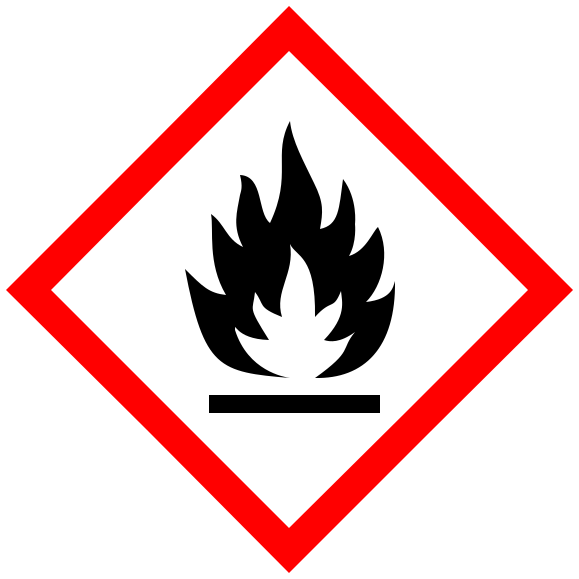 Flammable
 Harmful or irritant
What to do this week
- Check the label is readable and write down the opened date if it is not already there.
- Check it is stored as flammable stock and apart from the items listed under "Do not store with".
- If you no longer need it, add it to your disposal list so it goes on the next collection.
Safe storage in a school or lab
Check what sits beside the bottle before checking the bottle itself. Nitromethane can be sensitised to detonation by amines and alkalis, so ammonia solution, diethylamine, ethanolamine and triethylamine must not share its cabinet or tray. It is a flammable liquid, so it belongs in a ventilated fire-resistant cabinet with spill containment, away from ignition sources and oxidisers. Research groups tend to hold small bottles, which makes it easy to tuck one into whichever cabinet has space. Keep it away from heat too, including cabinets against radiators or sun-warmed walls, because heating is another way it can become sensitised.
How to tell it has deteriorated
Few visible signs of age show in the liquid itself, so the container does most of the talking. Look for a swollen or distorted bottle, a stained or lifted label, residue round the cap and any wet patch on the shelf or tray. A low level suggests the seal has let flammable vapour out into the cabinet. Any sign that an amine or alkali has reached the bottle, such as a leak from a neighbouring container, means it should be left alone, not moved or opened. Record the label state, the level and what was stored nearby. If anything looks wrong, ask for advice before it is handled.
How it must be disposed of
By specialist collection only. It never goes down the drain or into general waste. It is normally packed in a flammable laboratory pack with compatible chemicals.
Pouring it away, tipping it into a general solvent waste bottle or treating it in any way before collection is not acceptable, because amines and alkalis can sensitise it to detonation, and heating does the same, so a waste bottle that has gathered solvents and amine residues is the wrong home for it. It goes by specialist collection as hazardous waste, usually 16 05 06*, in a lab pack with compatible flammable organic liquids, under UN 1261. Keep it in its own bottle in the flammable cabinet, away from heat and amines, and record the quantity and label wording for the collection.
| EWC code, laboratory chemicals | 16 05 06* |
|---|---|
| Discarded organic chemical, not a laboratory pack | 16 05 08* |
| Hazardous waste | Yes |
20 01 13* (solvents) belongs to municipal collections and is shown for reference only. It is not the normal code for a laboratory collection.
The code depends on where the waste came from and what it is mixed with. Use the waste code finder to see why.
Do not store with
- OxidiserOxidisers can ignite flammable materials or make a fire far more intense.
- AcidOxidising acids can ignite flammable materials, and acid fumes attack containers and seals.
- CorrosiveA leak of corrosive stock can break down flammable containers and feed a fire.
Named chemicals to keep apart
- Acetic acidOxidising acids can ignite flammable materials, and acid fumes attack containers and seals.
- Ammonia solutionAmines and alkalis sensitise nitromethane to detonation.
- Calcium hypochloriteOxidisers can ignite flammable materials or make a fire far more intense.
- DiethylamineAmines and alkalis sensitise nitromethane to detonation.
- EthanolamineAmines and alkalis sensitise nitromethane to detonation.
- Hydrochloric acidOxidising acids can ignite flammable materials, and acid fumes attack containers and seals.
- Hydrogen peroxideOxidisers can ignite flammable materials or make a fire far more intense.
- Nitric acidOxidising acids can ignite flammable materials, and acid fumes attack containers and seals.
Show 6 more
- Potassium nitrateOxidisers can ignite flammable materials or make a fire far more intense.
- Potassium permanganateOxidisers can ignite flammable materials or make a fire far more intense.
- Sulfuric acidOxidising acids can ignite flammable materials, and acid fumes attack containers and seals.
- Thionyl chlorideA leak of corrosive stock can break down flammable containers and feed a fire.
- TriethylamineAmines and alkalis sensitise nitromethane to detonation.
- Zinc chlorideA leak of corrosive stock can break down flammable containers and feed a fire.
Common quantities we collect
Usually held as: neat.
Part-used bottles and full containers are both fine. Tell us the size and how many, and an estimate is enough for a first price.
Where it is commonly held
Hazard statements
- H226 Flammable liquid and vapour.
- H302 Harmful if swallowed.
Precautionary statements
- P210 Keep away from heat, hot surfaces, sparks, open flames and other ignition sources. No smoking.
- P233 Keep container tightly closed.
- P240 Ground and bond container and receiving equipment.
- P241 Use explosion-proof electrical, ventilating and lighting equipment.
- P242 Use non-sparking tools.
- P243 Take action to prevent static discharges.
- P264 Wash hands and exposed skin thoroughly after handling.
- P270 Do not eat, drink or smoke when using this product.
- P280 Wear protective gloves, protective clothing, eye protection and face protection.
- P301+P317 IF SWALLOWED: Get medical help.
- P303+P361+P353 IF ON SKIN (or hair): Take off immediately all contaminated clothing. Rinse skin with water or shower.
- P330 Rinse mouth.
- P370+P378 In case of fire: Use suitable extinguishing media to extinguish.
- P403+P235 Store in a well-ventilated place. Keep cool.
- P501 Dispose of contents and container in accordance with local, regional, national and international regulations.
Substance as classified, dilutions may differ.
Questions
Can nitromethane go in the same waste solvent bottle as other organics?
No. Amines and alkalis can sensitise nitromethane to detonation, and a mixed solvent bottle may hold either. Keep it in its own container and let the collection group it. Mixing stock together also makes the waste description inaccurate.
How do we store it if our research group also uses amines?
Put them in different cabinets. Ammonia solution, diethylamine, ethanolamine and triethylamine are the named concerns, and sharing a tray is not acceptable. Nitromethane goes in the flammable cabinet, with the amines kept in a separate space and a clear label on each.
Does an old bottle of nitromethane need special handling?
It gives few visible signs of age, so judge it by the container: swelling, staining, residue at the cap or a low level. If any of those are present, or if it has been near amines, do not move or open it. Ask for assessment as part of the collection request.
Related chemicals
Search the chemical database- 1,2-DichloroethaneCAS 107-06-2Flammable

- 1,2-DimethoxyethaneCAS 110-71-4Flammable
- 1,4-DioxaneCAS 123-91-1Flammable
- 2,4-DinitrophenylhydrazineCAS 119-26-6Flammable
- 2-Bromo-2-methylpropaneCAS 507-19-7Flammable
- 2-Chloro-2-methylpropaneCAS 507-20-0Flammable