
Peracetic acid (CAS 79-21-0): storage and disposal
Peracetic acid is an organic peroxide in acetic acid, with a sharp vinegar smell. University labs hold it at about 15% or about 35%, while clinics and veterinary practices meet it in disinfectant formulations. As classified it is a flammable liquid, fatal by skin contact and inhalation, and heating may cause a fire. It also decomposes in storage and gives off oxygen, so the state of the vented cap and the age of the container decide the handling.
- CAS number
- 79-21-0
- Form
- Solution
- Storage class
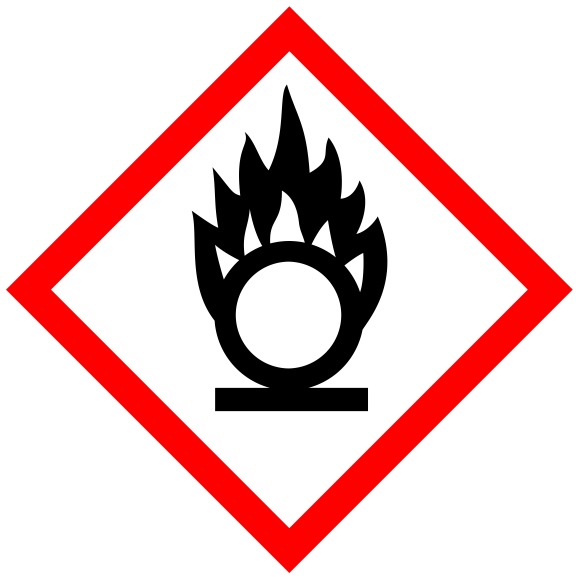
- Oxidiser
- Signal word
- Danger
- Usual EWC code
- 16 05 06*
 Flammable
 Corrosive
 Acute toxicity
 Hazardous to the environment
What to do this week
- Leave it where it is. If it looks old, crystalline or damaged, do not open or move it and keep people away from the shelf.
- Write down the label wording, the rough age and where it is stored, from a safe distance.
- Send us those details, and a photo if you can take one without touching it.
Safe storage in a school or lab
Oxidising power is the hazard that decides where it goes, along with the oxygen it keeps releasing. It needs a separate labelled space, well away from solvents, other organic stock and reducing materials. Clinic and practice cleaning cupboards are the usual problem, as ammonia based cleaners should not sit beside it, and heat from an autoclave or boiler nearby is a poor neighbour for something that may catch fire on heating. Vented caps only work upright, so a drum or bottle laid on its side can weep corrosive liquid through the vent. Metal shelves and fittings near it will corrode from the vapour. Never swap a vented cap for a plain one, even if the original looks tatty.
How to tell it has deteriorated
Look first at the cap and the label. A vented cap that has crusted over, bottle sides pushed outwards or a domed drum all point to oxygen building up with nowhere to go. Wet necks, sticky runs down the side and corroded metal nearby show the vent or seal has been leaking. A strong vinegar smell in a closed cupboard points the same way. The liquid itself usually stays clear and colourless while its strength falls, so it gives few visual signs of age. A faded label or missing date means nobody can say what is left in it. If it is old, undated or shows any of these signs, do not move it, do not open it, and get a specialist assessment.
Decomposes on storage, releasing oxygen, and needs a vented cap.
How it must be disposed of
By specialist collection only. It never goes down the drain or into general waste. It is normally packed in a oxidising laboratory pack with compatible chemicals.
Before asking for a collection, write down the cap type, whether the container has changed shape, the strength printed on the label and the volume left. Part used disinfectant from a bath or tray is a different thing to list from a sealed supplier drum, so keep those lines separate. A clinic would normally use 18 01 06* and a veterinary practice 18 02 05*. Vented containers have to travel upright, and that is what makes this awkward: the collector has to plan for it, and it has to stay out of any group holding solvents or other organic stock. Being very toxic to aquatic life, not even a small measure of the concentrate may go to a sink or drain, and nobody should attempt to weaken it first.
| EWC code, laboratory chemicals | 16 05 06* |
|---|---|
| Discarded organic chemical, not a laboratory pack | 16 05 08* |
| Human healthcare setting | 18 01 06* |
| Veterinary setting | 18 02 05* |
| Hazardous waste | Yes |
The code depends on where the waste came from and what it is mixed with. Use the waste code finder to see why.
Do not store with
- FlammableOxidisers can ignite flammable materials or make a fire far more intense.
- AcidMany oxidisers release toxic gas or become unstable in contact with acid.
- AlkaliSome oxidisers react strongly with alkalis, and ammonia based stock is especially at risk.
- ToxicToxic and oxidising stock are stored apart. A reaction could release toxic vapours.
- CorrosiveCorrosive stock can react with oxidisers, releasing heat or fumes.
Named chemicals to keep apart
- Acetic acidMany oxidisers release toxic gas or become unstable in contact with acid.
- AcetoneOxidisers can ignite flammable materials or make a fire far more intense.
- Ammonia solutionSome oxidisers react strongly with alkalis, and ammonia based stock is especially at risk.
- EthanolOxidisers can ignite flammable materials or make a fire far more intense.
- FormalinToxic and oxidising stock are stored apart. A reaction could release toxic vapours.
- HexaneOxidisers can ignite flammable materials or make a fire far more intense.
- Hydrochloric acidMany oxidisers release toxic gas or become unstable in contact with acid.
- Mercury(II) chlorideToxic and oxidising stock are stored apart. A reaction could release toxic vapours.
Show 9 more
- MethanolOxidisers can ignite flammable materials or make a fire far more intense.
- Nitric acidMany oxidisers release toxic gas or become unstable in contact with acid.
- Potassium hydroxideSome oxidisers react strongly with alkalis, and ammonia based stock is especially at risk.
- Sodium cyanideToxic and oxidising stock are stored apart. A reaction could release toxic vapours.
- Sodium hydroxideSome oxidisers react strongly with alkalis, and ammonia based stock is especially at risk.
- Sulfuric acidMany oxidisers release toxic gas or become unstable in contact with acid.
- Thionyl chlorideCorrosive stock can react with oxidisers, releasing heat or fumes.
- TolueneOxidisers can ignite flammable materials or make a fire far more intense.
- Zinc chlorideCorrosive stock can react with oxidisers, releasing heat or fumes.
Common quantities we collect
Usually held as: about 15%, about 35%, disinfectant formulations.
Part-used bottles and full containers are both fine. Tell us the size and how many, and an estimate is enough for a first price.
Where it is commonly held
Hazard statements
- H226 Flammable liquid and vapour.
- H242 Heating may cause a fire.
- H301 Toxic if swallowed.
- H310 Fatal in contact with skin.
- H314 Causes severe skin burns and eye damage.
- H330 Fatal if inhaled.
- H335 May cause respiratory irritation.
- H410 Very toxic to aquatic life with long lasting effects.
Precautionary statements
- P210 Keep away from heat, hot surfaces, sparks, open flames and other ignition sources. No smoking.
- P234 Keep only in original packaging.
- P235 Keep cool.
- P240 Ground and bond container and receiving equipment.
- P260 Do not breathe dust, fume, gas, mist, vapours or spray.
- P262 Do not get in eyes, on skin, or on clothing.
- P264 Wash hands and exposed skin thoroughly after handling.
- P270 Do not eat, drink or smoke when using this product.
- P271 Use only outdoors or in a well-ventilated area.
- P273 Avoid release to the environment.
- P280 Wear protective gloves, protective clothing, eye protection and face protection.
- P284 In case of inadequate ventilation wear respiratory protection.
- P301+P316 IF SWALLOWED: Get emergency medical help immediately.
- P301+P330+P331 IF SWALLOWED: Rinse mouth. Do NOT induce vomiting.
- P302+P352 IF ON SKIN: Wash with plenty of water.
- P302+P361+P354 IF ON SKIN: Take off immediately all contaminated clothing. Immediately rinse with water for several minutes.
- P304+P340 IF INHALED: Remove person to fresh air and keep comfortable for breathing.
- P305+P354+P338 IF IN EYES: Immediately rinse with water for several minutes. Remove contact lenses, if present and easy to do. Continue rinsing.
- P316 Get emergency medical help immediately.
- P320 Specific treatment is urgent (see supplemental first aid instruction on this label).
- P321 Specific treatment (see supplemental first aid instruction on this label).
- P330 Rinse mouth.
- P361+P364 Take off immediately all contaminated clothing. And wash it before reuse.
- P363 Wash contaminated clothing before reuse.
- P370+P378 In case of fire: Use suitable extinguishing media to extinguish.
- P391 Collect spillage.
- P403 Store in a well-ventilated place.
- P403+P233 Store in a well-ventilated place. Keep container tightly closed.
- P405 Store locked up.
- P410 Protect from sunlight.
- P411 Store at temperatures as specified on the label.
- P420 Store separately.
- P501 Dispose of contents and container in accordance with local, regional, national and international regulations.
- P233 Keep container tightly closed.
- P241 Use explosion-proof electrical, ventilating and lighting equipment.
- P242 Use non-sparking tools.
- P243 Take action to prevent static discharges.
- P261 Avoid breathing dust, fume, gas, mist, vapours or spray.
- P264+P265 Wash hands and exposed skin thoroughly after handling. Do not touch eyes.
- P301+P317 IF SWALLOWED: Get medical help.
- P303+P361+P353 IF ON SKIN (or hair): Take off immediately all contaminated clothing. Rinse skin with water or shower.
- P317 Get medical help.
- P319 Get medical help if you feel unwell.
- P362+P364 Take off contaminated clothing. And wash it before reuse.
- P403+P235 Store in a well-ventilated place. Keep cool.
Substance as classified, dilutions may differ.
Questions
Our disinfectant is only a dilute product. Is it as dangerous as the concentrate?
The fatal by skin contact and inhalation classification describes the substance, and a dilute formulation may be less hazardous. That does not make it safe or suitable for ordinary waste. The product safety data sheet gives its actual classification, so quote it when you list the item.
The cap on our drum seems to let vapour out. Should we tighten it or tape it?
No. A vented cap is meant to let oxygen escape, and sealing it lets pressure build up. Keep the drum upright and the area ventilated. If the vapour is strong, or the cap looks damaged, leave it alone and ask for a specialist to look at it.
Can out of date stock stay in the cleaning cupboard until a collection is booked?
Only if it is sound, upright and clear of ammonia based cleaners and other incompatible products. Mark it clearly so nobody picks it up for use. If it is undated or shows signs of pressure, leave it where it is and ask for an assessment.
Who needs to know when a veterinary practice or clinic clears this stock?
Tell the person who manages your hazardous waste records, since the consignment note kept for three years has to match the description. They should also confirm the correct healthcare or veterinary code, and whether any used solution is part of the same clearance.
Related chemicals
Search the chemical database- Ammonium dichromateCAS 7789-09-5Oxidiser

- Ammonium nitrateCAS 6484-52-2Oxidiser

- Ammonium perchlorateCAS 7790-98-9Oxidiser
- Ammonium persulfateCAS 7727-54-0Oxidiser
- Barium nitrateCAS 10022-31-8Oxidiser
- Barium peroxideCAS 1304-29-6Oxidiser