
Perchloric acid (CAS 7601-90-3): storage and disposal
University departments and some pathology labs hold perchloric acid at 60% or 70%. It is a strong oxidising acid that may cause fire or explosion on contact with organic material, and it causes severe skin burns and eye damage. Age and contamination decide how it is handled, because old bottles and residues can develop shock sensitive perchlorates. This site does not quote for it online, so each holding goes through a manual enquiry.
- CAS number
- 7601-90-3
- Form
- Solution
- Storage class
- Acid
- Signal word
- Danger
- Usual EWC code
- 16 05 06*
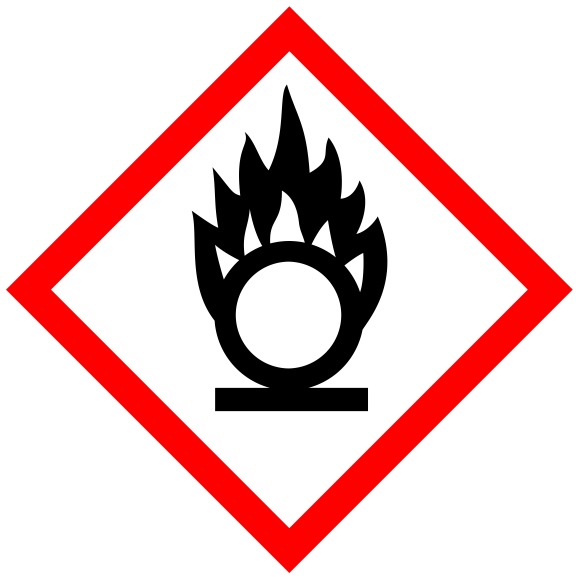 Oxidising
 Corrosive
This chemical is a manual enquiry
This can become unstable or explosive, especially if it is old or has dried out. Nobody should move it until someone competent has looked at it, so we start with a conversation and usually a store assessment.
Perchlorate family: old containers and residues can form shock sensitive perchlorates.
It cannot be priced through a form. Please do not open or move it. Call us or send an enquiry and we will talk through the safe next step, which is often a store assessment.
What to do this week
- Leave it where it is. If it looks old, crystalline or damaged, do not open or move it and keep people away from the shelf.
- Write down the label wording, the rough age and where it is stored, from a safe distance.
- Send us those details, and a photo if you can take one without touching it.
Safe storage in a school or lab
Anything organic must stay away from it: acetone, ethanol, ethyl acetate and hexane, along with wood, paper and cloth, because contact can cause fire or explosion. That makes a cardboard box or a wooden shelf a real concern here, and residue on either is a warning sign. Iron(II) sulfide and calcium hypochlorite are a separate matter, as acid contact releases hydrogen sulfide or chlorine. In a university store this oxidising acid sits low down on an acid-resistant tray in a ventilated corrosive store, away from organic acids, solvents and alkalis. Heat also needs keeping away, since it becomes a stronger oxidiser when hot. Date each bottle on arrival. If a bottle is already old or undated, or shows a warning sign, leave it exactly where it stands and do not open it.
How to tell it has deteriorated
What you tend to see first is the shelf, with residue around the bottle or a mark where drips have dried. Next comes the liquid, which should be colourless. A yellow or brown colour points to decomposition, and darker still is worse. Crystals in the liquid, around the cap or on the shelf are the most serious finding, because contamination and evaporation can leave shock sensitive perchlorates behind. A crust at the neck calls for the same caution, since nobody can tell by looking what it is made of. If you see any of these, or the bottle is old or undated, do not open it, do not move it and do not touch the residue. A competent chemist needs to see it in person, and a warning sign may call for an explosives or emergency specialist.
Contamination and evaporation in old bottles can leave crystals of shock sensitive perchlorate.
How it must be disposed of
This does not go through our standard collection route. It is arranged by manual enquiry, and never goes down the drain or into general waste.
How it leaves the site cannot be settled online. This site does not quote for it, and it is not accepted through the online quote path. Send a manual enquiry, and a store assessment is recommended, with a competent chemist seeing it in person. Do not open it, move it or try to make it safe while you wait, and it never goes into a sink, a drain, a bin or a skip. Useful details for the enquiry are the strength on the label, the approximate age, the shelf material beneath it and any crystals or colour you can see from where you stand. A recent, clean bottle goes through the same enquiry. A university holder would expect code 16 05 06*, and a hospital laboratory 18 01 06*.
| EWC code, laboratory chemicals | 16 05 06* |
|---|---|
| Discarded inorganic chemical, not a laboratory pack | 16 05 07* |
| Human healthcare setting | 18 01 06* |
| Hazardous waste | Yes |
The code depends on where the waste came from and what it is mixed with. Use the waste code finder to see why.
Do not store with
- FlammableOxidising acids can ignite flammable materials, and acid fumes attack containers and seals.
- AlkaliAcids and alkalis react with strong heat and spattering if they meet.
- OxidiserMany oxidisers release toxic gas or become unstable in contact with acid.
- ToxicToxic stock is stored apart from acids. Several toxic salts release toxic gas in contact with acid.
Named chemicals to keep apart
- AcetonePerchloric acid forms explosive mixtures with organic material.
- Ammonia solutionAcids and alkalis react with strong heat and spattering if they meet.
- Ammonium sulfide solutionSulfides release toxic hydrogen sulfide gas with acids.
- Calcium hypochloriteHypochlorites release toxic chlorine gas in contact with acids.
- Chloramine THypochlorites release toxic chlorine gas in contact with acids.
- EthanolPerchloric acid forms explosive mixtures with organic material.
- Ethyl acetatePerchloric acid forms explosive mixtures with organic material.
- HexanePerchloric acid forms explosive mixtures with organic material.
Show 16 more
- Iron(II) sulfideSulfides release toxic hydrogen sulfide gas with acids.
- IsopropanolPerchloric acid forms explosive mixtures with organic material.
- MethanolPerchloric acid forms explosive mixtures with organic material.
- Potassium chlorateChlorates and strong acids can form explosive chlorine dioxide.
- Potassium cyanideCyanides release highly toxic hydrogen cyanide gas with acids.
- Potassium ferricyanideHeating or strong acids can release toxic hydrogen cyanide from these complexes.
- Potassium ferrocyanideHeating or strong acids can release toxic hydrogen cyanide from these complexes.
- Sodium azideAzides release highly toxic and explosive hydrazoic acid with acids.
- Sodium chlorateChlorates and strong acids can form explosive chlorine dioxide.
- Sodium cyanideCyanides release highly toxic hydrogen cyanide gas with acids.
- Sodium dichloroisocyanurateHypochlorites release toxic chlorine gas in contact with acids.
- Sodium hypochloriteHypochlorites release toxic chlorine gas in contact with acids.
- Sodium nitriteNitrites release toxic nitrogen oxides with acids.
- Sodium sulfideSulfides release toxic hydrogen sulfide gas with acids.
- ToluenePerchloric acid forms explosive mixtures with organic material.
- XylenePerchloric acid forms explosive mixtures with organic material.
Common quantities we collect
Usually held as: 60%, 70%.
Part-used bottles and full containers are both fine. Tell us the size and how many, and an estimate is enough for a first price.
Where it is commonly held
Hazard statements
- H271 May cause fire or explosion; strong oxidiser.
- H314 Causes severe skin burns and eye damage.
Precautionary statements
- P210 Keep away from heat, hot surfaces, sparks, open flames and other ignition sources. No smoking.
- P220 Keep away from clothing and other combustible materials.
- P260 Do not breathe dust, fume, gas, mist, vapours or spray.
- P264 Wash hands and exposed skin thoroughly after handling.
- P280 Wear protective gloves, protective clothing, eye protection and face protection.
- P283 Wear fire resistant or flame retardant clothing.
- P301+P330+P331 IF SWALLOWED: Rinse mouth. Do NOT induce vomiting.
- P302+P361+P354 IF ON SKIN: Take off immediately all contaminated clothing. Immediately rinse with water for several minutes.
- P304+P340 IF INHALED: Remove person to fresh air and keep comfortable for breathing.
- P305+P354+P338 IF IN EYES: Immediately rinse with water for several minutes. Remove contact lenses, if present and easy to do. Continue rinsing.
- P306+P360 IF ON CLOTHING: Rinse immediately contaminated clothing and skin with plenty of water before removing clothes.
- P316 Get emergency medical help immediately.
- P321 Specific treatment (see supplemental first aid instruction on this label).
- P363 Wash contaminated clothing before reuse.
- P370+P378 In case of fire: Use suitable extinguishing media to extinguish.
- P371+P380+P375 In case of major fire and large quantities: Evacuate area. Fight fire remotely due to the risk of explosion.
- P405 Store locked up.
- P420 Store separately.
- P501 Dispose of contents and container in accordance with local, regional, national and international regulations.
Substance as classified, dilutions may differ.
Questions
Can perchloric acid go with our other acids on a normal collection?
Not through the online quote. It is handled by manual enquiry because old bottles and residues can carry shock sensitive perchlorates. Tell us what else is in the store when you enquire, so that the assessment can take the neighbouring stock into account as well.
Our perchloric acid has turned yellow. Can we take it to a fume cupboard for a closer look?
No. A yellow or brown colour is a warning sign, so the bottle stays where it is, closed. Note what you can see from a distance and send an enquiry straight away. It may need an explosives or emergency specialist rather than a routine visit.
The bottle is standing on a wooden shelf. Is that a problem?
It can be. Contact with wood can cause fire or explosion, and any dried residue on that shelf needs treating as a warning sign. Do not move the bottle to correct this. Mention the shelf material in your enquiry, so the person assessing it knows before they arrive.
Does an old bottle that has never been opened still need an assessment?
Yes. An intact seal does not tell you the contents are sound, and an old or undated bottle should not be opened or moved either way. Give the date of receipt if a record exists, and describe the seal and label in your enquiry.




