
Sodium amide (CAS 7782-92-5): storage and disposal
Sometimes labelled sodium azanide, sodium amide is a university reagent held as a solid. It releases flammable gases on contact with water, causes severe skin burns and eye damage, and is very toxic to aquatic life. Time in storage is what decides its handling: air and moisture turn it into explosive products, and a yellow or brown colour signals an explosion risk. It appears on published class A peroxide former lists and is not quoted online.
- CAS number
- 7782-92-5
- Form
- Solid
- Storage class
- Flammable
- Signal word
- Danger
- Usual EWC code
- 16 05 06*
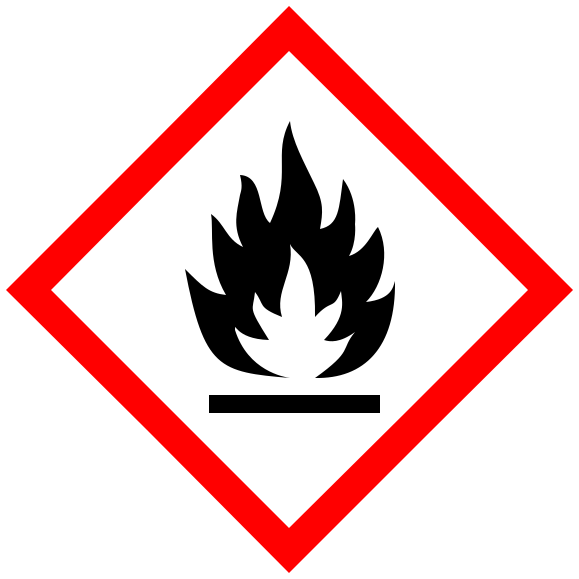 Flammable
 Corrosive
 Hazardous to the environment
This chemical is a manual enquiry
This can become unstable or explosive, especially if it is old or has dried out. Nobody should move it until someone competent has looked at it, so we start with a conversation and usually a store assessment.
Severe peroxide former: yellow or brown discolouration signals explosive risk.
It cannot be priced through a form. Please do not open or move it. Call us or send an enquiry and we will talk through the safe next step, which is often a store assessment.
What to do this week
- Leave it where it is. If it looks old, crystalline or damaged, do not open or move it and keep people away from the shelf.
- Write down the label wording, the rough age and where it is stored, from a safe distance.
- Send us those details, and a photo if you can take one without touching it.
Safe storage in a school or lab
It arrives in a sealed container, usually under a dry atmosphere, because air and moisture both attack it, and everything about its storage follows from keeping that seal good. The part used bottle at the back of a research cupboard is the classic problem, opened a few times and then forgotten by the person who bought it. Write the receipt date and opening date on the label, since its review interval is 3 months after opening. Keep it dry in a fire-resistant cabinet, with oxidisers and acid fumes away from it, and well clear of water based stock. Old or suspect sodium amide must not be opened or sampled for peroxide testing. Its condition requires specialist assessment. If the review date has passed, or the bottle is undated, do not open or move it.
How to tell it has deteriorated
Air and moisture slowly convert it, on the shelf, into products that can explode. Yellow or brown colour can indicate dangerous peroxide formation, but colour cannot establish how far deterioration has progressed or whether an apparently unchanged sample is safe. Fresh stock is off-white to grey. Yellow or brown discolouration signals an explosion risk, and even a faint yellow tinge at the surface of the solid should be taken seriously. A smell of ammonia near the bottle means moisture has reached the solid, though nobody should sniff it to find out. Caked solid, a crust at the thread and a damaged seal are the other things to look for. Do not open discoloured stock or any bottle whose age is unknown, do not move it, and get a specialist assessment. Colour seen through the glass is all you need to report.
Severe peroxide former: can form explosive peroxides in storage.
This can form peroxides as it ages, especially after opening. Age and the opened date matter more than appearance, so a container with no opened date should be treated as old.
Review after 3 months: Review interval after opening from the cited peroxide former lists, not an expiry date from a manufacturer. Class C and all other chemicals are left null.
How it must be disposed of
This does not go through our standard collection route. It is arranged by manual enquiry, and never goes down the drain or into general waste.
How it leaves depends on what a competent chemist finds in person, so the route starts with a manual enquiry. It is not quoted online and the online quote path does not accept it. A store assessment is recommended, and yellow or brown stock may need an explosives or emergency specialist. Tell them the dates on the label, whether the bottle has been opened, and any colour you can see without handling it. Do not open it, move it or try to make it safe, and do not attempt any treatment on the bench, even with a small remainder. It must never go into a sink, a drain, a bin or a skip. University stock normally takes code 16 05 06*.
| EWC code, laboratory chemicals | 16 05 06* |
|---|---|
| Discarded inorganic chemical, not a laboratory pack | 16 05 07* |
| Hazardous waste | Yes |
The code depends on where the waste came from and what it is mixed with. Use the waste code finder to see why.
Do not store with
- OxidiserOxidisers can ignite flammable materials or make a fire far more intense.
- AcidOxidising acids can ignite flammable materials, and acid fumes attack containers and seals.
- CorrosiveA leak of corrosive stock can break down flammable containers and feed a fire.
Named chemicals to keep apart
- Acetic acidOxidising acids can ignite flammable materials, and acid fumes attack containers and seals.
- Calcium hypochloriteOxidisers can ignite flammable materials or make a fire far more intense.
- Hydrochloric acidOxidising acids can ignite flammable materials, and acid fumes attack containers and seals.
- Hydrogen peroxideOxidisers can ignite flammable materials or make a fire far more intense.
- Nitric acidOxidising acids can ignite flammable materials, and acid fumes attack containers and seals.
- Potassium nitrateOxidisers can ignite flammable materials or make a fire far more intense.
- Potassium permanganateOxidisers can ignite flammable materials or make a fire far more intense.
- Sulfuric acidOxidising acids can ignite flammable materials, and acid fumes attack containers and seals.
Show 2 more
- Thionyl chlorideA leak of corrosive stock can break down flammable containers and feed a fire.
- Zinc chlorideA leak of corrosive stock can break down flammable containers and feed a fire.
Common quantities we collect
Usually held as: solid.
Part-used bottles and full containers are both fine. Tell us the size and how many, and an estimate is enough for a first price.
Where it is commonly held
Hazard statements
- H260 In contact with water releases flammable gases which may ignite spontaneously.
- H314 Causes severe skin burns and eye damage.
- H400 Very toxic to aquatic life.
Precautionary statements
- P223 Do not allow contact with water.
- P231+P232 Handle and store contents under inert gas. Protect from moisture.
- P260 Do not breathe dust, fume, gas, mist, vapours or spray.
- P264 Wash hands and exposed skin thoroughly after handling.
- P264+P265 Wash hands and exposed skin thoroughly after handling. Do not touch eyes.
- P273 Avoid release to the environment.
- P280 Wear protective gloves, protective clothing, eye protection and face protection.
- P301+P330+P331 IF SWALLOWED: Rinse mouth. Do NOT induce vomiting.
- P302+P335+P334 IF ON SKIN: Brush off loose particles from skin. Immerse in cool water or wrap in wet bandages.
- P302+P361+P354 IF ON SKIN: Take off immediately all contaminated clothing. Immediately rinse with water for several minutes.
- P304+P340 IF INHALED: Remove person to fresh air and keep comfortable for breathing.
- P305+P354+P338 IF IN EYES: Immediately rinse with water for several minutes. Remove contact lenses, if present and easy to do. Continue rinsing.
- P316 Get emergency medical help immediately.
- P317 Get medical help.
- P321 Specific treatment (see supplemental first aid instruction on this label).
- P363 Wash contaminated clothing before reuse.
- P370+P378 In case of fire: Use suitable extinguishing media to extinguish.
- P391 Collect spillage.
- P402+P404 Store in a dry place. Store in a closed container.
- P405 Store locked up.
- P501 Dispose of contents and container in accordance with local, regional, national and international regulations.
Substance as classified, dilutions may differ.
Questions
Our sodium amide has gone yellow. Can we still use it if we are careful?
No. Yellow or brown discolouration signals an explosion risk, and care in handling does not remove that. Do not open the bottle or move it. Send a manual enquiry describing the colour and the dates on the label, and keep people away from that cupboard.
Should we test old sodium amide for peroxides?
Do not open or test old sodium amide for peroxides. Sodium amide is a solid peroxide former, and attempting to sample or test suspect stock can cause an explosion. Leave the container undisturbed and request specialist assessment through a manual enquiry.
How do we deal with an opened bottle that has passed its review date?
Treat it as overdue and leave it closed where it stands, even if it still looks clean through the glass. Send an enquiry that gives the receipt and opening dates and the colour you can see. A competent chemist then needs to look at it in person.
Related chemicals
Search the chemical database- 1,2-DichloroethaneCAS 107-06-2Flammable


- 1,2-DimethoxyethaneCAS 110-71-4Flammable
- 1,4-DioxaneCAS 123-91-1Flammable
- 2,4-DinitrophenylhydrazineCAS 119-26-6Flammable
- 2-Bromo-2-methylpropaneCAS 507-19-7Flammable
- 2-Chloro-2-methylpropaneCAS 507-20-0Flammable