
Cyclohexane (CAS 110-82-7): storage and disposal
Cyclohexane is a highly flammable liquid held neat in school, college and university prep rooms. Its classified hazards include aspiration, skin irritation, drowsiness and very toxic effects on aquatic life with long lasting effects. It is volatile, so most problems are about vapour leaving the bottle. What decides handling is flammability, the aspiration hazard and the aquatic hazard together.
- CAS number
- 110-82-7
- Form
- Liquid
- Storage class
- Flammable
- Signal word
- Danger
- Usual EWC code
- 16 05 06*
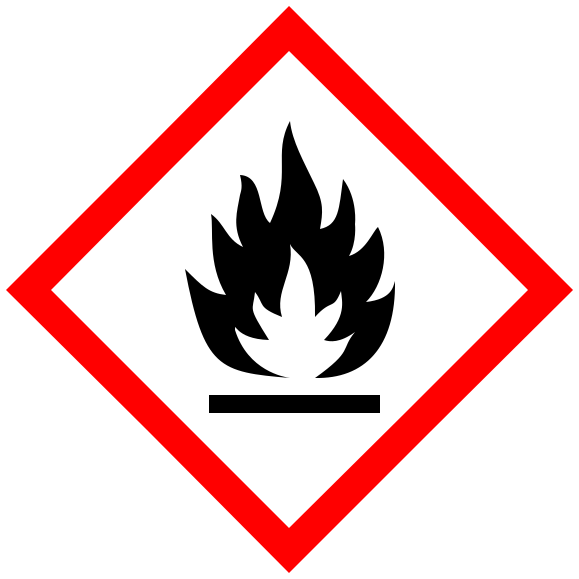 Flammable
 Harmful or irritant
 Serious health hazard
 Hazardous to the environment
What to do this week
- Check the label is readable and write down the opened date if it is not already there.
- Check it is stored as flammable stock and apart from the items listed under "Do not store with".
- If you no longer need it, add it to your disposal list so it goes on the next collection.
Safe storage in a school or lab
A practical shelf check comes first: inspect the bottle and its liquid level from the outside, because cyclohexane is volatile and a falling level can indicate a poor seal. Do not lift a bottle showing signs of leakage or pressure damage. Store it in the ventilated flammables cabinet with spill containment and away from ignition sources. Nitric acid reacts violently with organic solvents and perchloric acid forms explosive mixtures with organic material, so keep both well away. If it is ever kept in a cold store, use only a spark-free refrigerator, and check the contents after because cold can leave a solid mass in the bottle.
How to tell it has deteriorated
Few visual signs of ageing show in the liquid, so judge it by the bottle rather than the liquid. A lower level than the label suggests, a stained label, a dry or cracked cap liner and a faint solvent smell around the shelf are the usual faults. If stock has been kept cold, crystals or a solid mass can form and then melt back as the bottle warms, which is physical and not a sign of damage. Bulging or a sucked-in container wall points to a seal problem. Leave any such bottle in place, on a tray, for the collector.
How it must be disposed of
By specialist collection only. It never goes down the drain or into general waste. It is normally packed in a flammable laboratory pack with compatible chemicals.
How cyclohexane leaves a site is simple: by specialist collection and in no other way. It is not poured into drains, not put in a skip and not left to evaporate in a fume cupboard. Because it is very toxic to aquatic life, any spill that escapes the cabinet tray must be reported to the site lead. It is grouped with compatible flammable organics. For a laboratory pack the list code is 16 05 06*, and a loose discarded organic chemical can use 16 05 08*. Give bottle sizes and remaining volume.
| EWC code, laboratory chemicals | 16 05 06* |
|---|---|
| Discarded organic chemical, not a laboratory pack | 16 05 08* |
| Hazardous waste | Yes |
20 01 13* (solvents) belongs to municipal collections and is shown for reference only. It is not the normal code for a laboratory collection.
The code depends on where the waste came from and what it is mixed with. Use the waste code finder to see why.
Do not store with
- OxidiserOxidisers can ignite flammable materials or make a fire far more intense.
- AcidOxidising acids can ignite flammable materials, and acid fumes attack containers and seals.
- CorrosiveA leak of corrosive stock can break down flammable containers and feed a fire.
Named chemicals to keep apart
- Acetic acidOxidising acids can ignite flammable materials, and acid fumes attack containers and seals.
- Calcium hypochloriteOxidisers can ignite flammable materials or make a fire far more intense.
- Hydrochloric acidOxidising acids can ignite flammable materials, and acid fumes attack containers and seals.
- Hydrogen peroxideOxidisers can ignite flammable materials or make a fire far more intense.
- Nitric acidNitric acid reacts violently with organic solvents and can ignite them or build pressure in waste bottles.
- Perchloric acidPerchloric acid forms explosive mixtures with organic material.
- Potassium nitrateOxidisers can ignite flammable materials or make a fire far more intense.
- Potassium permanganateOxidisers can ignite flammable materials or make a fire far more intense.
Show 3 more
- Sulfuric acidOxidising acids can ignite flammable materials, and acid fumes attack containers and seals.
- Thionyl chlorideA leak of corrosive stock can break down flammable containers and feed a fire.
- Zinc chlorideA leak of corrosive stock can break down flammable containers and feed a fire.
Common quantities we collect
Usually held as: neat.
Part-used bottles and full containers are both fine. Tell us the size and how many, and an estimate is enough for a first price.
Where it is commonly held
Hazard statements
- H225 Highly flammable liquid and vapour.
- H304 May be fatal if swallowed and enters airways.
- H315 Causes skin irritation.
- H336 May cause drowsiness or dizziness.
- H410 Very toxic to aquatic life with long lasting effects.
Precautionary statements
- P210 Keep away from heat, hot surfaces, sparks, open flames and other ignition sources. No smoking.
- P233 Keep container tightly closed.
- P240 Ground and bond container and receiving equipment.
- P241 Use explosion-proof electrical, ventilating and lighting equipment.
- P242 Use non-sparking tools.
- P243 Take action to prevent static discharges.
- P261 Avoid breathing dust, fume, gas, mist, vapours or spray.
- P264 Wash hands and exposed skin thoroughly after handling.
- P271 Use only outdoors or in a well-ventilated area.
- P273 Avoid release to the environment.
- P280 Wear protective gloves, protective clothing, eye protection and face protection.
- P301+P316 IF SWALLOWED: Get emergency medical help immediately.
- P302+P352 IF ON SKIN: Wash with plenty of water.
- P303+P361+P353 IF ON SKIN (or hair): Take off immediately all contaminated clothing. Rinse skin with water or shower.
- P304+P340 IF INHALED: Remove person to fresh air and keep comfortable for breathing.
- P319 Get medical help if you feel unwell.
- P321 Specific treatment (see supplemental first aid instruction on this label).
- P331 Do NOT induce vomiting.
- P332+P317 If skin irritation occurs: Get medical help.
- P362+P364 Take off contaminated clothing. And wash it before reuse.
- P370+P378 In case of fire: Use suitable extinguishing media to extinguish.
- P391 Collect spillage.
- P403+P233 Store in a well-ventilated place. Keep container tightly closed.
- P403+P235 Store in a well-ventilated place. Keep cool.
- P405 Store locked up.
- P501 Dispose of contents and container in accordance with local, regional, national and international regulations.
Substance as classified, dilutions may differ.
Questions
Can we leave a half-empty bottle of cyclohexane in the cabinet?
Yes, as long as the cap seats properly and the label is legible. Half-empty bottles lose vapour through worn liners, so check the closure at each stock check and add the bottle to the collection list if it is no longer needed.
Why did our cyclohexane look solid after being in the fridge?
Cyclohexane can set to a crystalline mass when kept cold, and it melts back as the bottle warms. It is a physical change, but it shows the bottle was in a cold store, which should be spark-free.
Is a spill of cyclohexane an environmental problem?
Yes. It is classified as very toxic to aquatic life with long lasting effects, so never wash a spill into a sink or drain. Contain it, keep ignition sources away and report it to your site lead.
Related chemicals
Search the chemical database- 1,2-DichloroethaneCAS 107-06-2Flammable
- 1,2-DimethoxyethaneCAS 110-71-4Flammable
- 1,4-DioxaneCAS 123-91-1Flammable
- 2,4-DinitrophenylhydrazineCAS 119-26-6Flammable
- 2-Bromo-2-methylpropaneCAS 507-19-7Flammable
- 2-Chloro-2-methylpropaneCAS 507-20-0Flammable